Genres
Artists
Albums
Make Music
Sign in
Sign in
Artists
Latin Rock
Artists
Latin Rock
Hombres G
1985–1986
·
2 albums
Listen
4
/5
Genres
Tulum
Tulum is a contemporary electronic dance music sound that crystallized around the boutique party scene in Tulum, Mexico, during the 2010s. It blends deep, organic house grooves with downtempo sensibilities, hand-played percussion, and "world"-leaning timbres such as oud, bansuri, handpan, and Latin guitar. The style favors warm, analog textures; modal, minor-key harmonies (often Dorian or Phrygian); long, reverb-washed atmospheres; and subtle, mantra-like vocals or chants. Tempos usually sit between 112–120 BPM, with earthy polyrhythms and shuffling, Afro- and Latin-influenced percussion propelling a hypnotic four-on-the-floor. Aesthetically, the Tulum sound is associated with sunrise/sunset beach settings, bohemian design, and a wellness-forward, festival-adjacent culture. Musically it overlaps with the broader “organic house/downtempo” movement while retaining a distinctly tropical, ritualistic character.
Discover
Listen
Bytebeat
Bytebeat is a minimalist form of algorithmic music in which very short computer programs (often a single arithmetic expression) generate raw PCM audio directly. It typically uses 8-bit integer math and a running time counter t to produce harsh, glitchy, melody-like patterns, rhythms, and textures through bitwise operations, shifts, modular arithmetic, and simple integer multiplications. The aesthetic sits between chiptune timbres and noise art: crunchy aliasing, stepping waveforms, and emergent structure arise from extremely compact code. First popularized online in 2011, bytebeat is as much a programming puzzle as it is a musical style, celebrated for revealing how complex musical behaviors can emerge from ultra-simple rules.
Discover
Listen
Movida Madrileña
Movida madrileña is a late-1970s to mid-1980s cultural and musical movement centered in Madrid that celebrated freedom, experimentation, and urban nightlife in the wake of Spain’s transition to democracy. It blends punk’s DIY spirit with new wave, post-punk, synth-pop, and power pop, favoring catchy choruses, angular guitars, prominent bass lines, and bright analog synthesizers. Visually and lyrically it is playful, irreverent, and hedonistic—embracing fashion, film, photography, fanzines, and club culture—while often deploying irony to comment on modernity, identity, and the city. Key venues (notably Rock-Ola), indie labels (DRO, GASA, Tres Cipreses), and radio/TV programs (Radio 3’s shows, La Edad de Oro, La bola de cristal) amplified the sound and attitude across Spain.
Discover
Listen
Latin Rock
Latin rock blends the instrumentation and attitude of rock with Afro‑Latin and Caribbean rhythms, percussion, and song forms. Typical bands combine electric guitars, bass, and drum kit with congas, bongos, timbales, and hand percussion, creating a driving, danceable groove grounded in the clave. Vocals may be in Spanish, Portuguese, Spanglish, or English, and lyrics range from love songs and urban life to social and political commentary. Harmonically, Latin rock draws from blues/rock progressions but frequently incorporates modal colors (Dorian, Mixolydian) and montuno‑style vamps borrowed from salsa and Afro‑Cuban traditions. The result sits comfortably between club‑ready rhythm and arena‑sized rock energy.
Discover
Listen
Rock En Español
Rock en español is the umbrella term for rock music performed in Spanish across Latin America and Spain. It adapts the attitude, instrumentation, and songwriting of Anglo-American rock—electric guitars, bass, drums, and hook-driven choruses—while foregrounding Spanish lyrics and local themes. The style ranges from 1960s beat- and garage-influenced bands to 1970s blues/psychedelia and the punk, new wave, and pop-rock explosions of the 1980s and 1990s. Lyrically it moves from social critique and urban realism to romance and introspection, often reflecting the political and cultural realities of Spanish-speaking countries.
Discover
Listen
Pop Rock
Pop rock blends the hook-focused immediacy of pop with the instrumentation and drive of rock. It prioritizes catchy melodies, concise song structures, and polished production while retaining guitars, bass, and drums as core elements. Typical pop rock tracks use verse–pre-chorus–chorus forms, strong vocal harmonies, and memorable riffs. The sound ranges from jangly and bright to mildly overdriven and arena-ready, aiming for radio-friendly appeal without abandoning rock’s rhythmic punch.
Discover
Listen
Mexican Rock
Mexican rock is the umbrella term for rock music created in Mexico, blending Anglo-American rock idioms with local rhythms, instruments, and Spanish-language lyricism. It typically features electric guitars, bass, and drum set, but often integrates instruments such as trumpets, accordion, or folkloric percussion to evoke mariachi, ranchera, cumbia, and other regional styles. Lyrically, it ranges from street-level social commentary and political critique to playful wordplay and romantic storytelling, frequently using Mexican slang and cultural references. Stylistically it spans early rock and roll covers, garage and surf, psychedelic and hard rock, punk and urbano, and the 1990s alternative wave that helped define the broader movement of rock en español and Latin alternative.
Discover
Listen
Pop
Pop is a broad, hook-driven style of popular music designed for wide appeal. It emphasizes memorable melodies, concise song structures, polished vocals, and production intended for radio, charts, and mass media. While pop continually absorbs elements from other styles, its core remains singable choruses, accessible harmonies, and rhythmic clarity. Typical forms include verse–pre-chorus–chorus, frequent use of bridges and middle-eights, and ear-catching intros and outros. Pop is not defined by a single instrumentation. It flexibly incorporates acoustic and electric instruments, drum machines, synthesizers, and increasingly digital production techniques, always in service of the song and the hook.
Discover
Listen
Rock
Rock is a broad family of popular music centered on amplified instruments, a strong backbeat, and song forms that foreground riffs, choruses, and anthemic hooks. Emerging from mid‑20th‑century American styles like rhythm & blues, country, and gospel-inflected rock and roll, rock quickly expanded in scope—absorbing folk, blues, and psychedelic ideas—while shaping global youth culture. Core sonic markers include electric guitar (often overdriven), electric bass, drum kit emphasizing beats 2 and 4, and emotive lead vocals. Rock songs commonly use verse–chorus structures, blues-derived harmony, and memorable melodic motifs, ranging from intimate ballads to high‑energy, stadium‑sized performances.
Discover
Listen
Show all 9 genres
Albums
1986
4
/5
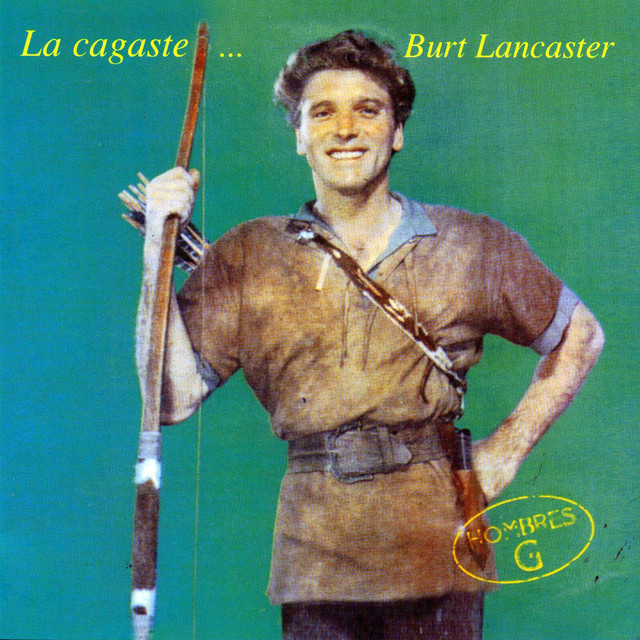
La cagaste...Burt Lancaster
Hombres G
Movida Madrileña
Mexican Rock
Latin Rock
1985
4
/5
Hombres G
Hombres G
Movida Madrileña
Similar artists
5
/5
Maná
Latin
Latin Rock
Mexican Rock
4
/5
Zoé
Mexican Rock
Latin Alternative
Latin Indie
4
/5
Los Enanitos Verdes
Argentine Rock
Mexican Rock
Latin Alternative
4
/5
Caifanes
Mexican Rock
Latin Alternative
Latin Rock
4
/5
Enjambre
Latin Indie
Latin Rock
Mexican Indie
4
/5
Bunbury
Latin Alternative
Latin Rock
Mexican Rock
4
/5
Elefante
Latin Rock
Mexican Rock
Latin Alternative
4
/5
Odisseo
Latin Alternative
Latin Indie
Latin Rock
4
/5
Camilo Séptimo
Latin Alternative
Mexican Indie
Rock En Español
4
/5
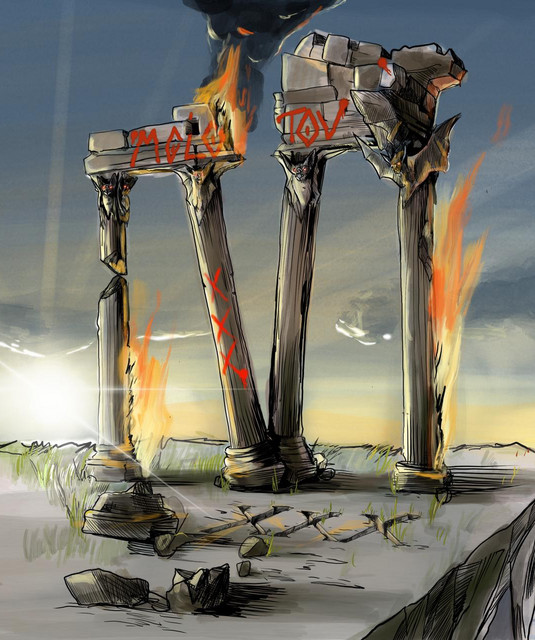
Molotov
Mexican Ska
Ska
Mexican Rock
Download our mobile app
Get the Melodigging app and start digging for new genres on the go
Download on the App Store
Get it on Google Play
© 2026 Melodigging
Give feedback
Legal
Melodding was created as a tribute to
Every Noise at Once
, which inspired us to help curious minds keep digging into music's ever-evolving genres.