Genres
Artists
Albums
Make Music
Sign in
Sign in
Artists
Jazz
Artists
Jazz
Henry Threadgill
2014–2016
·
2 albums
Listen
1
/5
Genres
Modern Creative
Modern Creative is a contemporary jazz umbrella that blends the improvisational daring of avant‑garde and free jazz with post‑bop craft, jazz fusion electricity, and the harmonic/structural ideas of Modern and Contemporary Classical music. In practice it is a semi‑improvisational approach: pre‑composed modules, cue‑based forms, and open sections are interwoven, while grooves and textures can draw from funk, pop, and rock as easily as from swing or rubato abstraction. The result ranges from ethereal, chamber‑like soundscapes to intense, rhythmically intricate ensembles—always prioritizing exploration within a purposeful compositional frame.
Discover
Listen
Loft Jazz
Loft jazz is a New York–centered jazz movement of the 1970s in which musicians reclaimed inexpensive industrial lofts in SoHo, Tribeca, and the Lower East Side as DIY performance and rehearsal spaces. More a scene and practice than a rigid style, loft jazz blends the freedom and energy of free jazz with post-bop craft, open forms, and an eclectic curiosity for world rhythms, funk vamps, and chamber-like textures. Musicians emphasized extended techniques, collective improvisation, and flexible ensembles—often without chordal instruments—while cultivating community-led venues, self-produced concerts, and independent recording. The sound ranges from meditative, spacious explorations to intense, high-energy “fire music,” unified by a spirit of autonomy, experimentation, and proximity between performers and audience.
Discover
Listen
Free Jazz
Free jazz is a radical branch of jazz that rejects fixed chord progressions, strict meter, and conventional song forms in favor of collective improvisation, textural exploration, and spontaneous interaction. Musicians prioritize timbre, dynamics, and gesture as much as pitch and harmony, often using extended techniques (multiphonics, overblowing, prepared piano) and unconventional sounds. While rooted in the blues and earlier jazz vocabularies, free jazz frees improvisers from pre-set harmonic cycles, allowing lines to unfold over tonal centers, shifting modes, drones, or complete atonality. Rhythm sections may float without a steady pulse, or drive with layered polyrhythms and “energy playing.” The result ranges from contemplative soundscapes to cathartic, high-intensity eruptions. Culturally, the genre intersected with the civil rights era and broader avant-garde movements, emphasizing autonomy, community, and new possibilities for musical expression.
Discover
Listen
Pop
Pop is a broad, hook-driven style of popular music designed for wide appeal. It emphasizes memorable melodies, concise song structures, polished vocals, and production intended for radio, charts, and mass media. While pop continually absorbs elements from other styles, its core remains singable choruses, accessible harmonies, and rhythmic clarity. Typical forms include verse–pre-chorus–chorus, frequent use of bridges and middle-eights, and ear-catching intros and outros. Pop is not defined by a single instrumentation. It flexibly incorporates acoustic and electric instruments, drum machines, synthesizers, and increasingly digital production techniques, always in service of the song and the hook.
Discover
Listen
Avant-Garde Jazz
Avant-garde jazz is a boundary-pushing current of jazz that privileges experimentation, collective improvisation, and timbral exploration over conventional song forms and chord progressions. It often uses atonality or loose tonality, extended instrumental techniques, shifting or absent meters, and open forms. Ensembles may emphasize texture and density as much as melody and harmony, drawing as readily from modern classical music and non-Western traditions as from blues and bebop. While sometimes intense or noisy, avant-garde jazz also embraces spaciousness and silence, allowing players to interact in real time without predetermined roles. The result is music that questions the limits of jazz itself, foregrounding sound, spontaneity, and social expression.
Discover
Listen
Jazz
Jazz is an improvisation-centered music tradition that emerged from African American communities in the early 20th century. It blends blues feeling, ragtime syncopation, European harmonic practice, and brass band instrumentation into a flexible, conversational art. Defining features include swing rhythm (a triplet-based pulse), call-and-response phrasing, blue notes, and extended harmonies built on 7ths, 9ths, 11ths, and 13ths. Jazz is as much a way of making music—spontaneous interaction, variation, and personal sound—as it is a set of forms and tunes. Across its history, jazz has continually hybridized, from New Orleans ensembles and big-band swing to bebop, cool and hard bop, modal and free jazz, fusion, and contemporary cross-genre experiments. Its influence permeates global popular and art music.
Discover
Listen
Avant-Garde
Avant-garde music is an umbrella term for boundary-pushing practices that challenge prevailing norms of harmony, rhythm, timbre, form, and performance. It privileges experimentation, conceptual rigor, and a willingness to reframe what counts as music at all. Historically tied to early 20th‑century artistic modernism, avant-garde music introduced atonality, the emancipation of noise, and new forms of notation and process. It embraces indeterminacy, extended techniques, electronics, spatialization, and multimedia performance, treating sound as material to be sculpted, questioned, and reinvented.
Discover
Listen
Neoclassicism
Neoclassicism in music is a 20th‑century movement that revived forms, genres, and aesthetics from the Baroque and Classical eras, but reframed them with modern harmony, rhythm, and orchestration. It emphasizes clarity, balance, objectivity, and contrapuntal craft, often rejecting late‑Romantic excess while retaining a tonal or modal center enriched by dissonance, bitonality, and crisp rhythmic drive. Typical hallmarks include neobaroque dance suites, neoclassical sonatas and concerti, chamber‑oriented scoring, clean textures, and a dry, anti‑rhetorical performance style.
Discover
Listen
Classical
Classical music is the notated art-music tradition of Europe and its global descendants, characterized by durable forms, carefully codified harmony and counterpoint, and a literate score-based practice. The term “classical” can refer broadly to the entire Western art-music lineage from the Medieval era to today, not just the Classical period (c. 1750s–1820s). It privileges long-form structures (such as symphonies, sonatas, concertos, masses, and operas), functional or modal harmony, thematic development, and timbral nuance across ensembles ranging from solo instruments to full orchestras and choirs. Across centuries, the style evolved from chant and modal polyphony to tonal harmony, and later to post-tonal idioms, while maintaining a shared emphasis on written notation, performance practice, and craft.
Discover
Listen
Show all 9 genres
Albums
2016
1
/5
Old Locks and Irregular Verbs
Henry Threadgill's Ensemble Double Up
Modern Creative
Jazz
2014
1
/5
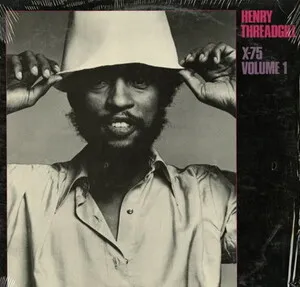
X-75, Volume 1
Henry Threadgill
Loft Jazz
Pop
Similar artists
2
/5
Art Ensemble Of Chicago
Free Improvisation
Jazz
Avant-Garde Jazz
1
/5
Cecil Taylor
Free Jazz
Jazz
Avant-Garde
1
/5
Anthony Braxton
Jazz
Modern Creative
Free Improvisation
1
/5
Wadada Leo Smith
Jazz
Avant-Garde Jazz
Free Jazz
1
/5
William Parker
Jazz
Avant-Garde
Avant-Garde Jazz
1
/5
Air
Jazz
Loft Jazz
Avant-Garde
1
/5
Various Artists
Afro-Funk
Alternative Rock
Ambient
2
/5
Marion Brown
Avant-Garde
Free Jazz
Jazz
1
/5
Bill Dixon
Free Improvisation
Avant-Garde
Free Jazz
1
/5
Lawrence D. "Butch" Morris
Free Jazz
Avant-Garde
Conducted Improvisation
Download our mobile app
Get the Melodigging app and start digging for new genres on the go
Download on the App Store
Get it on Google Play
© 2026 Melodigging
Give feedback
Legal
Melodding was created as a tribute to
Every Noise at Once
, which inspired us to help curious minds keep digging into music's ever-evolving genres.