Genres
Artists
Albums
Make Music
Sign in
Sign in
Artists
Emo
Artists
Emo
Finch
2002
·
1 album
Listen
3
/5
Genres
Emo Revival
Emo revival is a 2010s resurgence of the melodic, introspective strain of 1990s and early-2000s emo, updated with indie-rock and math-rock sensibilities. It emphasizes twinkly, interlocking clean guitars, confessional and diaristic lyrics, dynamic quiet‑loud arrangements, and a DIY ethos rooted in house shows, small labels, and online communities. Compared with 2000s mainstream emo-pop, the revival leans closer to Midwest emo and indie aesthetics—often cleaner in tone, more rhythmically intricate, and less polished, while remaining hooky and emotionally direct.
Discover
Listen
Post-Screamo
Post-screamo is a modern, studio-savvy offshoot of screamo that blends the genre’s emotive harsh vocals with sleek, pop-leaning hooks and polished, post-hardcore/metalcore instrumentation. Compared with classic screamo, it favors dynamic “scream-and-sing” song forms, EDM/electronic textures, and breakdowns with djent-tinged guitar tones. Clean choruses, cinematic builds, and glossy production sit alongside cathartic screams, creating a style that is equal parts heavy release and radio-ready melodicism.
Discover
Listen
Post-Post-Hardcore
Post-post-hardcore is a polished, third-wave offshoot of post-hardcore that crystallized in the 2010s. It fuses the genre’s emotive, dynamic vocals and tension-release structures with modern pop hooks, electronic programming, and metalcore heft. Compared with classic post-hardcore, it favors glossy production, radio-leaning choruses, and hybridized textures—think syncopated djent-lite riffs under bright synths, EDM-style risers and drops, half-time breakdowns, and call-and-response vocals (screamed versus soaring cleans). The result is an accessible yet intense sound that thrives in the internet era of playlists, YouTube covers, and scene cross-pollination.
Discover
Listen
Modern Ska Punk
Modern ska punk is a 2010s–2020s reboot of ska’s off‑beat guitar “skank” and brass arrangements fused with pop‑punk hooks, hardcore energy, and contemporary indie/DIY production. It keeps Jamaican ska’s upstroke rhythm and walking bass feel, but toggles to double‑time punk beats and distortion for choruses, foregrounding big gang vocals and tightly voiced horn stabs. Culturally, the scene coalesced around inclusive, explicitly anti‑racist/anti‑sexist, queer‑affirming DIY communities (e.g., Bad Time Records), and a new crop of bands that treat ska not as nostalgia but as a flexible songwriting language. High‑profile signals of the revival included Jeff Rosenstock’s 2021 full‑album ska rework SKA DREAM, and We Are the Union’s Ordinary Life, a trans‑affirming, hook‑forward ska‑punk LP. The term “New Tone,” popularized by members of Bad Operation, captures a cleaner, roots‑aware but forward‑looking branch of the sound.
Discover
Listen
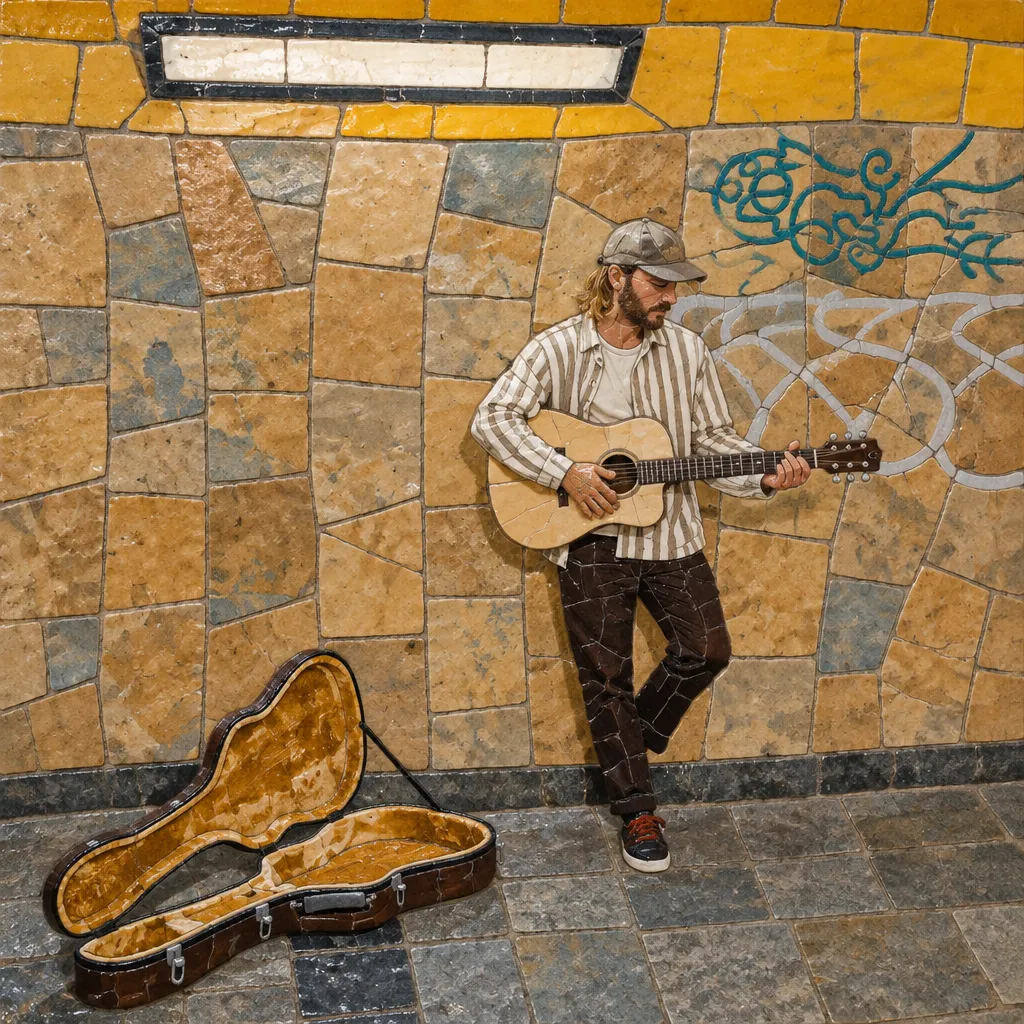
Guitar Case
Guitar case is a modern, singer‑songwriter–leaning microgenre built around intimate, mostly acoustic performances that could plausibly be delivered on a street corner with a guitar case open for tips. Tracks typically foreground a warm acoustic guitar (strummed or finger‑picked), close‑miked vocals, and confessional, first‑person narratives. Production is deliberately sparse—often just voice and guitar, perhaps with light percussion, harmony vocals, or subtle textures—so that the storytelling remains the focus. Aesthetically, it draws on folk and contemporary pop sensibilities, with memorable hooks delivered in a relaxed, personable tone. Tempos tend to be moderate, the harmonic language familiar and diatonic, and the overall feel approachable, buskable, and audience‑friendly.
Discover
Listen
Mall Screamo
Mall screamo is a mainstream, radio-ready variant of early-2000s screamo and post‑hardcore that fused pop‑punk hooks, emo melodrama, and screamed vocals with glossy, high‑budget production. Built for Warped Tour stages, MTV2 rotation, and Hot Topic racks, it emphasizes big, cathartic choruses, breakdowns that nod to metalcore, and confessional lyrics about heartbreak, alienation, and coming‑of‑age angst. Typical hallmarks include alternating clean/screamed vocals, octave‑lead guitar riffs in minor keys, fast pop‑punk drum patterns, and tightly edited, sample‑reinforced mixes. While rooted in 1990s underground screamo, “mall screamo” is distinguished by its accessibility and pop songwriting focus, trading abrasive chaos for earworm melodies and a verse‑pre‑chorus‑chorus economy that made the sound ubiquitous in mid‑2000s North American youth culture.
Discover
Listen
Screamo
Screamo is an emotionally charged offshoot of emo and hardcore punk characterized by cathartic, screamed vocals, dynamic extremes, and a blend of melody with discordance. Songs often move rapidly between fragile, clean passages and explosive, chaotic climaxes, emphasizing tension-and-release. Guitars favor octave runs, tremolo-picked melodies, and dissonant chord voicings, while drums switch from driving d-beats to blast beats and spacious half-time drops. Lyrics are typically confessional, poetic, and socially aware, delivered with a visceral intensity that foregrounds vulnerability and urgency. Early recordings embraced raw, DIY production and intimate, basement-show energy; later waves incorporated post-rock atmospherics and more expansive songwriting.
Discover
Listen
Alternative Hardcore
Alternative hardcore is a branch of hardcore punk that absorbs the textures, songcraft, and dynamics of 1990s alternative rock. It keeps the urgency, DIY ethos, and physical energy of hardcore while introducing greater melodic contour, groove-heavy riffs, and quiet–loud contrasts. Compared with straight-ahead hardcore, alternative hardcore favors mid‑to‑uptempo pacing, angular guitar voicings, punchy bass lines, and vocals that can move from barked shouts to tuneful, grainy singing. The result is music that’s still abrasive and cathartic, but wider in tone color and arrangement—sitting between post‑hardcore’s experimentation and alternative rock’s accessibility.
Discover
Listen
Emo
Emo is a rock subgenre that emerged from the mid-1980s Washington, D.C. hardcore punk scene as “emotional hardcore” (often shortened to emocore). It retains punk’s urgency but foregrounds confessional, vulnerable lyrics and dramatic dynamic shifts. Across its eras, emo has encompassed several distinct sounds: the intense, cathartic D.C. style; the melodic, guitar‑intricate “Midwest emo” of the 1990s; and the 2000s mainstream wave that blended emo’s lyrical candor with pop‑punk hooks (often called “emo pop”). Common musical traits include intertwining clean and overdriven guitars, intricate arpeggios and counter‑melodies, elastic song structures, and vocals that range from intimate murmurs to raw, impassioned shouts.
Discover
Listen
Post-Hardcore
Post-hardcore is a branch of hardcore punk that retains the style’s urgency and DIY ethos while expanding its musical vocabulary. Bands push beyond breakneck tempos and simple power-chord progressions into more dynamic song structures, varied rhythms, and a wider emotional range. Guitars often alternate between caustic distortion and clean, chiming textures; vocals can shift from shouted slogans to melodic singing; and arrangements emphasize tension-and-release, odd meters, and dramatic builds. Lyrically, post-hardcore tends to be more introspective and socially conscious than its hardcore roots, touching on personal, political, and philosophical themes.
Discover
Listen
Alternative
Alternative is an umbrella term for non-mainstream popular music that grew out of independent and college-radio scenes. It emphasizes artistic autonomy, eclectic influences, and a willingness to subvert commercial formulas. Sonically, alternative often blends the raw immediacy of punk with the mood and texture of post-punk and new wave, adding elements from folk, noise, garage, and experimental rock. While guitars, bass, and drums are typical, production ranges from lo-fi to stadium-ready, and lyrics tend toward introspection, social critique, or surreal storytelling. Over time, “alternative” became both a cultural stance and a market category, spawning numerous substyles (alternative rock, alternative hip hop, alternative pop, etc.) and moving from underground circuits to mainstream prominence in the 1990s.
Discover
Listen
Alternative Punk
Alternative punk is a broad, independent-minded branch of punk that stretches punk’s velocity and attitude into more melodic, experimental, and stylistically hybrid directions. It retains punk’s DIY ethos and raw edge, but embraces unusual song structures, artful dissonance, jangly or noisy guitar textures, and introspective or socially observant lyrics. Often tied to college radio and small labels, alternative punk bridged the gap between late-1970s punk/post-punk and the alternative and indie explosions of the late 1980s and 1990s.
Discover
Listen
Alternative Rock
Alternative rock is a broad umbrella for guitar-based rock that emerged from the independent and college-radio scenes as a counterpoint to mainstream, commercial rock. It blends the energy and ethos of punk with the textural and songwriting experiments of post-punk, new wave, jangle pop, and noise rock, often foregrounding introspective or socially aware lyrics. Across its many strains—from the melodic minimalism of college rock to the loud-quiet-loud dynamics of grunge and the artful experimentation of Radiohead-era modernism—alternative rock prioritizes authenticity, sonic individuality, and a do-it-yourself approach. Its sound ranges from chiming, chorus-laden clean guitars to abrasive distortion and feedback, supported by straightforward rock rhythms or off-kilter grooves, and production that can be either raw and live-sounding or polished yet unconventional.
Discover
Listen
Pop Punk
Pop punk blends the speed and attitude of punk rock with the melody, hooks, and songcraft of pop. It features bright, concise songs driven by crunchy power-chord guitars, punchy drums, and catchy vocal lines that often favor gang shouts and harmonies. Lyrically, pop punk tends to focus on adolescence, relationships, boredom, suburbia, and self-deprecating humor, delivered with a mix of earnestness and wit. Production ranges from raw and DIY to radio-ready polish, but the core is always immediacy: big choruses, tight structures, and energetic performances.
Discover
Listen
Rock
Rock is a broad family of popular music centered on amplified instruments, a strong backbeat, and song forms that foreground riffs, choruses, and anthemic hooks. Emerging from mid‑20th‑century American styles like rhythm & blues, country, and gospel-inflected rock and roll, rock quickly expanded in scope—absorbing folk, blues, and psychedelic ideas—while shaping global youth culture. Core sonic markers include electric guitar (often overdriven), electric bass, drum kit emphasizing beats 2 and 4, and emotive lead vocals. Rock songs commonly use verse–chorus structures, blues-derived harmony, and memorable melodic motifs, ranging from intimate ballads to high‑energy, stadium‑sized performances.
Discover
Listen
Show all 15 genres
Albums
2002
3
/5
What It Is to Burn
Finch
Mall Screamo
Alternative
Alternative Punk
Similar artists
4
/5
Pierce The Veil
Screamo
Post-Hardcore
Emo
4
/5
A Day To Remember
Neon Pop Punk
Easycore
Metalcore
4
/5
The Used
Emo
Emo Revival
Neo Metal
4
/5
Taking Back Sunday
Emo
Pop Punk
Emo Revival
4
/5
Silverstein
Post-Hardcore
Emocore
Emo
3
/5
Story Of The Year
Screamo
Emo
Emo Revival
3
/5
Hawthorne Heights
Emo
Emo Revival
Pop Punk
3
/5
Senses Fail
Emo
Pop Punk
Screamo
2
/5
Boys Night Out
Emo
Emo Revival
Pop Punk
2
/5
Hidden In Plain View
Emo
Emo Revival
Pop Punk
Download our mobile app
Get the Melodigging app and start digging for new genres on the go
Download on the App Store
Get it on Google Play
© 2026 Melodigging
Give feedback
Legal
Melodding was created as a tribute to
Every Noise at Once
, which inspired us to help curious minds keep digging into music's ever-evolving genres.