Genres
Artists
Albums
Make Music
Sign in
Sign in
Artists
Miami Bass
Artists
Miami Bass
FBC
2021–2025
·
3 albums
Listen
3
/5
Genres
Jersey Club Rap
Jersey club rap fuses the kick-heavy, chopped-and-stuttered bounce of Jersey club with contemporary rap flows. It keeps the genre’s signature pounding triplet kicks, bed‑squeak/percussion stabs, and call‑and‑response energy, but streamlines the beats to leave space for verses and hooks. Compared with earlier Jersey club, it uses fewer obvious sample flips and leans toward cleaner, more atmospheric sound design so that rapping sits front and center.
Discover
Listen
Rave Funk
Rave funk is a contemporary Brazilian club style that fuses the raw percussion, call‑and‑response vocals, and gritty bass of funk carioca with the supersaws, hoover stabs, white‑noise risers, and big‑room drops of EDM and rave. Typically sitting between 140–150 BPM (often at the Brazilian "150 BPM" pace), it uses the tamborzão or mandelão drum feel under festival‑scale synth builds and DJ‑friendly drops. The result is a high‑impact, dance‑floor sound that keeps the street energy of funk while adopting the dramatic structures of modern rave.
Discover
Listen
Brazilian Trap
Brazilian trap (trap brasileiro) is the Brazilian adaptation of the Atlanta-born trap sound, performed primarily in Portuguese and colored by local rhythms, slang, and aesthetics. It features 808-heavy beats, half-time grooves, rapid hi-hat rolls, and melodic, Auto-Tuned vocals, while often folding in the swing and percussive feel of funk carioca. Lyrics commonly move between street realities, internet-native lifestyle, fashion, and aspirational luxury, with strong regional accents and Brazilian vernacular giving it a distinct identity from US trap.
Discover
Listen
Tecnofunk
Tecnofunk is a raw, dance-centered hybrid genre from northern Brazil that fuses the melodic and party-driven language of tecnobrega with the percussive force, erotic directness, and street energy of Brazilian funk. It emerged in Belém do Pará in the late 2010s, especially through DJs, producers, and sound-system-centered party culture. The style is marked by heavy electronic beats, loud low-end, provocative vocal samples or lyrics, and a deliberately vulgar, festive, and high-impact aesthetic. Compared with classic tecnobrega, tecnofunk tends to hit harder rhythmically and often feels more aggressive and stripped-down. Compared with mainstream funk brasileiro, it retains strong Pará dance-music traits, including regional melodic phrasing, synth textures, and the legacy of brega-derived party production. The genre is closely tied to local dance scenes, DJ remix culture, and informal music circulation, where tracks are designed for immediate crowd response rather than polished pop presentation.
Discover
Listen
Fake
“Fake” is an informal, streaming-era genre tag used for sound‑alike covers, karaoke takes, tribute recordings, and generic instrumental remakes that closely mimic current or classic hits. Rather than foregrounding the original songwriter’s concept, these recordings prioritize recognizability, search optimization, and fast turnaround. Session singers and studio players reproduce the hook, tempo, and arrangement with minimal reinterpretation; track and artist names often echo the original title or lyrical catchphrase to capture search traffic.
Discover
Listen
Rap Feminino Nacional
Rap feminino nacional is the Brazilian movement of women MCs who rap primarily in Portuguese, centering female perspectives, Black identity, and everyday life in Brazil. It spans classic boom‑bap and modern trap aesthetics while freely borrowing from baile funk, samba, MPB, and contemporary R&B. The sound is marked by confident flows, pointed social commentary, and hook‑forward choruses that often blur rapped and sung delivery. Production ranges from raw, sample‑driven beats to glossy, club‑ready tracks, with frequent use of Afro‑Brazilian percussion, 808 bass, and syncopated, danceable rhythms.
Discover
Listen
Trap Carioca
Trap carioca is a Rio de Janeiro–rooted branch of Brazilian trap that fuses the half‑time 808 power of U.S. trap with the swing, percussion accents, and party ethos of funk carioca. Built on booming 808 sub‑bass, triplet hi‑hats, and minor‑key loops, it often layers or references the tamborzão and other baile funk drum idioms, local slang, and narratives of favela life, hustle, style, and romance. The result is a gritty yet polished sound that can slide between cold, nocturnal menace and swaggering dance energy, reflecting Rio’s street reality and club culture.
Discover
Listen
Chill Baile
Chill baile is a mellow, beat-driven offshoot of Brazil’s baile funk ecosystem that blends the genre’s signature tamborzão/808 percussion with laid‑back tempos, dreamy chords, and R&B‑ and downtempo‑leaning atmospheres. Instead of the raw, high‑energy club edge typical of baile funk, chill baile smooths the edges: tempos often drop into halftime or mid‑tempo ranges, grooves are swingy and elastic, and harmony favors jazzy seventh and ninth chords. The result is a sun‑bleached, coastal vibe—equal parts street rhythm and bedroom introspection—that sits comfortably between lo‑fi beats, chilled trap, and modern R&B.
Discover
Listen
Eletronica Underground Brasileira
Eletrônica underground brasileira (Brazilian underground electronic) is a catch‑all term for the country’s DIY, club‑rooted and internet‑native electronic scenes that blossomed outside the mainstream in the 2010s. It blends global club languages (techno, house, electro, bass music) with local rhythmic DNA (funk carioca, tecnobrega, samba, maracatu and other regional grooves), favoring gritty textures, syncopation, and adventurous sound design. The scene thrives on independent labels, parties and micro‑communities—often prioritizing live hardware sets and Bandcamp‑centric releases over commercial channels. A signature trait is rhythmic hybridity: straight four‑on‑the‑floor coexists with broken beats, baile‑derived tamborzão patterns, lo‑fi sampling of Brazilian percussion, and bold tempo play. The result is a spectrum that runs from hypnotic warehouse techno to colourful, percussive club experiments.
Discover
Listen
Musica Campineira
Música campineira refers to the contemporary independent music made in and around Campinas (São Paulo state, Brazil). It is not a single codified style, but a city‑tagged scene that blends MPB songwriting, Brazilian rock, Tropicália’s exploratory spirit, indie rock/pop textures and a dose of samba‑rock and bossa rhythms. Because it is scene‑based, you will hear a spectrum that runs from intimate voice‑and‑guitar MPB and chamber‑pop projects to guitar‑driven indie rock, synth‑tinged bedroom pop and groove‑oriented bands. What unites it is a regional identity shaped by the city’s universities (notably UNICAMP), DIY venues, collectives, and small labels that foster collaboration and stylistic cross‑pollination.
Discover
Listen
Musica Triste Brasileira
Música triste brasileira (Brazilian sad music) is a contemporary, streaming-native umbrella for mellow, downcast Brazilian pop, indie, and rap made to soundtrack heartbreak, solitude, and late‑night introspection. It blends intimate Portuguese‑language songwriting with lo‑fi textures, slow or mid‑tempo trap grooves, and MPB‑style bittersweet harmonies. While it borrows the global aesthetics of bedroom pop and emo‑rap, the genre’s core feeling is distinctly Brazilian: a modern, internet‑age rearticulation of saudade. Acoustic guitars and soft keys often share space with 808s and hazy synth pads; vocals are close‑mic’d, confessional, and drenched in reverb, with melodies that linger on minor/added‑color chords.
Discover
Listen
Pop Lgbtq+ Brasileira
Pop lgbtq+ brasileira is contemporary Brazilian pop created by openly LGBTQIA+ artists and rooted in the country’s club culture, internet-native scenes, and mainstream pop industry. Sonically, it blends glossy electropop and dance-pop with distinctly Brazilian rhythms and textures—most notably funk carioca’s tamborzão, brega/tecno-brega melodrama, axé’s carnival exuberance, and MPB’s lyrical sensibility. Productions often pull from reggaeton, house, trap-funk, and ballroom-vogue percussion, yielding high-energy tracks designed for both radio and dance floors. The genre is as much about voice and visibility as it is about hooks: lyrics commonly foreground queer love, pride, self-fashioning, resilience, and nightlife. Vocals range from diva belting to rap/sung hybrids, with campy, theatrical performance aesthetics that translate strongly to video and stage. The scene’s rise is tightly linked to streaming-era dynamics, YouTube/Instagram/TikTok virality, and collaborations with DJs and funk producers.
Discover
Listen
Nu Disco
Nu disco is a 21st‑century reinterpretation of 1970s/early‑1980s disco, post‑disco, and Italo‑disco aesthetics filtered through modern house production. It favors warm analog timbres, live‑sounding basslines, four‑on‑the‑floor drums, and lush chords, but with contemporary clarity, arrangement discipline, and low‑end weight. Compared with classic disco or disco house, nu disco typically runs a touch slower and groovier, leans into Balearic and space‑disco atmospheres, and often blends boogie/funk instrumentation with synth‑pop and French‑house sensibilities. It is equally at home on sunset terraces and peak‑time dancefloors, embracing both nostalgia and modern dance utility.
Discover
Listen
Miami Bass
Miami bass is a high-energy, bass-forward hip hop and electro offshoot that emerged in South Florida during the mid-to-late 1980s. It is defined by booming TR-808 sub-bass, crisp handclaps and snares, uptempo breakbeats, and chant-like vocals that favor call-and-response hooks over dense lyricism. Often nicknamed "booty bass," the style prioritizes dancefloor function and car-audio impact, with many tracks effectively serving as "bass tests" for subwoofers. Melodic and harmonic elements are sparse and repetitive, while the rhythmic programming and low-end power drive the music’s party-centric atmosphere.
Discover
Listen
Boom Bap
Boom bap is a foundational East Coast hip hop style defined by hard, punchy drums—“boom” for the kick and “bap” for the snare—laid under sample-based loops from jazz, soul, and funk records. It typically runs around 85–96 BPM, favors gritty, minimally processed textures (often associated with SP‑1200 and early Akai MPC samplers), and foregrounds lyrical skill: multisyllabic rhyme schemes, internal rhymes, storytelling, street reportage, and battle bars. DJ techniques such as scratching and cut‑choruses are common, and arrangements emphasize head‑nod grooves, sparse basslines, and tight bar structures that give MCs room to “sit in the pocket.”
Discover
Listen
Brazilian Hip Hop
Brazilian hip hop (often called "rap nacional") adapts the core aesthetics of U.S. hip hop—MC-led storytelling, sample-based beats, and DJ culture—to Brazilian realities, accents, and rhythms. It balances gritty street reportage with poetic social critique, frequently referencing life in the periferias (urban outskirts), racism, police violence, and everyday resilience. Musically it ranges from classic boom-bap to trap-inflected productions and occasional fusions with samba, MPB, and funk carioca, creating a distinctly local cadence and swing. Over time, it has grown from a grassroots movement centered on breakdance circles and DIY shows to a mainstream force, launching influential albums, cyphers, and festival circuits while nurturing powerful scenes in São Paulo, Rio de Janeiro, Belo Horizonte, and beyond.
Discover
Listen
Funk Brasileiro
Funk brasileiro (also known internationally as baile funk) is an urban dance music from Brazil that grew out of Rio de Janeiro’s favela party culture. It took the skeletal templates of Miami bass and electro, then reimagined them with Portuguese lyrics, crowd‑shouting hooks, and Afro‑Brazilian rhythmic ideas. The sound is defined by booming 808 sub‑bass, punchy drum programming, and chant‑like vocals designed for participation on the dance floor. While early tracks typically sat around 130–140 BPM with the iconic tamborzão groove, later waves popularized 150 BPM energy and an even more percussive, hard‑hitting feel. Lyrically it ranges from party anthems and romantic “melody” cuts to street reportage and social commentary. Over time it branched into many substyles—proibidão, ostentação, 150 BPM/mandelão, automotivo, and pop‑crossover hybrids—while influencing global pop, rap, and club music.
Discover
Listen
Funk Carioca
Funk carioca, also known as baile funk, is a high-energy dance music born in the favelas of Rio de Janeiro. It blends the booming 808 sub-bass and drum-machine punch of Miami bass and electro with Brazilian street party culture, Portuguese slang, and call-and-response vocals. At its core is the tamborzão rhythm, a syncopated, percussive groove that drives simple, looping beats and chant-like hooks. Lyrics range from playful and explicitly sexual (putaria) to socially conscious narratives and favela pride, and performances are designed for massive neighborhood bailes (street parties). Over time the style has branched into many variants—from melodic radio-friendly hits to darker proibidão—and has influenced global club music while remaining a defining sound of contemporary urban Brazil.
Discover
Listen
Political Hip Hop
Political hip hop is a branch of hip hop that foregrounds social critique, civic engagement, and political education. Its lyrics address systemic racism, policing and carceral systems, poverty and class, imperialism and war, voter suppression, media bias, and community self-determination. Artists often use rhetorical devices, historical references, and speech samples to make arguments as much as to entertain. Musically, the style draws on boom‑bap rhythms, funk and soul sampling, abrasive collage production (famously by The Bomb Squad), and, at times, jazz rap’s reflective textures. Clarity of delivery and message density are prioritized, with hooks designed to mobilize, provoke, or unify listeners. The genre has developed global branches, adapting local issues and languages while maintaining the core emphasis on political content.
Discover
Listen
Hip Hop
Hip hop is a cultural and musical movement that emerged from Black, Latino, and Caribbean communities, centering around rapping (MCing), DJing/turntablism, sampling-based production, and rhythmic speech over beats. It prioritizes groove, wordplay, and storytelling, often reflecting the social realities of urban life. Musically, hip hop is built on drum-centric rhythms (from breakbeats to 808 patterns), looped samples, and bass-forward mixes. Lyrically, it ranges from party anthems and braggadocio to political commentary and intricate poetic forms, with flow, cadence, and rhyme density as core expressive tools. Beyond music, hip hop encompasses a broader culture, historically intertwined with graffiti, b-boying/b-girling (breakdance), fashion, and street entrepreneurship, making it both an art form and a global social language.
Discover
Listen
Show all 20 genres
Albums
2025
3
/5
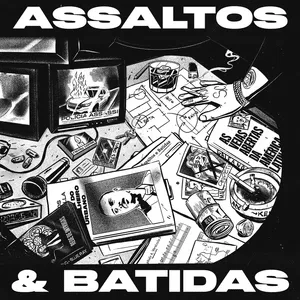
Assaltos e batidas
FBC
Political Hip Hop
2023
3
/5
O amor, o perdão e a tecnologia irão nos levar para outro planeta
FBC
Nu Disco
2021
4
/5
Baile
FBC & VHOOR
Funk Carioca
Miami Bass
Funk Brasileiro
Similar artists
1
/5
Various Artists
Afro-Funk
Alternative Rock
Ambient
4
/5
BK
Boom Bap
Brazilian Hip Hop
Brazilian Trap
4
/5
2ZDinizz
Boom Bap
Brazilian Hip Hop
Brazilian Trap
4
/5
Djonga
Boom Bap
Brazilian Hip Hop
Brazilian Trap
4
/5
Mãolee
Boom Bap
Brazilian Hip Hop
Brazilian Trap
4
/5
Gigantes
Boom Bap
Brazilian Hip Hop
Brazilian Trap
4
/5
Yago Oproprio
Boom Bap
Brazilian Hip Hop
Brazilian Trap
4
/5
Coyote Beatz
Boom Bap
Brazilian Hip Hop
Brazilian Trap
4
/5
Nansy Silvvz
Boom Bap
Brazilian Hip Hop
Brazilian Trap
4
/5
LEALL
Trap Carioca
Drill
Boom Bap
Download our mobile app
Get the Melodigging app and start digging for new genres on the go
Download on the App Store
Get it on Google Play
© 2026 Melodigging
Give feedback
Legal
Melodding was created as a tribute to
Every Noise at Once
, which inspired us to help curious minds keep digging into music's ever-evolving genres.