Genres
Artists
Albums
Make Music
Sign in
Sign in
Artists
Coldwave
Artists
Coldwave
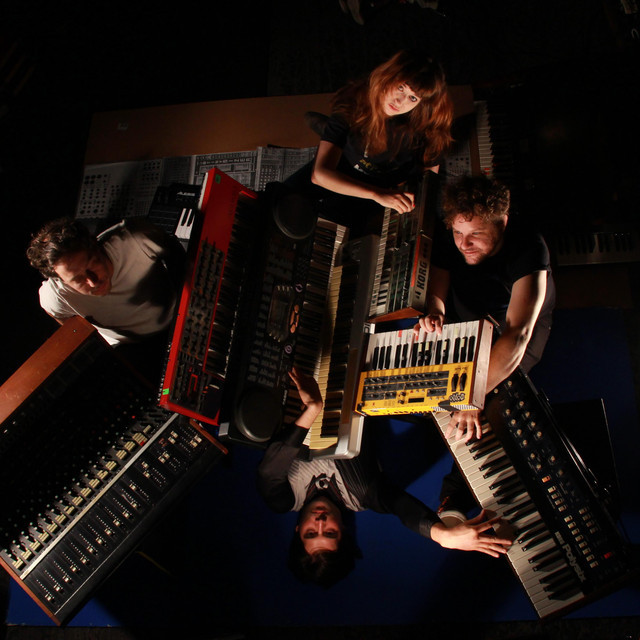
Duchess Says
2008
·
1 album
Listen
1
/5
Genres
J-Division
J-division is a contemporary Japanese media‑mix pop and hip‑hop scene centered on “2.5D” idol projects and voice‑actor (seiyu) character units. Songs are typically credited to fictional characters and performed by their voice actors, fusing glossy J‑pop with EDM drops, trap‑influenced beats, and anison (anime song) theatricality. The “division” idea reflects franchise formats that pit city‑ or team‑based units against one another in story‑driven releases, live events, and stage productions. The sound ranges from bright, dance‑floor J‑pop to cypher‑style rap tracks, often featuring tightly choreographed hooks, stacked harmonies, dramatic key changes, and narrative lyrics that extend a franchise’s worldbuilding.
Discover
Listen
Britpop Revival
Britpop revival is a 21st‑century resurgence of the bright, catchy guitar‑based British pop/rock associated with 1990s Britpop. Bands in this style channel the melodic immediacy, sing‑along choruses and wry, everyday storytelling of classic Britpop, itself rooted in 1960s British pop and mod. The sound typically features chiming or crunchy guitars, prominent hooks, mid‑to‑up‑tempo backbeats and anthemic refrains that celebrate local identity and ordinary life. Culturally, Britpop revival leans on nostalgia for the "Cool Britannia" moment while updating production sheen and festival‑ready dynamics, often positioning itself as a lively, communal alternative to darker indie trends.
Discover
Listen
Indie Québécois
Indie québécois is the independent music scene from Quebec—centered largely in Montréal and Québec City—that blends the DIY spirit of indie rock and pop with francophone songwriting traditions. It typically features a mix of guitar-driven textures, warm analog synths, and richly arranged instrumentation, while lyrics often foreground identity, urban life, and the poetic cadences of Québécois French. The sound ranges from intimate, folk-leaning songs to expansive, post‑rock and art‑pop arrangements. A bilingual culture and dense venue network fostered collaborations between francophone and anglophone artists, making the scene remarkably porous and stylistically adventurous. Festivals like POP Montréal and M for Montreal, along with labels such as Secret City, Bonsound, and (formerly) Dare to Care/Bravo Musique, helped project the scene internationally.
Discover
Listen
New Rave
New rave is a mid‑2000s British-born fusion of indie rock energy and 1990s rave sonics, dressed in day‑glo aesthetics and festival‑size hooks. It pairs live drums, guitars, and chant‑ready vocals with club‑minded synths, sawtooth leads, and heavily sidechained kicks to produce high‑octane, dance‑floor‑friendly songs. Propelled by blogs, MySpace, and hype magazines, the style emphasized communal euphoria and neon futurism while borrowing breakbeats, acid squelches, and rave stabs from earlier UK dance culture. The result is a glossy, maximal sound that feels both nostalgically 90s and distinctly 2000s in its pop-savvy immediacy.
Discover
Listen
Dance-Punk Revival
Dance-punk revival is a 2000s resurgence of the late-1970s/early-1980s dance-punk aesthetic, recast through indie-rock and contemporary club sensibilities. It blends punk’s sharp, aggressive guitars and terse, chantable vocals with disco/house rhythms, elastic funk basslines, and percussive accents such as cowbell, claps, and syncopated hi-hats. Where the original wave drew from no wave and post-punk minimalism, the revival emphasized tighter songcraft, bigger hooks, and production drawing on DJ culture and analog-digital hybrid studios. The result is nervy, kinetic music designed equally for the live stage and the dance floor, often characterized by four-on-the-floor kick drums, angular riffs, and sardonic, deadpan or shout-sung delivery.
Discover
Listen
Electroclash
Electroclash is a late-1990s/early-2000s fusion of 1980s synth-pop and new wave aesthetics with contemporary club-ready electro, techno, and house production. It pairs deadpan or detached vocals, sexually charged and ironic lyrics, and fashion-forward performance art with analog-sounding drum machines, biting synth basslines, and minimal, mechanical grooves. The style’s signature sound emphasizes retro timbres (saw/square leads, arpeggiators, vocoders), rigid four-on-the-floor or electro-funk rhythms, and a cool, decadent attitude that blurs underground club culture with pop spectacle.
Discover
Listen
Noise Rock
Noise rock is a subgenre of rock that deliberately embraces distortion, feedback, dissonance, and abrasive textures as primary musical materials rather than mere effects. It prioritizes timbre, volume, and sonic density over conventional melody and harmony, often using nonstandard tunings, prepared or detuned guitars, and extended techniques to generate harsh overtones and sheets of sound. Rhythm sections tend to be driving and repetitive, anchoring the chaos with motorik pulses, lurching grooves, or pummeling, minimal patterns. Vocals range from spoken and murmured to shouted and cathartic, with lyrics that skew cryptic, confrontational, or surreal. Aesthetically, noise rock traces a line from punk’s anti-virtuosity and DIY ethos through no wave’s iconoclasm and the avant-garde’s interest in sound-as-sound, yielding music that can be physically intense, psychologically unsettling, and artistically exploratory.
Discover
Listen
Coldwave
Coldwave is a European post-punk offshoot characterized by icy, minimalist arrangements, prominent basslines, sparse drum machines, and a detached vocal delivery. Emerging first in France (and neighboring Belgium) in the late 1970s and peaking through the mid-1980s, it blends punk’s austerity with the synthetic textures of early analog keyboards and stark, minor-key guitar figures. The mood is melancholic and introspective—often sung in French or English—favoring rigid rhythms, chorus-drenched guitars, and compact songwriting that foregrounds atmosphere over virtuosity. Its "cold" aesthetic refers as much to the emotional temperature of the music as to the gray-toned production: dry snares, steely bass, and reverb used not for lushness but for distance.
Discover
Listen
Post-Punk
Post-punk is a broadly experimental strain of rock that emerged in the late 1970s as artists sought to push beyond the speed, simplicity, and orthodoxy of first-wave punk. It typically features angular, bass-forward grooves; jagged or minimal guitar lines; stark, spacious production; and an openness to dub, funk, electronic, and avant-garde ideas. Lyrics often examine alienation, urban decay, politics, and the inner life with artful or abstract delivery. A studio-as-instrument approach, emphasis on rhythm section interplay, and an appetite for non-rock textures (tape effects, drum machines, found sound, synths) distinguish the style. The result can be danceable yet tense, cerebral yet visceral, and emotionally restrained yet intensely expressive.
Discover
Listen
Dance-Punk
Dance-punk is a fusion of punk’s abrasive energy and attitude with the groove-forward rhythms of funk and disco. It favors tight, four-on-the-floor drum patterns, rubbery and syncopated bass lines, choppy, scratchy rhythm guitars, and percussion accents like cowbell and handclaps. Vocals are often shouted, talk-sung, or delivered with sardonic cool, and lyrics tend to be ironic, urban, and socially observant. A first wave emerged in the late 1970s and early 1980s alongside post-punk and no wave scenes (especially in New York and the UK), while a high-profile revival in the early 2000s (centered around DFA Records) brought analog synths, minimalist production, and indie-club sensibilities back to the fore.
Discover
Listen
Electropunk
Electropunk fuses the confrontational energy and DIY ethos of punk with the timbres and machinery of electronic music. Instead of guitars and live drums, it leans on aggressive synthesizers, drum machines, samplers, and effects, delivering short, high-impact songs with shouted or sneered vocals. The sound is raw, minimal, and often deliberately abrasive: distorted basslines, square- and saw-tooth leads, clipped claps and snares, and overdriven mixes that prize attitude over polish. Tempos typically range from mid-tempo stomp to frenetic club pace, and arrangements favor tight verse–chorus forms, sudden breaks, and noise-washed codas. The aesthetics are anti-virtuosic, performance-art friendly, and intensely physical—made to be felt as much as heard.
Discover
Listen
Synth Punk
Synth punk is a raw, high‑energy fusion of punk’s velocity and attitude with the abrasive, synthetic timbres of analog keyboards, drum machines, and noise gear. Instead of guitar-driven riffs, synth punk typically foregrounds distorted monosynth bass lines, cheap combo organs, or primitive sequencers pounding out repetitive patterns at punk tempos. Vocals are often shouted, sneered, or delivered deadpan; lyrics skewer consumer culture, media saturation, technology, and urban alienation. Production values tend toward the minimal and DIY: overdriven inputs, tape saturation, room mics, and purposeful crudity. The result is a confrontational, mechanical churn—danceable yet hostile—that helped open a direct line between punk, early industrial, and later synth-oriented underground scenes.
Discover
Listen
Show all 12 genres
Albums
2008
1
/5
Anthologie des 3 perchoirs
Duchess Says
Electropunk
Synth Punk
Dance-Punk Revival
Similar artists
3
/5
Soulwax
Mashup
Alternative Dance
Electroclash
3
/5
TR/ST
Ebm
Synth-Pop
Coldwave
3
/5
Sextile
Synth Punk
Deathrock
Ebm
2
/5
Curses
Dark Disco
Coldwave
Dark Wave
2
/5
A Place To Bury Strangers
Coldwave
Dark Wave
Dream Pop
2
/5
Potochkine
Coldwave
Dark Wave
Ebm
2
/5
Preoccupations
Garage Psych
Post-Punk
Coldwave
2
/5
Ruth
Coldwave
Dark Wave
Electroclash
2
/5
Deux
Coldwave
Dark Wave
Electroclash
2
/5
S. Product
Coldwave
Dark Wave
Ebm
Download our mobile app
Get the Melodigging app and start digging for new genres on the go
Download on the App Store
Get it on Google Play
© 2026 Melodigging
Give feedback
Legal
Melodding was created as a tribute to
Every Noise at Once
, which inspired us to help curious minds keep digging into music's ever-evolving genres.