Genres
Artists
Albums
Make Music
Sign in
Sign in
Artists
Afrobeat
Artists
Afrobeat
DarkoVibes
Listen
3
/5
Genres
Asakaa
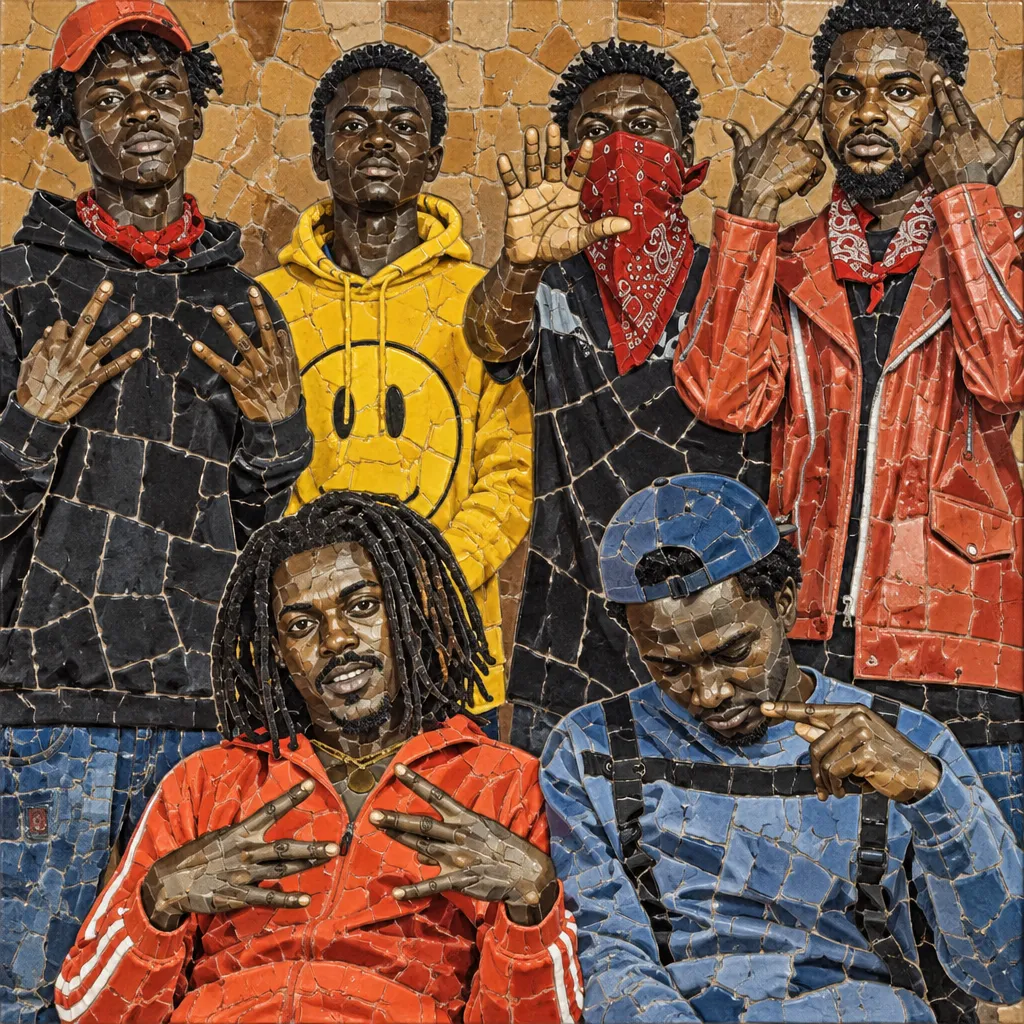
Asakaa is a Ghanaian take on drill music that emerged from Kumasi (nicknamed "Kumerica"). It fuses the cold, sliding-808 sonics of UK drill with Ghana’s hip hop lineage (hiplife and highlife influences) and street-slang storytelling in Twi and English. Typical Asakaa beats sit around 140 BPM with menacing, minor-key textures, rattling triplet hi-hats, swung drill snares, and heavy 808 glides. Lyrically, artists document street realities, crew pride, and youth culture, while hooks often use chant-like call-and-response that suits both clubs and street cyphers.
Discover
Listen
Afrobeats
Afrobeats (plural) is a contemporary West African pop umbrella that blends indigenous Nigerian and Ghanaian rhythms with global Black music—especially dancehall, hip hop, R&B, and highlife. Typical tracks sit in the mid‑tempo 95–115 BPM range and feature syncopated, polyrhythmic drum programming (shakers, rimshots, congas, talking drum), rubbery sub‑bass lines, bright synths, and guitar licks that recall highlife. Vocals are melodic and hook‑driven, often delivered in a fluid mix of English, Nigerian Pidgin, Yoruba, Twi, or other local languages, with call‑and‑response refrains tailored for dance floors. Distinct from Fela Kuti’s Afrobeat (singular), Afrobeats prioritizes songcraft, club‑ready grooves, and pop structures. It travels easily across diasporas, seamlessly absorbing UK club influences and Caribbean cadence while maintaining unmistakably West African rhythmic DNA.
Discover
Listen
Afroswing
Afroswing (often called Afro-bashment) is a UK-born fusion that blends the syncopation and feel-good bounce of afrobeats and dancehall with the cadence and street sensibility of UK rap and grime. It typically sits at a mid‑tempo groove, features warm 808 bass, sparse plucked or mallet-like melodies, and highly singable hooks. Vocals usually mix melodic rap with light Auto-Tune, weaving UK slang, Jamaican patois, and West African pidgin/vernacular into conversational, charismatic lyrics about nightlife, romance, hustle, and identity. The overall mood is bright, accessible, and rhythmically infectious, designed as much for radio and playlists as for clubs.
Discover
Listen
Alté
Alté (often stylized as alté) is a Nigerian-born, genre-fluid movement that blends alternative R&B, Afrobeats, hip hop, neo-soul, dancehall, and indie pop into a moody, atmospheric sound. It values experimentation, understated grooves, and a DIY ethos that extends from production choices to fashion, visuals, and community. Songs typically feature warm, textural synths, lightly swung Afrocentric percussion, silky vocals, and introspective lyrics delivered in English, Nigerian Pidgin, or code-switches. Rather than chasing club maximalism, alté favors mid‑tempo rhythms, lush harmony, and space for tone and texture to breathe.
Discover
Listen
Basshall
Basshall is a club-focused fusion of modern dancehall riddims with the sound design and drops of bass-heavy EDM. It keeps the dembow-derived, off‑beat swing of Jamaican dancehall while layering sub‑driven 808s, aggressive synths, and festival‑ready builds and drops borrowed from trap, electro house, and UK bass. Typical tempos sit around 95–110 BPM (or 130–140 BPM with a halftime feel). Vocals often draw on Jamaican patois toasting or catchy pop hooks, and arrangements alternate between groove-led verses and explosive, sound‑system drops. Emerging from European (especially Dutch) club culture and the global‑bass scene, Basshall spreads dancehall’s energy into big‑room contexts without losing its Caribbean rhythmic DNA.
Discover
Listen
Azonto
Azonto is a contemporary Ghanaian dance-music style built for parties, street performances, and viral choreography. Emerging in the early 2010s, it matches swaggering, humorous dance moves with catchy call-and-response hooks and MC-led verses. Musically, Azonto sits on a bright, syncopated 4/4 groove—often between 105–130 BPM—with crisp handclaps, off‑beat hi‑hats, bouncing kick patterns, and short melodic riffs from synths, bell/mallet tones, or plucks. Harmony is usually minimal (two to four repeating chords), keeping the spotlight on rhythm, energy, and vocal interplay. Lyrics blend Twi, Ga, and Ghanaian Pidgin with English, and celebrate fashion, flirtation, everyday jokes, and local slang. The genre rose with dance challenges and YouTube-era virality, helping push West African pop into UK and global club culture. Signature tracks include Sarkodie & E.L.’s “U Go Kill Me,” Fuse ODG’s “Azonto” and “Antenna,” Castro’s “Azonto Fiesta,” and Gasmilla’s “Aboodatoi.”
Discover
Listen
Afropop
Afropop is a modern, pan‑African pop style that blends West and Central African rhythmic traditions with global pop, R&B, hip hop, dancehall, and electronic production. It favors catchy toplines, call‑and‑response hooks, bright guitar licks inspired by highlife and soukous, and mid‑tempo grooves designed for dancing. Songs are often multilingual, moving fluidly between English or French and local languages or pidgins, while lyrics center on romance, joy, aspiration, and celebration. Production commonly uses syncopated percussion, warm sub‑bass, plucky synths or marimbas, and clean, melodic vocals (often with tasteful Auto‑Tune), resulting in an upbeat, accessible sound with unmistakably African groove and feel.
Discover
Listen
Ghanaian Hip Hop
Ghanaian hip hop is the local adaptation of hip hop culture and rap aesthetics within Ghana’s musical and linguistic landscape. It blends core hip hop elements—MCing, DJ/production, and street poetry—with Ghanaian rhythms and cadences drawn from highlife and contemporary Afrobeats. Artists often rap in a fluid mix of English, Ghanaian Pidgin, and local languages such as Twi, Ga, Fante, Ewe, and Hausa. Production ranges from boom-bap and sample-based beats to trap and drill textures, frequently accented by highlife guitar figures, kpanlogo-derived percussion, and danceable Afrobeats grooves. Lyrically, the genre balances braggadocio and wordplay with storytelling, proverbs, social commentary, and aspirational “hustle” themes.
Discover
Listen
Hiplife
Hiplife is a Ghanaian fusion of classic highlife rhythms and melodies with hip hop’s rapped delivery, drum programming, and sampling aesthetics. Built around mid‑tempo grooves, hiplife typically marries syncopated, guitar-led highlife riffs and horn stabs with hip hop drum patterns, dancehall energy, and catchy R&B‑style hooks. Artists rap predominantly in Ghanaian languages (Twi, Ga, Ewe) and Ghanaian Pidgin English, foregrounding local idioms, humor, social commentary, and storytelling. The result is a vibrant, dance‑forward urban pop sound that remains unmistakably Ghanaian while being fully conversant with global rap and Caribbean diasporic styles.
Discover
Listen
Afrobeat
Afrobeat is a horn-driven, polyrhythmic, and politically charged style that emerged in Nigeria, spearheaded by bandleader Fela Kuti and drummer Tony Allen. It fuses West African highlife and juju with American funk, jazz, and soul to create extended, hypnotic grooves. Typical tracks revolve around interlocking guitar and keyboard ostinatos, elastic bass vamps, dense percussion (shekere, congas, agogô, cowbell), and tightly arranged horn riffs that punctuate the beat. Vocals often use call-and-response and socially conscious lyrics, delivered in English, Nigerian Pidgin, or Yoruba. Harmonically sparse but rhythmically intricate, Afrobeat prioritizes feel: long, evolving arrangements, richly syncopated drum patterns, and sectional dynamics that spotlight solos and collective interplay.
Discover
Listen
Hip Hop
Hip hop is a cultural and musical movement that emerged from Black, Latino, and Caribbean communities, centering around rapping (MCing), DJing/turntablism, sampling-based production, and rhythmic speech over beats. It prioritizes groove, wordplay, and storytelling, often reflecting the social realities of urban life. Musically, hip hop is built on drum-centric rhythms (from breakbeats to 808 patterns), looped samples, and bass-forward mixes. Lyrically, it ranges from party anthems and braggadocio to political commentary and intricate poetic forms, with flow, cadence, and rhyme density as core expressive tools. Beyond music, hip hop encompasses a broader culture, historically intertwined with graffiti, b-boying/b-girling (breakdance), fashion, and street entrepreneurship, making it both an art form and a global social language.
Discover
Listen
Highlife
Highlife is a popular music genre from Ghana that blends indigenous rhythmic cycles and song forms with Western instrumentation and harmonies. It is instantly recognizable by its bright, interlocking guitar lines (often played with a two‑finger plucking technique), buoyant polyrhythms, call‑and‑response vocals, and jazzy horn riffs. Early dance‑band highlife favored brass and woodwinds (trumpet, saxophone, trombone) and big‑band arrangements, while guitar‑band highlife drew from palm‑wine guitar styles with lighter, lilted grooves. Across its variants, the music typically sits in major or mixolydian tonalities and uses dominant 7th/9th chord colors. From its coastal roots in the late 19th and early 20th centuries to post‑independence urban dance halls, highlife has continually evolved, later embracing electric guitars, synthesizers, and drum machines—yielding contemporary uptempo, synth‑driven forms that still retain the genre’s danceable feel.
Discover
Listen
Show all 12 genres
Similar artists
3
/5
AratheJay
Asakaa
Afro R&b
Afro Soul
4
/5
Joeboy
Afroswing
Hiplife
Nigerian Pop
4
/5
King Promise
Highlife
Hiplife
Azonto
4
/5
R2Bees
Afrobeat
Afrobeats
Afropop
4
/5
Teni
Hiplife
Afrobeat
Afrobeats
3
/5
Stonebwoy
Afrobeat
Afrobeats
Afropop
3
/5
Joey B
Afro Drill
Afrobeat
Afropop
3
/5
Show Dem Camp
Alté
Afro R&b
Afro Soul
3
/5
Smallgod
Afro Drill
Afrobeat
Afrobeats
3
/5
M.anifest
Afrobeat
Afrobeats
Afropop
Download our mobile app
Get the Melodigging app and start digging for new genres on the go
Download on the App Store
Get it on Google Play
© 2026 Melodigging
Give feedback
Legal
Melodding was created as a tribute to
Every Noise at Once
, which inspired us to help curious minds keep digging into music's ever-evolving genres.