Genres
Artists
Albums
Make Music
Sign in
Sign in
Artists
Axé
Artists
Axé
Casa Fanti Ashanti
1 album
Listen
2
/5
Genres
Axé
Axé is a high-energy popular music from Salvador, Bahia, that fuses Afro-Brazilian and Caribbean rhythms with pop and rock songcraft. Designed for massive Carnival parades, it pairs large percussion ensembles with bright electric guitars, brass hooks, and call-and-response vocals to drive dancing crowds along the trio elétrico (truck-mounted sound stages). Grounded in afoxê/ijexá and samba-reggae grooves, axé favors upbeat major-key melodies, anthemic choruses, and lyrics celebrating joy, love, summer, Afro-Bahian pride, and the collective ecstasy of the street party. Its sound is at once percussive and melodic: layered surdos, timbales, repiniques, and atabaques interlock beneath catchy horn lines and pop arrangements built to move tens of thousands of revelers.
Discover
Listen
Traditional Folk
Traditional folk is a broad umbrella for orally transmitted songs and dance tunes that circulated in rural and working-class communities before the age of mass recording. Repertoires include narrative ballads, laments, love songs, work songs, lullabies, and instrumental dance sets such as reels, jigs, hornpipes, and marches. Stylistically, traditional folk favors strophic forms, pentatonic or modal melodies (often Dorian and Mixolydian), limited harmonic movement, and strong, memorable tunes designed for communal singing and dancing. Performances range from unaccompanied solo voice to small ensembles built around fiddle, flute/whistle, pipes, concertina/accordion, guitar, banjo, and frame drum. Ornamentation, variation by verse, and flexible tempo are integral, reflecting an oral tradition where songs live through continual reinterpretation. Although it is pan‑regional, the modern idea of “traditional folk” coalesced in the 19th century through collectors and revivalists who documented vernacular music and framed it as cultural heritage.
Discover
Listen
Candomblé Music
Candomblé music is the sacred musical practice of the Afro-Brazilian religion Candomblé. It centers on polyrhythmic drumming ensembles, call-and-response singing, and dance that invites the presence (incorporation) of the orixás (divinities). The core ensemble features three hand-played atabaque drums (rum, rumpi, and lê), metal bells (agogô), and rattles/shakers (xequerê, adjá), with the lead drummer (alabê) cueing changes in rhythm and energy. Stylistically, it preserves multiple West and Central African lineages—especially Yoruba (Ketu/Nagô), Fon/Ewe (Jeje), and Kongo/Angola—expressed in distinct toques (rhythmic patterns) such as ijexá, alujá, agueré, congo, and opanijé. Chants are performed in liturgical languages (predominantly Yoruba/Nagô, as well as Kikongo/Kimbundu and Fon) and in Portuguese, using a responsorial texture led by a solo cantor with a unison chorus. The music is not entertainment but ritual: every rhythm, melody, and text is tied to specific orixás, colors, dances, and ceremonial moments. Beyond the terreiro (temple), Candomblé’s musical vocabulary has profoundly shaped Brazilian popular music, from afoxé and samba de roda to axé and MPB, especially through the diffusion of the ijexá timeline and call-and-response vocal aesthetics.
Discover
Listen
Albums
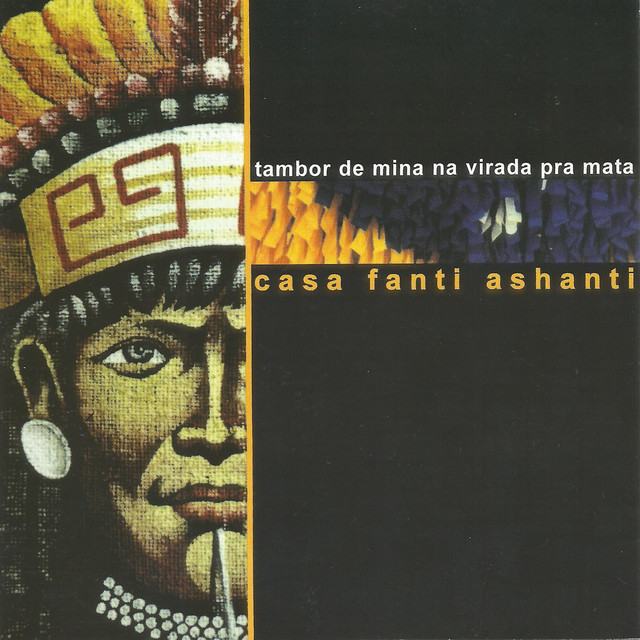
Tambor de Mina
Casa Fanti Ashanti
Candomblé Music
Similar artists
1
/5
Eloah
Axé
Traditional Folk
Afoxê
2
/5
A Barca
Axé
Forró
Forró Tradicional
2
/5
Roque Ferreira
Samba De Roda
Axé
Samba
1
/5
Jongo da Serrinha
Axé
Candombe
Samba
1
/5
Ismael Rangel
Axé
Traditional Folk
Jongo
1
/5
Jongo do Vale do Café
Axé
Traditional Folk
Jongo
1
/5
Jongo do Quilombo São José
Axé
Traditional Folk
1
/5
Jongo de Pinheiral
Axé
Traditional Folk
1
/5
Carlos Pita
Axé
Traditional Folk
Cantoria
3
/5
Carlinhos Brown
Samba-Reggae
Axé
Modern Downshift
Download our mobile app
Get the Melodigging app and start digging for new genres on the go
Download on the App Store
Get it on Google Play
© 2026 Melodigging
Give feedback
Legal
Melodding was created as a tribute to
Every Noise at Once
, which inspired us to help curious minds keep digging into music's ever-evolving genres.