Your digging level
Description
Afoxê is an Afro‑Brazilian carnival music and performance tradition that emerged in Salvador da Bahia in the early 20th century. It is rooted in the Candomblé religion and centers on the ijexá (ijexá/ijexá) rhythm associated with the Ijexá nation of Yoruba origin.
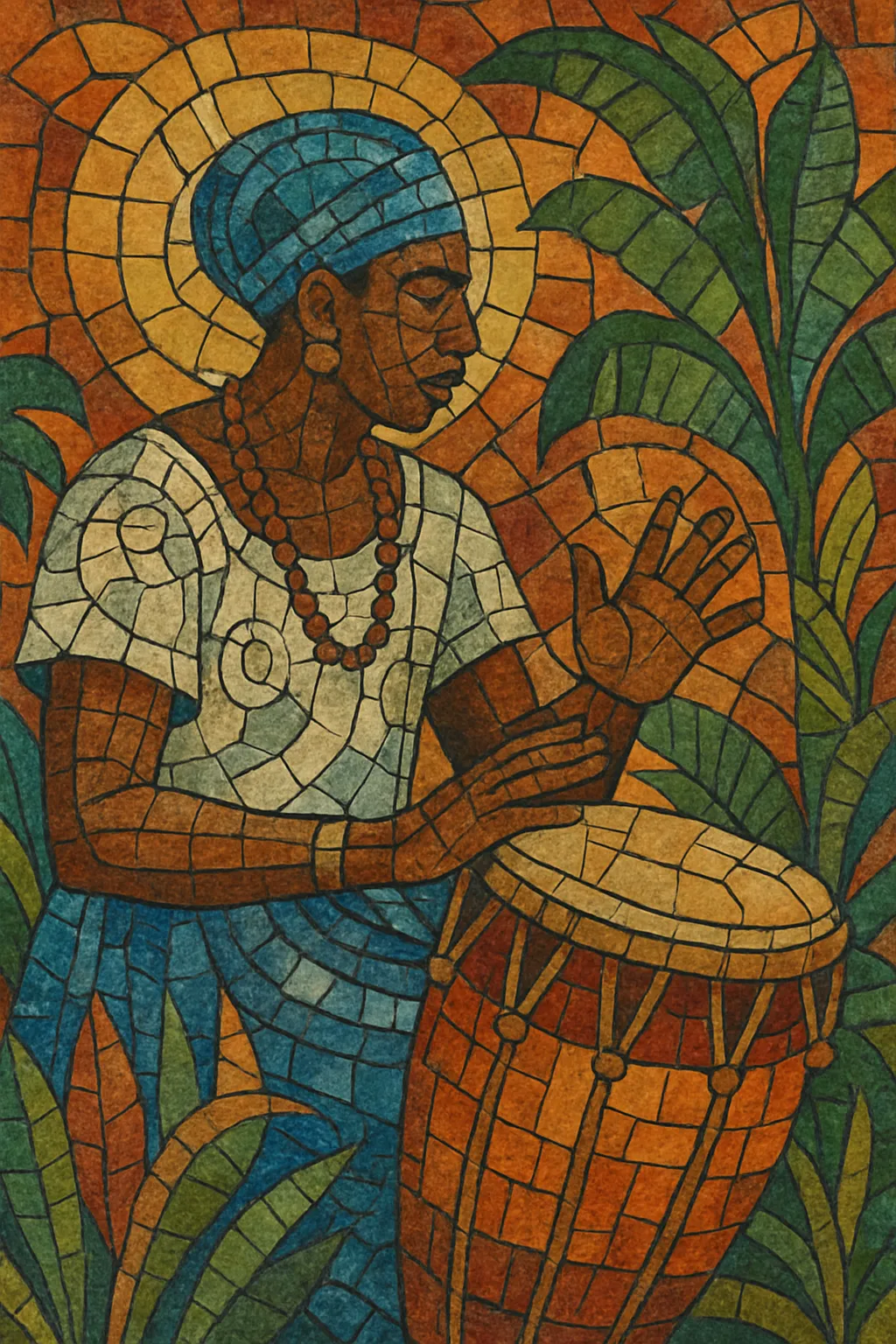
Beyond a musical style, afoxê denotes the cultural and religious blocos (processional groups) that present choreographed parades with call‑and‑response singing, ritual language, praise to orixás (deities), and an instrumentation led by atabaque drums, agogô bells, xequerê (shekere), and other hand percussion. While sacred in origin, afoxê became a visible, affirming expression of Afro‑Brazilian identity in Carnival, later informing popular Bahian music and the national soundscape.
History
Afoxê coalesced in Salvador (Bahia), where Afro‑Brazilian religious communities brought Candomblé rhythms and chants into public procession. The ijexá rhythm—tied to the Yoruba Ijexá nation—became the pulse of these parades, translating liturgical drumming, call‑and‑response singing, and praise texts to orixás into a festive, yet reverent, street practice during Carnival.
Afoxê denotes both the groups (blocos) and the music they play. These groups maintained ritual aesthetics (white garments, beadwork, symbolic colors of orixás) while adapting performance for secular public space.
A landmark in the tradition’s visibility was Afoxé Filhos de Gandhy (founded 1949), whose serene, processional style and ijexá groove became iconic in Salvador’s Carnival. Throughout mid‑century, afoxê served as a cultural and religious entity safeguarding Afro‑Bahian heritage amid rapid urban and musical change.
From the 1970s, the rise of blocos afro in Bahia and Pernambuco created a broader Black cultural movement. While distinct from samba‑reggae and other emergent styles, afoxê’s ijexá rhythm and Afro‑spiritual framing strongly informed the sound worlds that later fed Bahian pop and axé music. MPB artists (e.g., Caetano Veloso, Gilberto Gil) incorporated ijexá into songs, bringing afoxê’s cadence to national and international audiences.
In Pernambuco (Recife/Olinda), afoxê groups (e.g., Alafin Oyó, Ylê de Egbá) reaffirmed the tradition within local Carnival, intertwining with regional Afro‑Brazilian identities.
Today afoxê sits at the intersection of sacred and popular spheres: processional, community‑based, and deeply tied to Candomblé cosmology, yet also a stylistic reservoir for Brazilian popular music. Performances continue to feature choreography, ritual language, and percussion‑led ensembles, sustaining a century‑long lineage of Afro‑Brazilian cultural preservation and public celebration.