Genres
Artists
Albums
Make Music
Sign in
Sign in
Artists
Avant-Garde
Artists
Avant-Garde
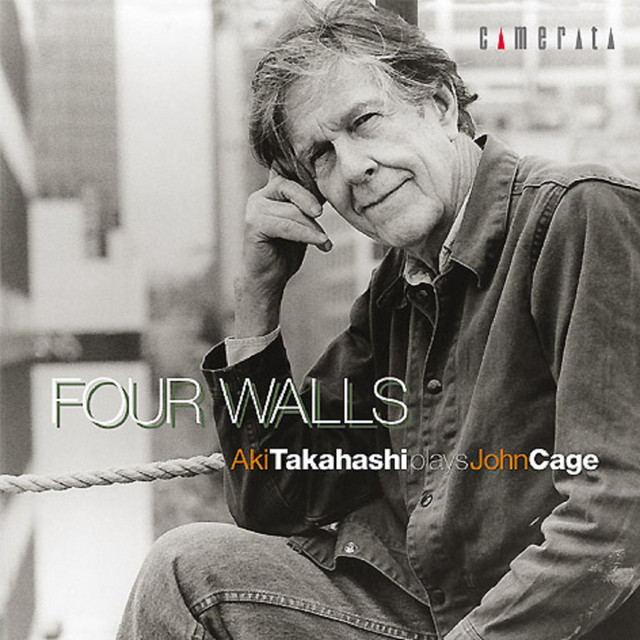
Aki Takahashi
1999–2010
·
2 albums
Listen
1
/5
Genres
Minimalism
Minimalism is a style of Western art music that emerged in the United States during the 1960s, characterized by the use of very limited musical materials, steady pulse, and extensive repetition. Composers often build pieces from short cells or motifs that are repeated and slowly transformed through additive or subtractive processes, phase shifting, and gradual changes in harmony, texture, or register. Harmony is typically consonant (often modal or diatonic), though just intonation and extended drones are also common. The result is music that foregrounds process, clarity, audibility of structure, and a hypnotic sense of stasis and flow. Typical ensembles include keyboards, mallet percussion, strings, winds, voices, and electronics or tape. Minimalism influenced a wide array of later styles, from ambient and new age to post-minimalism and minimal techno.
Discover
Listen
Stochastic Music
Stochastic music is a 20th‑century avant‑garde approach in which musical parameters are governed by probability theory and random processes rather than fixed, note‑by‑note determination. Instead of traditional melody and harmony, composers shape "sound masses" by controlling statistical features like density, event rate, pitch distributions, durations, and dynamics. Typical tools include Gaussian, Poisson, and Markov processes, which create evolving textures, swarms, and clouds of sound—often realized in both orchestral and electroacoustic settings. The term is most closely associated with Iannis Xenakis, who formalized the method and demonstrated it in landmark works and writings, but it has deeply influenced computer music, experimental electronic practices, and later microsound/granular approaches.
Discover
Listen
Avant-Garde
Avant-garde music is an umbrella term for boundary-pushing practices that challenge prevailing norms of harmony, rhythm, timbre, form, and performance. It privileges experimentation, conceptual rigor, and a willingness to reframe what counts as music at all. Historically tied to early 20th‑century artistic modernism, avant-garde music introduced atonality, the emancipation of noise, and new forms of notation and process. It embraces indeterminacy, extended techniques, electronics, spatialization, and multimedia performance, treating sound as material to be sculpted, questioned, and reinvented.
Discover
Listen
Classical Piano
Classical piano is the tradition of composing and performing music for the acoustic piano within the Western classical lineage. It emphasizes formal clarity, tonal harmony, contrapuntal writing, and expressive nuance across the full compass of the instrument. Its core repertoire ranges from Classical-era sonatas and variations to Romantic character pieces, études, dances, and 20th-century impressionistic and modernist works. Pianists exploit dynamics, articulation, pedaling, and touch to shape phrases, imitate orchestral textures, and project both intimate lyricism and large-scale drama.
Discover
Listen
Classical
Classical music is the notated art-music tradition of Europe and its global descendants, characterized by durable forms, carefully codified harmony and counterpoint, and a literate score-based practice. The term “classical” can refer broadly to the entire Western art-music lineage from the Medieval era to today, not just the Classical period (c. 1750s–1820s). It privileges long-form structures (such as symphonies, sonatas, concertos, masses, and operas), functional or modal harmony, thematic development, and timbral nuance across ensembles ranging from solo instruments to full orchestras and choirs. Across centuries, the style evolved from chant and modal polyphony to tonal harmony, and later to post-tonal idioms, while maintaining a shared emphasis on written notation, performance practice, and craft.
Discover
Listen
Japanese Classical
Japanese classical refers to the courtly, religious, theatrical, and chamber traditions that crystallized in Japan from the Nara and Heian periods onward. It encompasses Gagaku (imperial court music), Shinto ritual music (kagura), Buddhist chant (shōmyō), Noh and Kabuki repertories (e.g., nagauta, jōruri), and chamber music for koto, shamisen, and shakuhachi (sankyoku). The style emphasizes modal color (ryō and ritsu modes, along with later in/yo pentatonic variants), the dramatic architecture of jo–ha–kyū (slow introduction, development, swift conclusion), and the aesthetic of ma (meaningful silence/space). Textures are often heterophonic or layered, timbres are cultivated for breathy, reedy, and bell-like colors (e.g., shō, hichiriki, ryūteki), and rhythm can range from free-flowing chant to stately ceremonial cycles. The result is a contemplative yet ceremonially powerful sound world distinct from Western common-practice tonality.
Discover
Listen
Albums
2010
1
/5
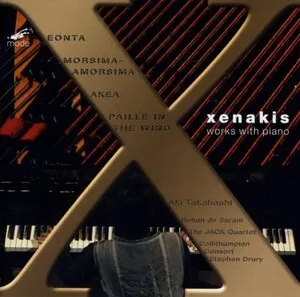
Works With Piano
Iannis Xenakis Ιάννης Ξενάκης
Stochastic Music
1999
1
/5
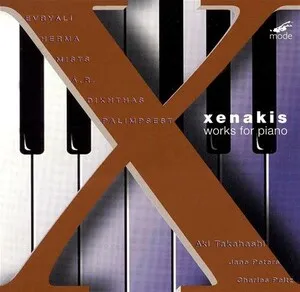
Works for Piano
Iannis Xenakis Ιάννης Ξενάκης
Stochastic Music
Classical
Similar artists
1
/5
Various Artists
Afro-Funk
Alternative Rock
Ambient
2
/5
Ensemble Modern
Minimalism
Avant-Garde
Classical
2
/5
Frederic Rzewski
Avant-Garde
Classical Piano
Experimental
2
/5
Boris Berman
Avant-Garde
Classical Piano
Minimalism
1
/5
Irina Kataeva
Avant-Garde
Classical Piano
Minimalism
1
/5
Sabine Liebner
Avant-Garde
Classical Piano
Experimental
1
/5
Irvine Arditti
Chamber Music
Avant-Garde
Étude
1
/5
Kasper de Roo
Avant-Garde
Japanese Classical
Minimalism
2
/5
Karlheinz Stockhausen
Integral Serialism
Serialism
Darmstadt School
1
/5
Stephen Drury
Avant-Garde
Minimalism
Ballet
Download our mobile app
Get the Melodigging app and start digging for new genres on the go
Download on the App Store
Get it on Google Play
© 2026 Melodigging
Give feedback
Legal
Melodding was created as a tribute to
Every Noise at Once
, which inspired us to help curious minds keep digging into music's ever-evolving genres.