Genres
Make Music
Artists
Albums
Challenges
Sign in
Sign in
Albums
By Midori Takada
Albums
By Midori Takada
You Who Are Leaving to Nirvana
July 22, 2022
Listen
1
/5
Genres
East Asian Classical Music
East Asian classical music refers to the interconnected courtly, ritual, and elite art-music traditions of China, Korea, Japan, and (historically) Vietnam that share a deep lineage in classical Chinese musical thought and repertory. At its core are Confucian ceremonial aesthetics, pentatonic modal systems, heterophonic ensemble textures, and codified repertoires transmitted through court institutions, temples, and literati circles. Signature sound worlds include China’s refined guqin and yayue court ensembles, Japan’s stately gagaku and Buddhist shōmyō chant, Korea’s aak (Confucian ritual), hyangak/dangak, and jeongak (court and aristocratic music), and Vietnam’s nhã nhạc (Huế court music). The result is a family of traditions marked by timbral subtlety (e.g., sho chord clusters, hichiriki reeds, silk-string zithers), flexible but ceremonially structured rhythm, and modal nuance—often conveying grandeur, contemplation, and ritual solemnity.
Discover
Listen
Shōmyō
Shōmyō (声明) is a form of Japanese Buddhist chant practiced primarily in the Tendai and Shingon traditions. It is an a cappella, liturgical vocal music used to intone sutras, dhāraṇī, hymns, and ritual formulae in temples. Two main stylistic groupings are recognized: - Ryokyoku (呂曲): the more elaborate, melismatic, and technically demanding style. - Rikkyoku (律曲): the simpler, more syllabic, and easier-to-memorize style. Textures are predominantly unison (male monastic voices), with free, breath-governed rhythm and subtle microtonal inflection. Although primarily unaccompanied, wooden blocks (mokugyō), bowl gongs (keisu), or hand-clapping may mark ritual timing in certain services. Texts appear in Sino-Japanese (kanbun) and in Sanskrit (Siddhaṃ/seed syllables) as transmitted through Buddhist liturgy.
Discover
Listen
Buddhist Music
Buddhist music is the broad family of liturgical chant and ritual sound practices associated with Buddhist traditions across Asia. It centers on the vocal recitation of sutras, mantras, and dhāraṇīs, often performed a cappella by monastics or lay chanters, and is designed to aid concentration, devotion, and the transmission of teachings. While primarily vocal and modal, instrumentation appears in many regional practices: Tibetan rituals feature low multiphonic chant with drums, large cymbals, horns, and shawms; Chinese fanbai and Korean beompae retain courtly timbres; Japanese shōmyō emphasizes refined, unison vocal lines; and Theravāda communities in Southeast Asia maintain austere Pāli chant with minimal or no accompaniment. Common traits include restricted melodic ambitus, formulaic melodic contours, free or flexible rhythm, and text-forward delivery in sacred languages such as Pāli, Sanskrit, Tibetan, Chinese, Korean, and Japanese.
Discover
Listen
Similar albums
2010
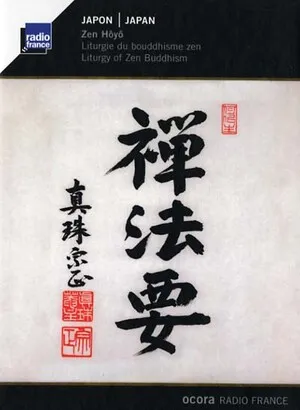
Japon : Zen hôyô, liturgie du bouddhisme zen
Moines du temple Daitokuji de Kyôto
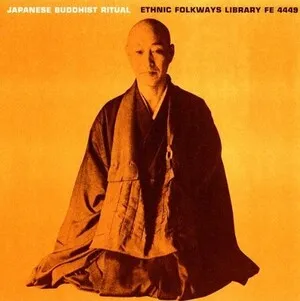
1954
Japanese Buddhist Ritual
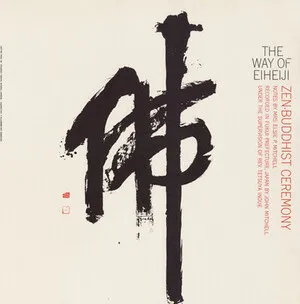
1959
The Way of Eiheiji: Zen-Buddhist Ceremony
The Monks of the Eiheiji 曹洞宗大本山永平寺
2018
Selwa
Ani Chöying Drolma & Steve Tibbetts
1997
Chö
Ani Chöying Drolma & Steve Tibbetts
1977
Japan: Shakuhachi - The Japanese Flute
Kohachiro Miyata
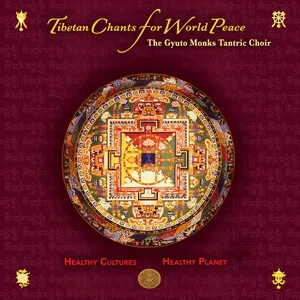
2008
Tibetan Chants for World Peace
The Gyuto Monks Tantric Choir
1990
Japan: Traditional Vocal & Instrumental Music
Kengyo Mitsuzaki 光崎検校 / Kōtō Minezaki 峰崎勾当
1976
Gagaku and Beyond
Herbie Mann
1991
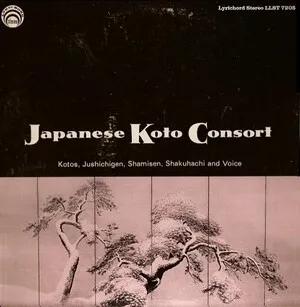
Japanese Koto Consort: Kotos, Jushichigen, Shamisen, Shakuhachi and Voice
Master Musicians of the Ikuta School
Download our mobile app
Get the Melodigging app and start digging for new genres on the go
Download on the App Store
Get it on Google Play
© 2026 Melodigging
Give feedback
Legal
Melodding was created as a tribute to
Every Noise at Once
, which inspired us to help curious minds keep digging into music's ever-evolving genres.