Your digging level
Description
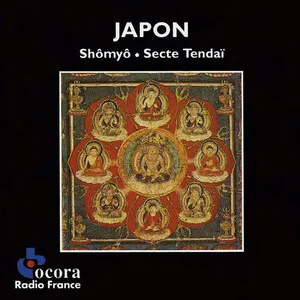
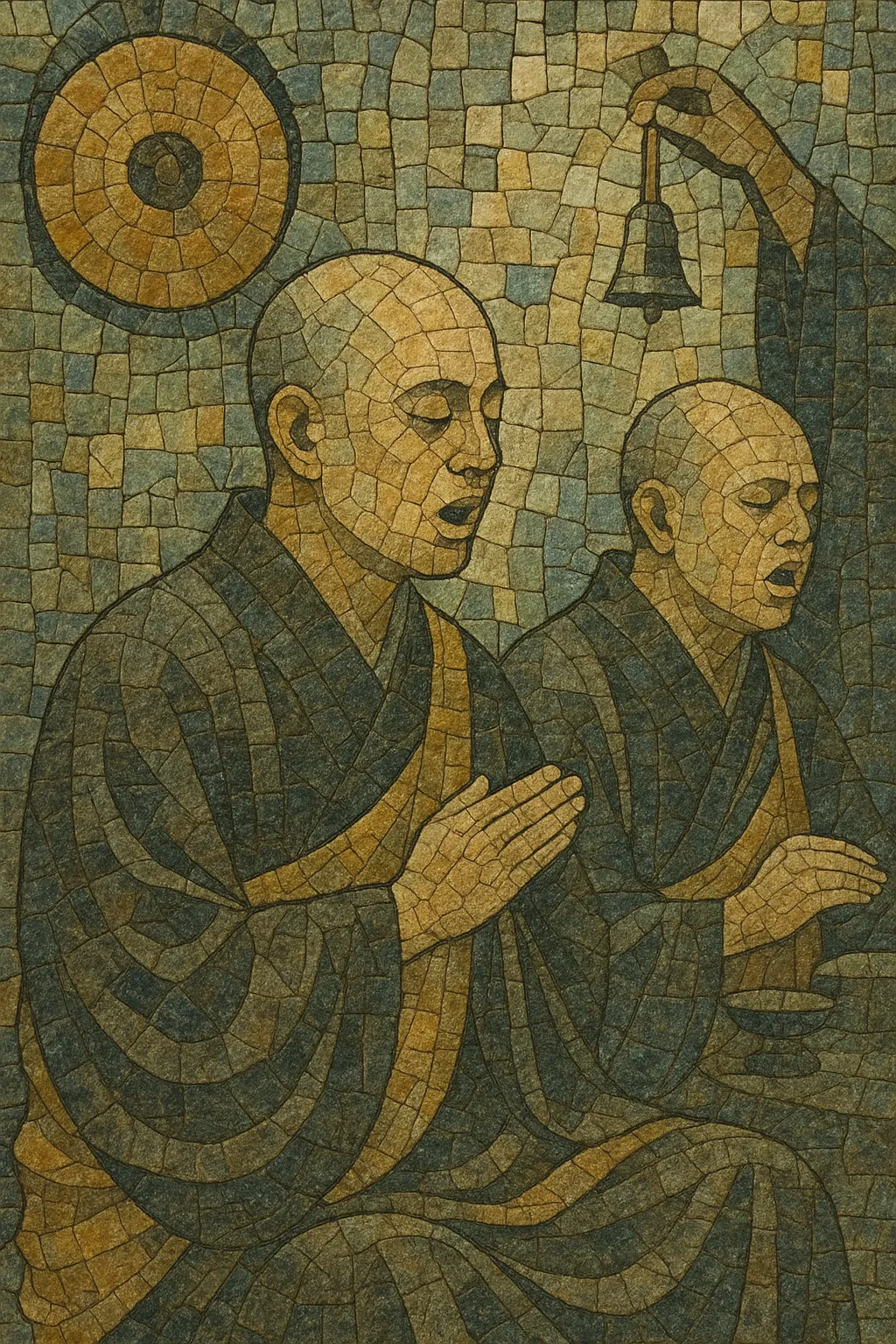
Shōmyō (声明) is a form of Japanese Buddhist chant practiced primarily in the Tendai and Shingon traditions.
It is an a cappella, liturgical vocal music used to intone sutras, dhāraṇī, hymns, and ritual formulae in temples.
Two main stylistic groupings are recognized:
• Ryokyoku (呂曲): the more elaborate, melismatic, and technically demanding style. • Rikkyoku (律曲): the simpler, more syllabic, and easier-to-memorize style.Textures are predominantly unison (male monastic voices), with free, breath-governed rhythm and subtle microtonal inflection. Although primarily unaccompanied, wooden blocks (mokugyō), bowl gongs (keisu), or hand-clapping may mark ritual timing in certain services. Texts appear in Sino-Japanese (kanbun) and in Sanskrit (Siddhaṃ/seed syllables) as transmitted through Buddhist liturgy.
History
Buddhist chant reached Japan alongside Buddhism via Korea and China, taking root during the Nara and Heian periods. With the establishment of Shingon (by Kūkai) and Tendai (by Saichō) in the early 800s, a specifically Japanese chant tradition—shōmyō—was codified for temple ritual. Its modal thinking was shaped by continental liturgical practice and adapted to Japanese linguistic and aesthetic sensibilities.
Temple lineages standardized repertories, melodic formulas, and transmission methods. Two broad stylistic families emerged: ryokyoku (ornate, melismatic, demanding) and rikkyoku (more syllabic, pedagogically accessible). These correspond to different pedagogical aims and ritual functions, and are taught within sectarian schools (e.g., Tendai at Enryaku‑ji; Shingon lineages such as Buzan‑ryū and Chizan‑ryū).
While shōmyō relies heavily on oral transmission (master–disciple), mnemonic syllables and specialized neumatic/character notations (various “fu” systems) have long supported teaching. Modern editions may also use staff notation, but performance practice—free rhythm, nuanced pitch approach, timbre—is embedded in oral pedagogy.
Through medieval and Edo periods, shōmyō remained integral to monastic education and public ritual. The Meiji Restoration’s secular reforms challenged temple culture, but chant persisted. In the 20th century, preservation societies and professional temple ensembles began concertizing and recording (in Japan and abroad), bringing shōmyō to new audiences. Contemporary composers and ambient/drone artists have drawn inspiration from its sustained tones and ritual temporality.
Shōmyō is actively maintained in major Tendai and Shingon centers (Mount Hiei/Enryaku‑ji; Mount Kōya/Kongōbu‑ji; Kyoto’s Daigo‑ji and Tō‑ji), performed in liturgy and on the concert stage. Ensembles such as Shōmyō no Kai have helped document and disseminate repertory globally.