Genres
Make Music
Artists
Albums
Challenges
Sign in
Sign in
Albums
By Oruç Güvenç ve Tümata
Albums
By Oruç Güvenç ve Tümata
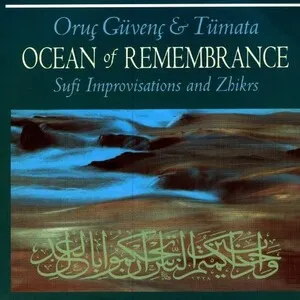
Ocean of Remembrance: Sufi Improvisations & Zhikrs
1995
Listen
2
/5
Genres
Turkish Classical
Turkish classical (Ottoman/Turkish art music) is a refined modal art tradition centered on the makam (scale/melodic behavior) system and cyclical rhythms called usul. It developed in the Ottoman court, Mevlevi lodges, and urban salons, using an intimate chamber instrumentation (ney, tanbur, ud, kemençe, kanun, keman) and highly ornamented vocal lines. Compositions follow characteristic forms such as peşrev and saz semaisi (instrumental), as well as vocal forms like beste, kar, semai, yürük semai, and the later şarkı. Improvisation (taksim) introduces and connects sections, exploring the seyir (melodic path) of the chosen makam with nuanced microtonal inflections. Its aesthetic emphasizes subtle emotion, controlled ornamentation, and measured development, with repertoire spanning sacred (Mevlevi ayin) and secular works. The tradition balances composed structure and spontaneous improvisation, cultivated through the meşk (master–apprentice) pedagogy.
Discover
Listen
Turkish Music
Turkish music is a broad umbrella encompassing the courtly classical traditions of the Ottoman era, regional folk styles of Anatolia and Thrace, Sufi devotional practices, and modern popular forms that blend local aesthetics with global genres. Its classical core is organized by makam (melodic modes) and usul (cyclical rhythms), using microtonal intervals and rich ornamentation. Instruments such as oud (ud), tanbur, ney, kanun, bağlama (saz), kemençe, and a variety of frame and goblet drums are central. Folk idioms feature asymmetrical meters (like 9/8 or 7/8), call‑and‑response vocals, and dance forms like halay and çiftetelli. Since the 20th century, Turkish music has integrated Western harmony, orchestration, and production techniques, giving rise to arabesk, Anatolian rock, Turkish pop, and hip hop while maintaining the expressive depth and modal nuance characteristic of its older traditions.
Discover
Listen
Sufi
Sufi is a devotional musical tradition rooted in Islamic mysticism that seeks to induce remembrance of the Divine (dhikr) and transport performers and listeners toward spiritual ecstasy (wajd). It is not a single uniform style, but a family of practices that vary across regions—most notably Persian/Iranian, Anatolian/Turkish (Mevlevi), Arab, and South Asian (qawwali, kafi). Musically, Sufi repertoire tends to revolve around repetitive, mantra-like refrains, call-and-response between lead and chorus, and gradual intensification over cyclical rhythms. Melodic language draws from regional modal systems such as the Persian dastgāh, Ottoman/Turkish makam, and South Asian raga, and is often supported by drones. Texts are central: poetry by mystic masters like Rumi, Hafez, Bullhe Shah, and Amir Khusrau is sung in Persian, Urdu, Punjabi, Arabic, Turkish, and other languages. Instrumentation varies by locale—harmonium, tabla/dholak, tanpura, and clapping in South Asia; ney, kudüm, bendir, and tanbur in Turkey; oud and frame drums across the Arab world—yet the unifying aim is spiritual uplift and inner transformation.
Discover
Listen
Islamic Religious Music & Recitation
Islamic religious music and recitation encompasses the sacred vocal arts of Islam, centered on Qur'an recitation (tilāwah/tajwīd), the call to prayer (adhān), devotional chant (dhikr), praise poetry (madīh, na‘t), and paraliturgical song traditions such as nasheed, qasidah, and Sufi samā‘. While many Muslims distinguish Qur'anic recitation from "music" and regard it as a unique sacred art bound by rules of tajwīd and pious intent, its sound-world overlaps with regional musical systems (especially the Arabic maqām tradition) through modal nuance, melisma, and ornamentation. Across regions, the genre ranges from unaccompanied, metrically free recitation and adhān, to percussion-accompanied nasheed, and to more elaborate Sufi traditions (e.g., qawwali) with call-and-response, rhythmic cycles, and ecstatic crescendos—all unified by devotional texts, ethical themes, and reverence for the divine.
Discover
Listen
Similar albums
1994
Whirling
Omar Faruk Tekbilek
2004
Himma
Sufi Music Ensemble
1997
The Music of Islām: Volume Nine - Mawlawiyah Music of the Whirling Dervishes
Galata Mevlevi Music & Sema Ensemble
1994
Ney Taksimleri (Improvisation Ney Music)
M. Sadreddin Özçimi
1978
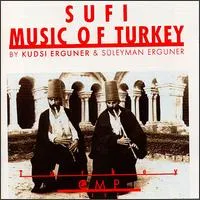
Sufi Music of Turkey
Kudsi Erguner & Süleyman Erguner
2004
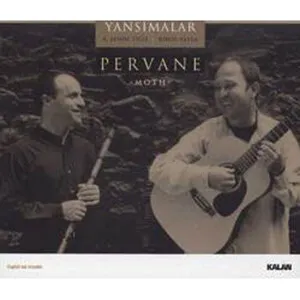
Pervane
Yansımalar
2000
Serzeniş
Yansımalar
2009
Istanbul: Dimitrie Cantemir 1673-1723 - "Le livre de la science de la musique" et les traditions musicales Sépharades e…
Dimitrie Cantemir
2001
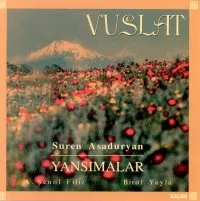
Vuslat
Yansımalar & Suren Asaduryan
1994
Dergâh
Ercan Irmak
Download our mobile app
Get the Melodigging app and start digging for new genres on the go
Download on the App Store
Get it on Google Play
© 2026 Melodigging
Give feedback
Legal
Melodding was created as a tribute to
Every Noise at Once
, which inspired us to help curious minds keep digging into music's ever-evolving genres.