Genres
Make Music
Artists
Albums
Challenges
Sign in
Sign in
Albums
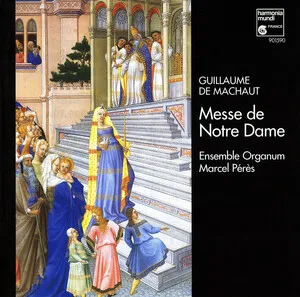
By Ensemble Organum
Albums
By Ensemble Organum
Messe de Notre Dame
1996
Listen
2
/5
Genres
Ars Nova
Ars nova is a 14th‑century European musical style that originated in France and spread to Italy, marking a decisive break from the earlier Ars antiqua. It is distinguished by innovations in rhythmic and mensural notation that allowed composers to write complex, syncopated, and independently moving parts. Typical genres and forms include the isorhythmic motet, mass movements, and secular chansons in the formes fixes (ballade, virelai, and rondeau). Textures are primarily vocal and polyphonic (often three to four voices), with techniques such as isorhythm (talea and color), hocket, and frequent use of mensural proportions. Its French wing coalesced around the theories and works of Philippe de Vitry and Guillaume de Machaut, while the Italian Trecento (often considered an Italian Ars nova) cultivated parallel secular song forms and characteristic cadences (e.g., the Landini cadence).
Discover
Listen
Mass
Mass is a large-scale vocal genre that sets the Ordinary of the Roman Catholic liturgy—Kyrie, Gloria, Credo, Sanctus (and Benedictus), and Agnus Dei—most often in Latin. It began as monophonic chant but developed into sophisticated polyphony and later into concert works for choir, soloists, and instruments or full orchestra. Across history, composers have used techniques such as cantus firmus, imitation, paraphrase, and parody to unify movements. The genre spans from austere a cappella writing to monumental symphonic-choral statements, and today is performed both liturgically and in the concert hall. Common subtypes include Missa brevis (short Mass, often omitting the Credo or compact in scale) and Missa solemnis (festal, expansive forces and duration).
Discover
Listen
Polyphonic Chant
Polyphonic chant is a sacred vocal tradition in which two or more independent voices sing liturgical material at the same time, creating vertical harmony from originally monophonic chant. Emerging from the practice of adding a second voice to chant (organum), it favors perfect consonances (fourths, fifths, and octaves) and often places a sustained chant line (tenor) beneath more florid upper parts. In its classic medieval Western form, it is unaccompanied (a cappella), modal rather than tonal, and frequently governed by rhythmic modes. While the Notre Dame school in Paris codified much of its technique, related polyphonic chant practices also exist in other liturgical cultures (e.g., Georgian and Corsican traditions), each with distinctive sonorities and voice-leading norms.
Discover
Listen
Medieval Classical Music
Medieval classical music refers to the body of sacred and secular art music created in Europe from roughly the 5th to the late 15th centuries. It encompasses the Christian chant traditions of the early Middle Ages, the emergence of notated polyphony in the High Middle Ages, and the rhythmically and formally sophisticated Ars Nova of the 14th century. At its core are modal melodies (church modes), primarily vocal textures, and a gradual evolution from monophony (single melodic line) to increasingly complex polyphony. Notation develops from adiastematic neumes to staff-based pitch notation and, later, mensural systems that codify rhythm. Characteristic sonorities emphasize perfect consonances (octaves, fifths, and fourths), with triadic harmony only beginning to coalesce near the end of the period. Though rooted in the liturgy (Mass, Office, and Latin song), the era also nurtured rich vernacular traditions—troubadours, trouvères, Minnesänger—and instrumental practices on harp, vielle, recorder, lute, and organ. The period laid the foundational techniques, theories, and repertories that define the entire subsequent Western classical tradition.
Discover
Listen
Similar albums
1996
La messe de Nostre Dame; Songs From Le voir dit
Guillaume de Machaut / Oxford Camerata / Jeremy Summerly
2001
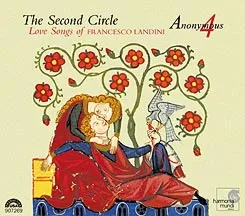
The Second Circle: Love Songs of Francesco Landini
Francesco Landini / Anonymous 4
1991
The Island of St. Hylarion: Music of Cyprus 1413-1422
[anonymous] / Ensemble Project Ars Nova
1987
The Mirror of Narcissus: Songs by Guillaume de Machaut
Guillaume de Machaut
2007
Dreams in the Pleasure Garden
Guillaume de Machaut / Orlando Consort
2002
Narcisso speculando
Paolo da Firenze / Mala Punica / Pedro Memelsdorff
1980
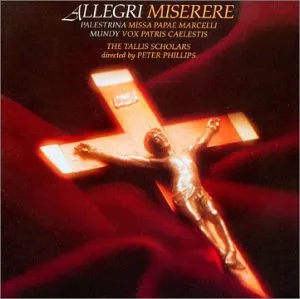
Miserere / Missa Papae Marcelli / Vox Patris caelestis
Gregorio Allegri / The Tallis Scholars / Peter Phillips
1994
Miserere; Messe; Motets
Gregorio Allegri / A Sei Voci
1987
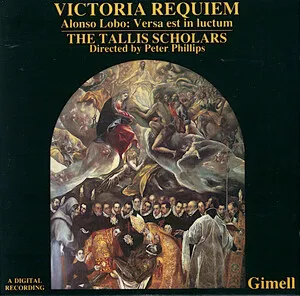
Requiem / Versa est in luctum
Tomás Luis de Victoria / Alonso Lobo
2002
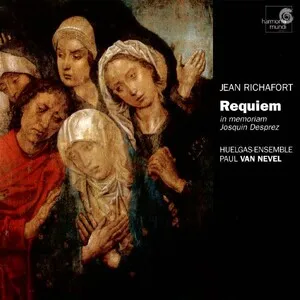
Requiem: In memoriam Josquin Desprez
Jean Richafort / Huelgas Ensemble / Paul Van Nevel
Download our mobile app
Get the Melodigging app and start digging for new genres on the go
Download on the App Store
Get it on Google Play
© 2026 Melodigging
Give feedback
Legal
Melodding was created as a tribute to
Every Noise at Once
, which inspired us to help curious minds keep digging into music's ever-evolving genres.