Genres
Artists
Albums
Make Music
Sign in
Sign in
Albums
By John Rutter
Albums
By John Rutter
A Song in Season
October 12, 2010
Listen
Genres
Classical Harp
Classical harp refers to the Western art‑music repertoire and performance practice for the concert harp, especially the single‑ and double‑action pedal harp used from the late Baroque and Classical eras through Romanticism to the present. It foregrounds idiomatic arpeggiation, glissandi, harmonics, and refined pedaling that enable chromatic harmony and orchestral color. The genre spans solo works, concertos, chamber music, and orchestral writing, and is closely associated with the Parisian harp schools of the 19th–20th centuries, whose pedagogy shaped modern technique and repertoire.
Discover
Listen
Anglican Liturgy
Anglican liturgy refers to the body of musical and textual worship practices associated with the Church of England and, by extension, the global Anglican Communion. Its musical language ranges from plainsong-like recitation (for psalms and prayers) to elaborate choral polyphony and organ-accompanied hymnody. Core forms include the Preces and Responses, settings of the canticles (Magnificat/Nunc dimittis; Te Deum/Jubilate), anthems, service settings for Holy Communion, and congregational hymns. The defining aesthetic combines English-language scriptural and prayer-book texts with a cathedral-choir sound—traditionally trebles and lower voices or mixed SATB—prioritizing clarity of text, balanced sonority, modal/diatonic harmony, and dignified, prayerful pacing.
Discover
Listen
English Renaissance
English Renaissance music refers to the flourishing of sacred and secular composition in England from the early 16th century through the early 17th century. It is characterized by rich modal polyphony, careful text setting, and a distinctive color that often features expressive cross-relations ("English false relations"). The tradition encompasses large-scale Latin and English church works (Masses, motets, anthems, and services), as well as an influential secular output including madrigals, lute songs (ayres), consort songs, and instrumental music for viols and keyboard (the Virginalist school). Dance-derived forms such as the pavan and galliard, and variation techniques over ground basses (e.g., romanesca, passamezzo) are hallmarks of the instrumental style. Instrumentation typically centers on choir, viol consort, lute, and virginals/harpsichord, with an idiom that balances imitative counterpoint and clear declamation. The period witnessed a golden age under the Tudors and early Stuarts, culminating in composers such as Tallis, Byrd, Morley, Dowland, and Gibbons.
Discover
Listen
Similar albums
Hide discovered
2024
Brass at Christmas
John Rutter; Luc Vertommen, Sheffield Philharmonic Chorus, Black Dyke Band, Nic…
1987
The Music of Christmas
John Rutter
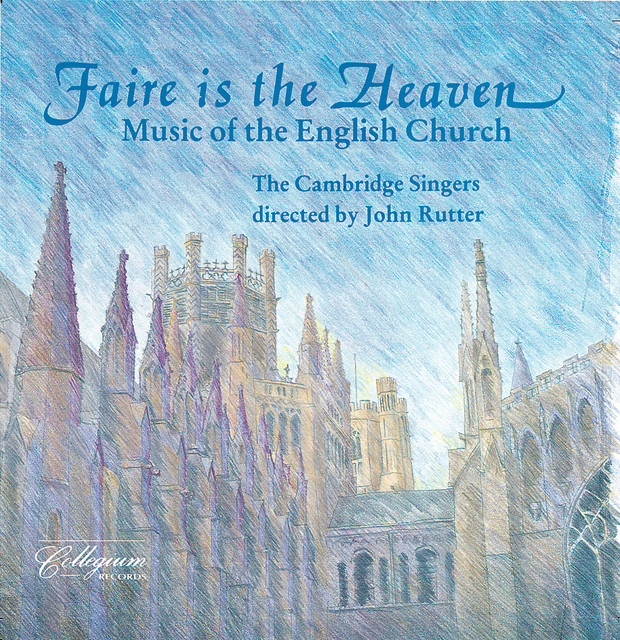
Faire Is the Heaven
The Cambridge Singers, John Rutter
2025
A Clare College Celebration: The Christmas Edition
John Rutter; Choir of Clare College, Cambridge, The Dmitri Ensemble, Graham Ross
2008
Classic FM: The Holly and the Ivy
John Rutter
2007
Messiah: The Complete Work
Handel; Royal Philharmonic Orchestra, The Cambridge Singers, John Rutter
2023
Classical Tranquillity
John Rutter & Manchester Camerata
A Ceremony of Carols
Britten, Csonka, Rutter; Elektra Women’s Choir, Rita Costanzi
1988
Faire Is the Heaven: Music of the English Church
The Cambridge Singers, John Rutter
1999
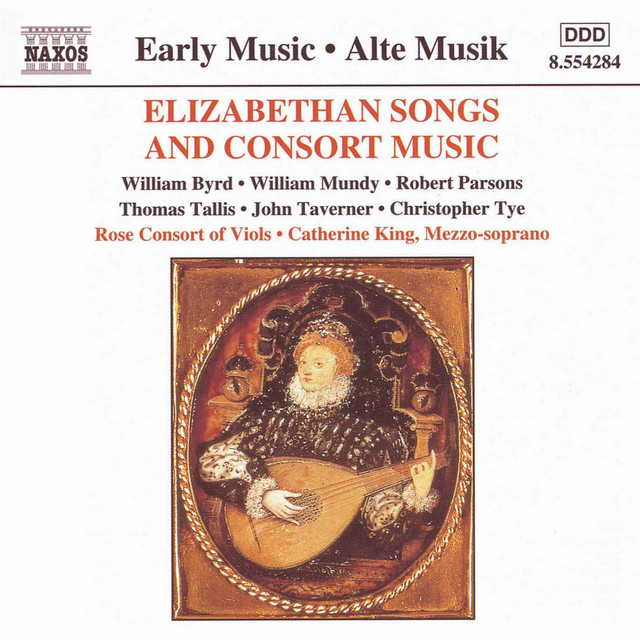
Elizabethan Songs and Consort Music
The Rose Consort Of Viols
Download our mobile app
Get the Melodigging app and start digging for new genres on the go
Download on the App Store
Get it on Google Play
© 2026 Melodigging
Give feedback
About & FAQ
Legal
Melodding was created as a tribute to
Every Noise at Once
, which inspired us to help curious minds keep digging into music's ever-evolving genres.