Your digging level for this genre

0/8
🏆
Sign in, then listen to this genre to level up

Description

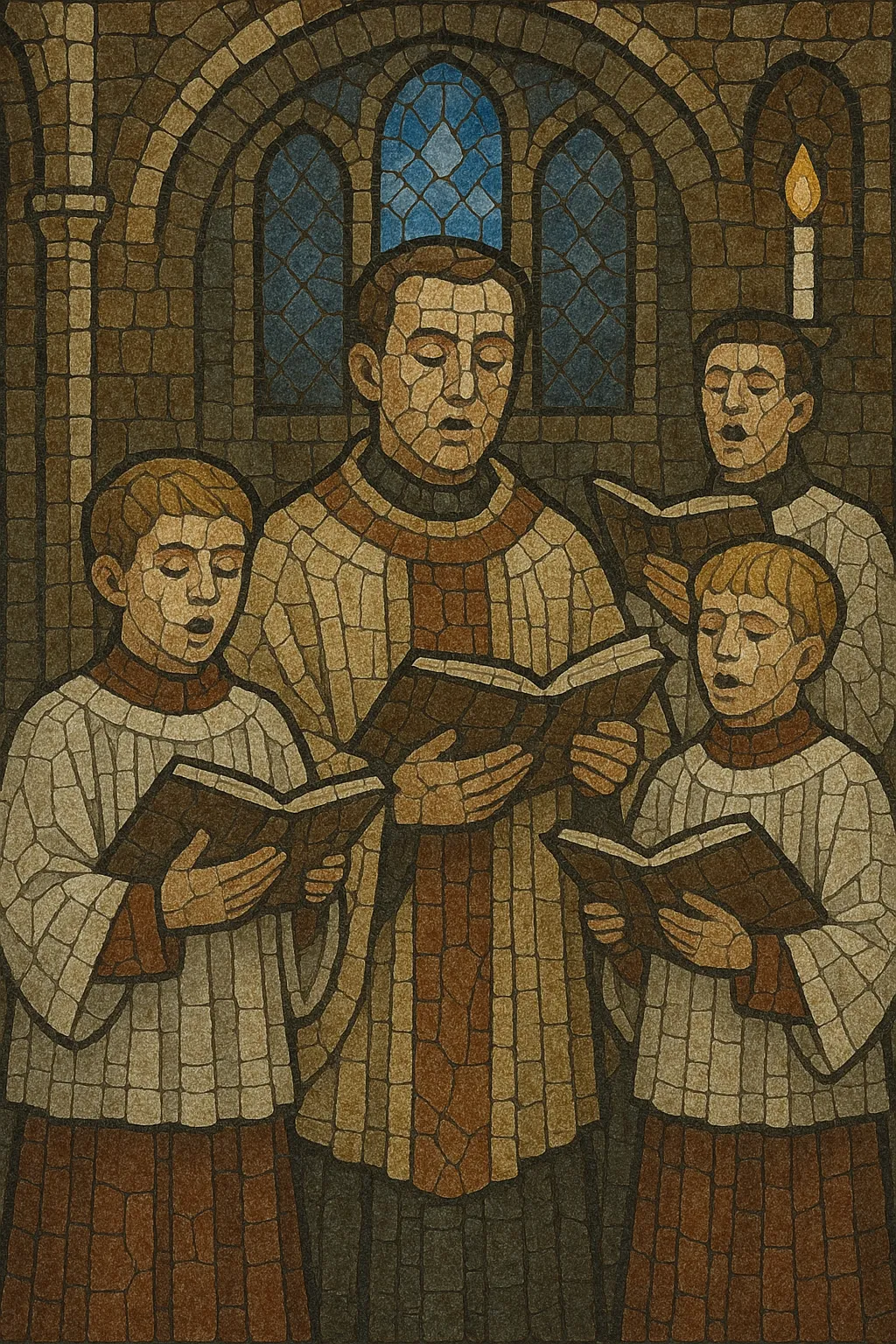
Anglican liturgy refers to the body of musical and textual worship practices associated with the Church of England and, by extension, the global Anglican Communion.

Its musical language ranges from plainsong-like recitation (for psalms and prayers) to elaborate choral polyphony and organ-accompanied hymnody. Core forms include the Preces and Responses, settings of the canticles (Magnificat/Nunc dimittis; Te Deum/Jubilate), anthems, service settings for Holy Communion, and congregational hymns.

The defining aesthetic combines English-language scriptural and prayer-book texts with a cathedral-choir sound—traditionally trebles and lower voices or mixed SATB—prioritizing clarity of text, balanced sonority, modal/diatonic harmony, and dignified, prayerful pacing.

History

Origins (late Medieval to Reformation)

The musical DNA of Anglican liturgy emerges from late medieval English church practice, especially the Sarum Use, which itself relied on Gregorian/plainchant and polyphony. The English Reformation catalyzed a decisive shift to vernacular worship.

The Book of Common Prayer and Early Music (1540s–1600s)

Thomas Cranmer’s Book of Common Prayer (first issued in 1549) standardized English-language liturgy and shaped its musical needs: simple syllabic recitation for prayers and psalms, and dignified settings for canticles and the Communion service. John Merbecke provided influential early musical templates; composers such as Thomas Tallis and William Byrd created polyphonic services and anthems that set a high artistic bar while preserving textual intelligibility.

Cathedral and Chapel Royal Traditions (17th–18th c.)

Anglican music flourished in royal and collegiate chapels and cathedrals. Orlando Gibbons and Henry Purcell refined verse anthems and full anthems, integrating solo-chorus dialogue, expressive dissonance, and organ support. The institutional continuity of cathedral choirs safeguarded a distinctive performance practice.

Victorian Revival and 20th-Century Expansion

The 19th century saw a liturgical and musical revival (Samuel Sebastian Wesley, John Stainer, C. V. Stanford, and Parry), renewed hymnody, and widespread organ building. In the 20th century, Herbert Howells and Ralph Vaughan Williams deepened the idiom with modal color, pastoral harmony, and richly voiced choral textures, influencing hymnals and service music throughout the Anglican Communion.

Global Communion and Contemporary Practice

As Anglicanism spread, its liturgy and music took root in diverse cultures, often integrating local languages and melodies while maintaining the core Anglican forms—Responses, canticles, anthems, and hymns—sustained by professional and volunteer choirs, organists, and congregations worldwide.

How to make a track in this genre

Core Texts and Forms
•   Choose canonical Anglican texts: Preces/Responses, psalms, canticles (Magnificat, Nunc dimittis, Te Deum, Jubilate), and Holy Communion (Kyrie/Gloria/Sanctus/Benedictus/Agnus Dei in English). •   Maintain textual primacy: write melodies and textures that keep words intelligible.
Psalmody and Chant
•   For psalms/canticles, use Anglican chant-style recitation: a reciting note with measured inflections and cadences; point the text to align syllables with cadential formulas. •   Favor modal or diatonic harmony, with controlled dissonance for textual emphasis and expressive cadences (including characteristic English false relations used sparingly).
Choral Texture and Harmony
•   Score for SATB choir (or men-and-boys/treble choirs); write clear, singable lines with balanced voice leading. •   Employ homophony for clarity in congregational moments and gentle polyphony for anthems and service settings. •   Harmonic language can span Tudor modality to late-Romantic/20th-century Anglican color (Howells/Vaughan Williams): added seconds, quartal/quintal touches, and warm, resonant voicings.
Organ and Accompaniment
•   Use organ to support pitch and pacing; write dignified introductions/interludes and soft underlay for prayers. •   Registrations should support text and choir—not overpower—reserving fuller reeds/mixtures for climactic Amens and doxologies.
Hymns and Anthems
•   For hymns, craft sturdy, congregational melodies with clear phrases and predictable cadences; harmonize in four parts with practical voice ranges. •   For anthems, balance expressive counterpoint with declamation; aim for 3–6 minutes, with a clear arc that follows the text’s rhetoric.
Performance Practice
•   Moderate, unhurried tempi; prioritize blend, diction, and dynamic shape. •   Observe liturgical function: write lengths and intensities appropriate to Morning/Evening Prayer or Communion, leaving space for silence and prayer.

Top tracks

Locked
Share your favorite track to unlock other users’ top tracks
Influenced by
Has influenced
Challenges
Digger Battle
Let's see who can find the best track in this genre
© 2025 Melodigging
Melodding was created as a tribute to Every Noise at Once, which inspired us to help curious minds keep digging into music's ever-evolving genres.
Buy me a coffee for Melodigging