Genres
Artists
Albums
Make Music
Sign in
Sign in
Record label
Karlrecords
Germany
Related genres
Ambient
Ambient is a form of electronic and electroacoustic music that prioritizes tone, atmosphere, and texture over conventional song structures and rhythmic drive. It typically features slow-moving harmonies, sustained drones, gentle timbral shifts, and extensive use of space and silence. Rather than drawing attention to itself through hooks or beats, ambient is designed to be as ignorable as it is interesting, rewarding both background listening and focused immersion. Artists often employ synthesizers, samplers, tape loops, field recordings, and subtle acoustic instruments, with reverb and delay creating a sense of place. Substyles range from luminous, consonant soundscapes to darker, more dissonant atmospheres.
Discover
Listen
Avant-Garde
Avant-garde music is an umbrella term for boundary-pushing practices that challenge prevailing norms of harmony, rhythm, timbre, form, and performance. It privileges experimentation, conceptual rigor, and a willingness to reframe what counts as music at all. Historically tied to early 20th‑century artistic modernism, avant-garde music introduced atonality, the emancipation of noise, and new forms of notation and process. It embraces indeterminacy, extended techniques, electronics, spatialization, and multimedia performance, treating sound as material to be sculpted, questioned, and reinvented.
Discover
Listen
Drone
Drone is a minimalist music genre defined by sustained tones, long durations, and extremely gradual change. Harmony is often static or centered on a single fundamental with subtle overtone shifts, while rhythm tends toward stasis or very slow pulses. Sound sources range from acoustic instruments (e.g., strings, organ, bagpipes, shruti box, tambura) to electronics (sine waves, oscillators, feedback, tape loops, and later digital synthesis and processing). Many composers favor just intonation or other alternative tuning systems to emphasize beating patterns, psychoacoustic effects, and the internal life of sound. Although drone as a sonic principle is ancient and global, the modern experimental genre cohered in the 1960s through the New York minimalists and related avant‑garde circles, then spread into ambient, experimental, and heavy music scenes. The focus is less on melody and more on timbre, resonance, and the phenomenology of listening.
Discover
Listen
Electroacoustic
Electroacoustic music is a broad art-music tradition that integrates recorded acoustic sound and electronically generated or processed sound into coherent musical works. It privileges timbre, gesture, texture, and spatialization over conventional melody-and-harmony song forms, often employing tape manipulation, synthesis, live electronics, and computer-based signal processing. Works are frequently composed for fixed media (stereo or multichannel loudspeakers) and may also involve live performers who are transformed in real time. Concert presentation typically emphasizes spatial diffusion and immersive listening, and the repertoire spans concert works, radio pieces, installations, and soundscape compositions.
Discover
Listen
Electronic
Electronic is a broad umbrella genre defined by the primary use of electronically generated or electronically processed sound. It encompasses music made with synthesizers, drum machines, samplers, computers, and studio/tape techniques, as well as electroacoustic manipulation of recorded or synthetic sources. The genre ranges from academic and experimental traditions to popular and dance-oriented forms. While its sonic palette is rooted in electricity and circuitry, its aesthetics span minimal and textural explorations, structured song forms, and beat-driven club permutations. Electronic emphasizes sound design, timbre, and studio-as-instrument practices as much as melody and harmony.
Discover
Listen
Experimental
Experimental music is an umbrella term for practices that prioritize exploration, process, and discovery over adherence to established genre norms. It embraces new sound sources, nonstandard tuning systems, indeterminacy and chance operations, graphic and open-form scores, extended techniques, and technology-led sound design (tape, electronics, computers, and live processing). Rather than a single style, it is a methodology and ethos: testing hypotheses about sound, structure, and performance, often blurring boundaries between composition, improvisation, sound art, and performance art. Listeners can expect unfamiliar timbres, unusual forms, and an emphasis on how music is made as much as the resulting sound.
Discover
Listen
Free Jazz
Free jazz is a radical branch of jazz that rejects fixed chord progressions, strict meter, and conventional song forms in favor of collective improvisation, textural exploration, and spontaneous interaction. Musicians prioritize timbre, dynamics, and gesture as much as pitch and harmony, often using extended techniques (multiphonics, overblowing, prepared piano) and unconventional sounds. While rooted in the blues and earlier jazz vocabularies, free jazz frees improvisers from pre-set harmonic cycles, allowing lines to unfold over tonal centers, shifting modes, drones, or complete atonality. Rhythm sections may float without a steady pulse, or drive with layered polyrhythms and “energy playing.” The result ranges from contemplative soundscapes to cathartic, high-intensity eruptions. Culturally, the genre intersected with the civil rights era and broader avant-garde movements, emphasizing autonomy, community, and new possibilities for musical expression.
Discover
Listen
Industrial
Industrial is an experimental electronic music tradition that uses abrasive timbres, mechanical rhythms, and transgressive aesthetics. Its sound palette often includes distorted drum machines, tape loops, metallic percussion, feedback, and found-object recordings alongside synthesizers and samplers. Emerging from late-1970s UK underground art and performance scenes, industrial foregrounds themes of dehumanization, technology, surveillance, and power. Releases frequently embrace anti-commercial presentation, stark graphic design, and confrontational performance art, treating the studio as a laboratory for sonic manipulation rather than a vehicle for conventional songcraft. While early industrial emphasized noise, tape processing, and avant-garde collage, later waves fused the style with dancefloor precision (EBM), rock and metal heft, and club-oriented production, giving rise to a broad post-industrial family that remains influential in experimental, electronic, and popular music.
Discover
Listen
Jazz
Jazz is an improvisation-centered music tradition that emerged from African American communities in the early 20th century. It blends blues feeling, ragtime syncopation, European harmonic practice, and brass band instrumentation into a flexible, conversational art. Defining features include swing rhythm (a triplet-based pulse), call-and-response phrasing, blue notes, and extended harmonies built on 7ths, 9ths, 11ths, and 13ths. Jazz is as much a way of making music—spontaneous interaction, variation, and personal sound—as it is a set of forms and tunes. Across its history, jazz has continually hybridized, from New Orleans ensembles and big-band swing to bebop, cool and hard bop, modal and free jazz, fusion, and contemporary cross-genre experiments. Its influence permeates global popular and art music.
Discover
Listen
Jazz Rock
Jazz rock is a hybrid style that merges the improvisational language and harmonic richness of jazz with the amplified energy, backbeat, and song forms of rock. It typically features electric guitar, bass, and drums alongside jazz-oriented instruments such as saxophone, trumpet, and keyboards, often arranged in horn sections. Extended chords, syncopation, and improvisation coexist with catchy riffs and driving grooves, yielding music that is both virtuosic and accessible. While closely related to jazz fusion, jazz rock generally keeps a stronger tie to rock songcraft and backbeat-centered rhythms.
Discover
Listen
Musique Concrète
Musique concrète is an electroacoustic approach to composition that uses recorded real‑world sounds (objets sonores) as primary material rather than traditional instruments or notation. Composers edit, splice, loop, reverse, time‑stretch, filter, and otherwise transform these recordings to create works designed for loudspeakers. Emerging in late‑1940s France, it introduced acousmatic listening—focusing on the sound itself, detached from its source—along with a morphology‑based vocabulary of gesture, texture, and timbre. Historically realized on tape and now on digital audio workstations, musique concrète privileges montage and transformation over conventional harmony and meter, inviting listeners into a rich, tactile world of sonic phenomena.
Discover
Listen
Techno
Techno is a four-on-the-floor, machine-driven form of electronic dance music that emerged in mid-to-late 1980s Detroit. It is characterized by steady 4/4 kick drums, repetitive and hypnotic rhythmic patterns, synthetic timbres, and an emphasis on texture, groove, and forward momentum over elaborate harmony. Producers typically use drum machines, sequencers, and synthesizers to build layered percussion, pulsing basslines, and evolving motifs. While often dark and minimalistic, techno spans a wide spectrum—from soulful, futuristic Detroit aesthetics to hard, industrially tinged European strains—yet it consistently prioritizes kinetic energy for dancefloors and a sense of machine futurism.
Discover
Listen
Indie
Indie (short for “independent”) began as music made and released outside the major-label system, where a DIY ethos shaped everything from songwriting and recording to artwork and touring. As a sound, indie is eclectic but often features jangly or overdriven guitars, intimate or understated vocals, melodic basslines, and unvarnished production that foregrounds authenticity over gloss. It spans rock, pop, and folk while welcoming electronic textures and lo‑fi aesthetics. Lyrics typically focus on personal observation, small details, and wry self-awareness rather than overt virtuosity or spectacle. Beyond style, indie describes a culture: small labels and stores, college/alternative radio, fanzines/blogs, community venues, and scenes that value experimentation, individuality, and artistic control.
Discover
Listen
Cello
Cello as a genre centers musical works and performances where the violoncello is the primary voice, spanning solo repertoire, chamber settings, and orchestral features. The instrument’s lyrical baritone range (from a deep C2 to a singing C6 and beyond in harmonics) allows it to cover melody, inner voices, and bass lines with equal authority. In this genre, idiomatic bowing (legato, spiccato, martelé), coloristic techniques (sul tasto, sul ponticello), and expressive vibrato shape phrases that often feel vocal in character. While rooted in Western classical traditions, modern cello practice also extends into film music, contemporary classical, and crossover settings, emphasizing intimacy, resonance, and storytelling.
Discover
Listen
Albums
Off to Titan
Philippe Petit
Oneirika
Zeitkratzer + Elliott Sharp
Aus den sieben Tagen
Stockhausen; Zeitkratzer, Keiji Haino
The Sum of Disappearing Sounds
Cezary Gapik
Ligment
Ulna
Disappearing in a Mirror
Giulio Aldinucci
Imaginary Boys
Golden Diskó Ship
Şeb-i Yelda
R.A.N., Hüma Utku
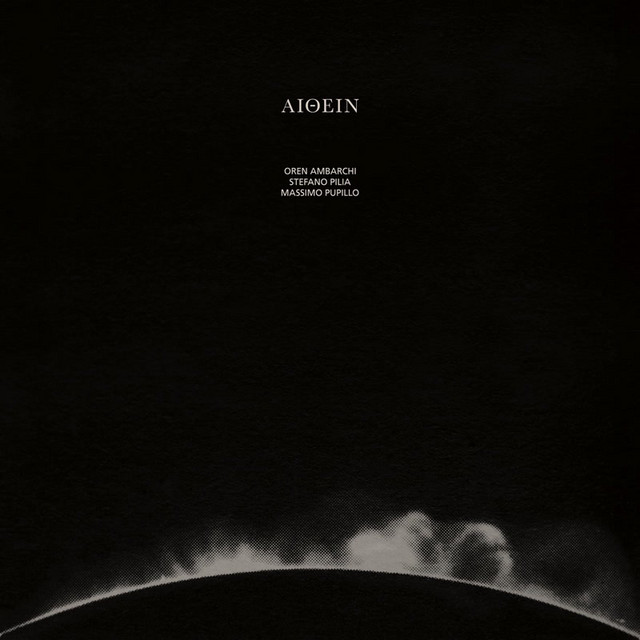
Aithein
Oren Ambarchi, Massimo Pupillo, Stefano Pilia
The Ocean Is Closed
zeitkratzer & She She Pop
Show more
Artists
Steve Reich
Yoko Ono
John Cage
Karlheinz Stockhausen
Iannis Xenakis
Phill Niblock
Fanu
Bill Laswell
Otomo Yoshihide
Gareth Davis
Thurston Moore
Painkiller
James Plotkin
Arovane
Porya Hatami
Frank Bretschneider
Muhal Richard Abrams
Peter Brötzmann
Keiji Haino
Aidan Baker
Golden Diskó Ship
Brian Harnetty
Jasmine Guffond
Submerged
Ale Hop
Hüma Utku
Various Artists
Schneider TM
Reinhold Friedl
Massimo Pupillo
Ken Vandermark
Philippe Petit
Sara Persico
Strings of Consciousness
Angel
Fret
Jens Pauly
Talibam!
Morton Subotnick
Kammerflimmer Kollektief
Alvin Lucier
Ernstalbrecht Stiebler
Ensemble Avantgarde
Caspar Brötzmann
Pita
Zeitkratzer
Benjamin Finger
Felix Kubin
Hanno Leichtmann
Idklang
Simon Berz
Yasunao Tone
75 Dollar Bill
Wolfgang Seidel
Bérangère Maximin
Paul LaBrecque
Mesías Maiguashca
Mia Zabelka
Konstrukt
Martina Bertoni
Arash Akbari
Oren Ambarchi
Elliott Sharp
Stefano Pilia
Laurent de Schepper Trio
Anna Clementi
Guy Reibel
Karkhana
Cezary Gapik
Ulna
She She Pop
Alexandre Babel
Lars Nagler
Prince Charming
Audrey Chen
Sam Kulik
Hans Castrup
afarOne
Nicolas Wiese
Paula Akinsinde
Creta
Spajić-Latinović, Svetlana
Dragana Tomić
Obrad Milić
Tellavision
Arurmukha
G.A.M.S.
MimiCof
Saba Alizâdeh
Barakat
Stefan Schmidt
Ulf Stolterfoht
Iris Drögekamp
Thomas Weber
Phonosphere
Thomas Stern
The Great Learning Orchestra
Summer of Seventeen
An Moku
Giulio Aldinucci
Nickolas Mohanna
Download our mobile app
Get the Melodigging app and start digging for new genres on the go
Download on the App Store
Get it on Google Play
© 2026 Melodigging
Give feedback
Legal
Melodding was created as a tribute to
Every Noise at Once
, which inspired us to help curious minds keep digging into music's ever-evolving genres.