Genres
Artists
Albums
Make Music
Sign in
Sign in
Record label
Thumbs Up Records
Wisconsin
Related genres
Alternative Rock
Alternative rock is a broad umbrella for guitar-based rock that emerged from the independent and college-radio scenes as a counterpoint to mainstream, commercial rock. It blends the energy and ethos of punk with the textural and songwriting experiments of post-punk, new wave, jangle pop, and noise rock, often foregrounding introspective or socially aware lyrics. Across its many strains—from the melodic minimalism of college rock to the loud-quiet-loud dynamics of grunge and the artful experimentation of Radiohead-era modernism—alternative rock prioritizes authenticity, sonic individuality, and a do-it-yourself approach. Its sound ranges from chiming, chorus-laden clean guitars to abrasive distortion and feedback, supported by straightforward rock rhythms or off-kilter grooves, and production that can be either raw and live-sounding or polished yet unconventional.
Discover
Listen
Emo
Emo is a rock subgenre that emerged from the mid-1980s Washington, D.C. hardcore punk scene as “emotional hardcore” (often shortened to emocore). It retains punk’s urgency but foregrounds confessional, vulnerable lyrics and dramatic dynamic shifts. Across its eras, emo has encompassed several distinct sounds: the intense, cathartic D.C. style; the melodic, guitar‑intricate “Midwest emo” of the 1990s; and the 2000s mainstream wave that blended emo’s lyrical candor with pop‑punk hooks (often called “emo pop”). Common musical traits include intertwining clean and overdriven guitars, intricate arpeggios and counter‑melodies, elastic song structures, and vocals that range from intimate murmurs to raw, impassioned shouts.
Discover
Listen
Midwest Emo
Midwest emo is a regionally rooted branch of emo that emerged in the American Midwest during the 1990s. It is distinguished by clean, interlocking "twinkly" guitar lines, melodic bass counterpoint, and dynamic, often understated drumming. The style blends the confessional lyricism and DIY ethos of emo with the delicacy and clarity of indie rock, plus the rhythmic and harmonic playfulness of math rock. Vocals tend to be intimate and conversational, while arrangements favor open guitar voicings (add9/sus2), arpeggios, and intricate two‑guitar interplay over high‑gain distortion. While associated with college towns and basement shows, Midwest emo’s influence has spread widely, shaping subsequent waves of emo and inspiring cross‑genre borrowing from indie rock to emo rap.
Discover
Listen
Pop Punk
Pop punk blends the speed and attitude of punk rock with the melody, hooks, and songcraft of pop. It features bright, concise songs driven by crunchy power-chord guitars, punchy drums, and catchy vocal lines that often favor gang shouts and harmonies. Lyrically, pop punk tends to focus on adolescence, relationships, boredom, suburbia, and self-deprecating humor, delivered with a mix of earnestness and wit. Production ranges from raw and DIY to radio-ready polish, but the core is always immediacy: big choruses, tight structures, and energetic performances.
Discover
Listen
Post-Hardcore
Post-hardcore is a branch of hardcore punk that retains the style’s urgency and DIY ethos while expanding its musical vocabulary. Bands push beyond breakneck tempos and simple power-chord progressions into more dynamic song structures, varied rhythms, and a wider emotional range. Guitars often alternate between caustic distortion and clean, chiming textures; vocals can shift from shouted slogans to melodic singing; and arrangements emphasize tension-and-release, odd meters, and dramatic builds. Lyrically, post-hardcore tends to be more introspective and socially conscious than its hardcore roots, touching on personal, political, and philosophical themes.
Discover
Listen
Punk
Punk is a fast, abrasive, and minimalist form of rock music built around short songs, stripped-down instrumentation, and confrontational, anti-establishment lyrics. It emphasizes DIY ethics, raw energy, and immediacy over virtuosity, often featuring distorted guitars, shouted or sneered vocals, and simple, catchy melodies. Typical songs run 1–3 minutes, sit around 140–200 BPM, use power chords and basic progressions (often I–IV–V), and favor live, unpolished production. Beyond sound, punk is a cultural movement encompassing zines, independent labels, political activism, and a fashion vocabulary of ripped clothes, leather, and safety pins.
Discover
Listen
Punk Rock
Punk rock is a fast, raw, and stripped‑down form of rock music that foregrounds energy, attitude, and the DIY ethic over technical polish. Songs are short (often 90–180 seconds), in 4/4, and driven by down‑stroked power‑chord guitars, eighth‑note bass, and relentless backbeat drumming. Vocals are shouted or sneered rather than crooned, and lyrics are direct, often political, anti‑establishment, or wryly humorous. Production is intentionally unvarnished, prioritizing immediacy and live feel over studio perfection. Beyond sound, punk rock is a culture and practice: independent labels, fanzines, all‑ages venues, self‑organized tours, and a participatory scene that values inclusivity, affordability, and self‑reliance.
Discover
Listen
Rock
Rock is a broad family of popular music centered on amplified instruments, a strong backbeat, and song forms that foreground riffs, choruses, and anthemic hooks. Emerging from mid‑20th‑century American styles like rhythm & blues, country, and gospel-inflected rock and roll, rock quickly expanded in scope—absorbing folk, blues, and psychedelic ideas—while shaping global youth culture. Core sonic markers include electric guitar (often overdriven), electric bass, drum kit emphasizing beats 2 and 4, and emotive lead vocals. Rock songs commonly use verse–chorus structures, blues-derived harmony, and memorable melodic motifs, ranging from intimate ballads to high‑energy, stadium‑sized performances.
Discover
Listen
Screamo
Screamo is an emotionally charged offshoot of emo and hardcore punk characterized by cathartic, screamed vocals, dynamic extremes, and a blend of melody with discordance. Songs often move rapidly between fragile, clean passages and explosive, chaotic climaxes, emphasizing tension-and-release. Guitars favor octave runs, tremolo-picked melodies, and dissonant chord voicings, while drums switch from driving d-beats to blast beats and spacious half-time drops. Lyrics are typically confessional, poetic, and socially aware, delivered with a visceral intensity that foregrounds vulnerability and urgency. Early recordings embraced raw, DIY production and intimate, basement-show energy; later waves incorporated post-rock atmospherics and more expansive songwriting.
Discover
Listen
Hardcore
Hardcore (often called hardcore techno in its early form) is a fast, aggressive branch of electronic dance music characterized by heavily distorted, punchy 4/4 kick drums, tempos ranging from roughly 160 to well over 200 BPM, and a dark, high‑energy aesthetic. It emphasizes percussive drive over complex harmony, using clipped and saturated kick-bass sound design, sharp hi-hats, claps on the backbeat, and harsh synth stabs or screeches. Vocals, when present, are typically shouted hooks, sampled movie lines, or crowd chants processed with distortion and effects. Originating in the Netherlands in the early 1990s, the style quickly splintered into related scenes and subgenres such as gabber, happy hardcore, Frenchcore, terrorcore, speedcore, and later hardstyle. Its culture is closely associated with large-scale raves, specialized labels, and distinctive visual branding.
Discover
Listen
Alternative
Alternative is an umbrella term for non-mainstream popular music that grew out of independent and college-radio scenes. It emphasizes artistic autonomy, eclectic influences, and a willingness to subvert commercial formulas. Sonically, alternative often blends the raw immediacy of punk with the mood and texture of post-punk and new wave, adding elements from folk, noise, garage, and experimental rock. While guitars, bass, and drums are typical, production ranges from lo-fi to stadium-ready, and lyrics tend toward introspection, social critique, or surreal storytelling. Over time, “alternative” became both a cultural stance and a market category, spawning numerous substyles (alternative rock, alternative hip hop, alternative pop, etc.) and moving from underground circuits to mainstream prominence in the 1990s.
Discover
Listen
Skramz
Skramz is the grassroots, early form of screamo that emerged from DIY hardcore and emo scenes in the mid‑to‑late 1990s. Raw, cathartic vocals, breakneck dynamics, and fragile clean passages collide to create songs that feel intimate and volatile at once. Hallmarks include tense quiet‑loud arcs, dissonant chord voicings, trebly guitar tones that flicker between arpeggios and frantic strumming, and highly expressive, often confessional lyrics. Unlike more polished, post‑2000s screamo variants, skramz foregrounds unfiltered emotion, community ethics, and a live‑in‑the‑room sound.
Discover
Listen
Albums
Double Bind
Excuse Me, Who Are You?
Lost Friends / Found Family
The Others Like Us, Me Too, Thanks. & red sun
Sweeten the Victory
Valendina
About That Beer I Owed Ya
Excuse Me, Who Are You?
Make Up Your Place
Tiny Voices
best buds :)
red sun
Emergency, Exit
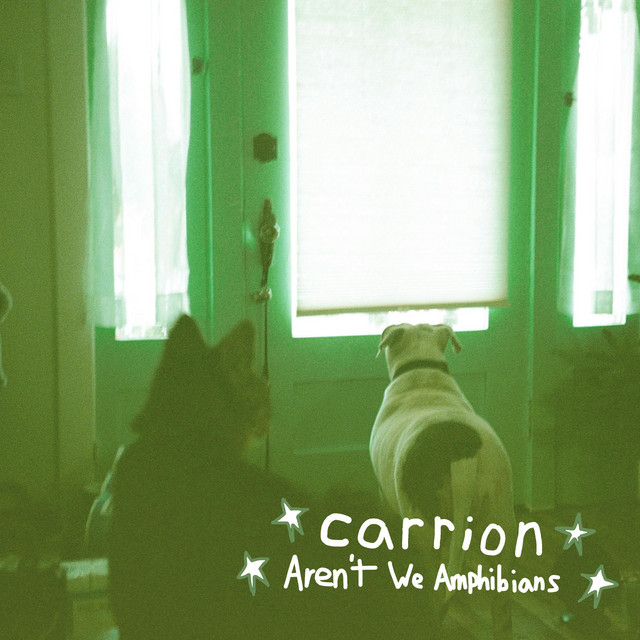
Aren’t We Amphibians
Carrion
Aren’t We Amphibians
Self Preservation
Honey Creek
Sweethearts: A Split With Just Let Me Go
Aren't We Amphibians
Show more
Artists
Tiny Voices
red sun
Me Too, Thanks.
Endswell
Excuse Me Who Are You?
Aren't We Amphibians
The Others Like Us
Valendina
Creek, Honey
MooseCreek Park
Garden Home
Download our mobile app
Get the Melodigging app and start digging for new genres on the go
Download on the App Store
Get it on Google Play
© 2026 Melodigging
Give feedback
Legal
Melodding was created as a tribute to
Every Noise at Once
, which inspired us to help curious minds keep digging into music's ever-evolving genres.