Your digging level

For this genre
0/8
🏆
Sign in, then listen to this genre to level up

Description

Zampogna refers to the Italian bagpipe tradition, centered on the various double‑chanter, drone bagpipes known collectively as zampogne.

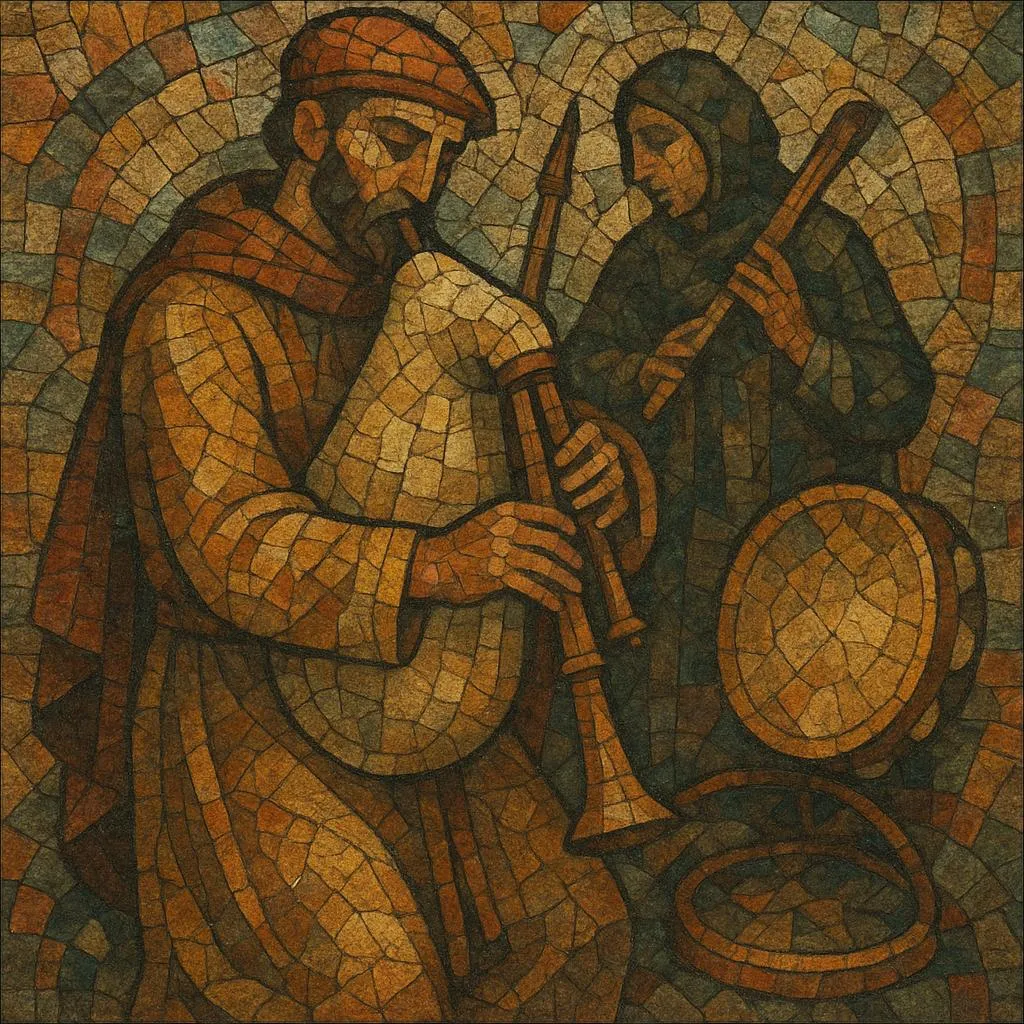
Played primarily in southern and central Italy, it is an unmistakable pastoral sound associated with shepherd culture, Christmas novenas, processions, and vigorous southern dance forms. Typical ensembles pair the zampogna with a small conical shawm (ciaramella/piffero) and frame drum (tamburello). The instrument’s continuous drones underpin modal melodies in compound meters (6/8, 9/8, 12/8), from solemn pastorali to driving tarantelle.

Across regions (Molise, Lazio/Ciociaria, Campania/Irpinia, Basilicata, Calabria, parts of Sicily), distinct zampogna types (a paro, a chiave, and other local variants) carry highly localized tunings, ornaments, and repertoires. While ancient in root, the modern folk practice crystallized in the early modern era and remains emblematic of Italian seasonal folk music.


Sources: Spotify, Wikipedia, Discogs, RYM, MB, user feedback and other online sources

History

Origins and Early Practice

The Italian word “zampogna” denotes a family of double‑chanter, drone bagpipes whose ancestry reaches back to Roman and medieval shepherd traditions. Although bagpipe use in the peninsula is attested much earlier, the recognizable regional folk practice coalesced during the 17th–18th centuries, when pastoral musicians (zampognari) became fixtures of village life, markets, and Christmas novenas.

Regional Styles and Repertoire

As transhumant shepherding linked mountains and plains, distinctive local variants emerged: the zampogna a paro (two unkeyed chanters of equal length) and a chiave (with keys) among others. Repertoires included devotional pastorali, processional hymns, lullabies, and lively couple or circle dances (tarantella, saltarello). Typical ensembles paired zampogna with ciaramella/piffero (a piercing shawm) and tamburello, creating the iconic southern Italian folk sound.

19th–20th Centuries: Persistence and Pressure

Industrialization and urbanization reduced shepherd culture and seasonal music‑making, yet Christmas bagpipers remained a powerful symbol in towns and cities. Ethnographers and early collectors documented regional playing, tunings, and instrument‑making, preserving techniques that were increasingly at risk.

Folk Revival and Contemporary Scene

From the late 20th century, Italy’s folk revival rekindled regional pride and apprenticeship networks. Festivals (notably in Molise, home to a major zampogna museum and gatherings), craft luthiers, and conservatory‑adjacent projects stabilized instrument building and pedagogy. Contemporary artists present the zampogna both in historically grounded contexts and in cross‑genre fusions (with world, classical, and even experimental settings), while the Christmas pastorale tradition continues to define its wider public image.

How to make a track in this genre

Instruments and Ensemble
•   Core voice: a regional zampogna (e.g., a paro or a chiave), tuned to local practice with at least one drone (bordone). •   Typical partners: ciaramella/piffero (small double‑reed shawm) for countermelodies and cues, plus tamburello for dance pulse. Solo zampogna pieces (pastorali, suonate) are also common.
Rhythm and Form
•   Favor compound meters (6/8, 9/8, 12/8). Tarantelle often cycle through repeated strains (AABB or AAB), with accelerando and call‑and‑response between zampogna and ciaramella. •   Processional pieces and pastorali use steady, lilting ostinati under long melodic arcs; dance forms use driving tamburello patterns and emphatic cadences.
Melody, Mode, and Harmony
•   Compose in modal centers (Aeolian, Dorian, Mixolydian are common). The drone(s) supply tonic (and sometimes dominant) reference; harmonies arise from melodic suspension against the drone. •   Use idiomatic ornaments: cuts, grace‑note flicks, mordents, and quick appoggiature, coordinated with bag pressure for phrasing.
Technique and Timbre
•   Maintain stable bag pressure for even tone; shape phrases through finger articulation and micro‑swells rather than dynamic tonguing. •   Exploit chanter doublestops (on variants that allow them) and drone modulation (where regional builds permit) to mark sections or dancers’ figures.
Repertoire Building
•   For pastorali and Christmas music, craft flowing, hymn‑like melodies with repeated two‑ or four‑bar cells over drones. •   For tarantella/saltarello, write short, hooky themes with sectional repeats and rising intensity. Interleave answered phrases by ciaramella or voice to cue dancers.
Performance Practice
•   Start at moderate tempo, invite tamburello to lock the groove, then increase energy for dance segments. •   Respect local tunings and timbres; zampogna traditions are highly regional—study a specific school (Molise, Irpinia, Ciociaria, etc.) for authentic fingerings, ornaments, and cadence formulas.

Top tracks

Locked
Share your favorite track to unlock other users’ top tracks

Upcoming concerts

in this genre
Influenced by

Download our mobile app

Get the Melodigging app and start digging for new genres on the go
© 2026 Melodigging
Melodding was created as a tribute to Every Noise at Once, which inspired us to help curious minds keep digging into music's ever-evolving genres.
Buy me a coffee for Melodigging