Your digging level
Description
Zamacueca is an ancient colonial song-and-dance genre that arose in the Viceroyalty of Peru, blending Spanish sung-dance traditions with Andean rhythmic sensibilities and Afro-Peruvian percussion.
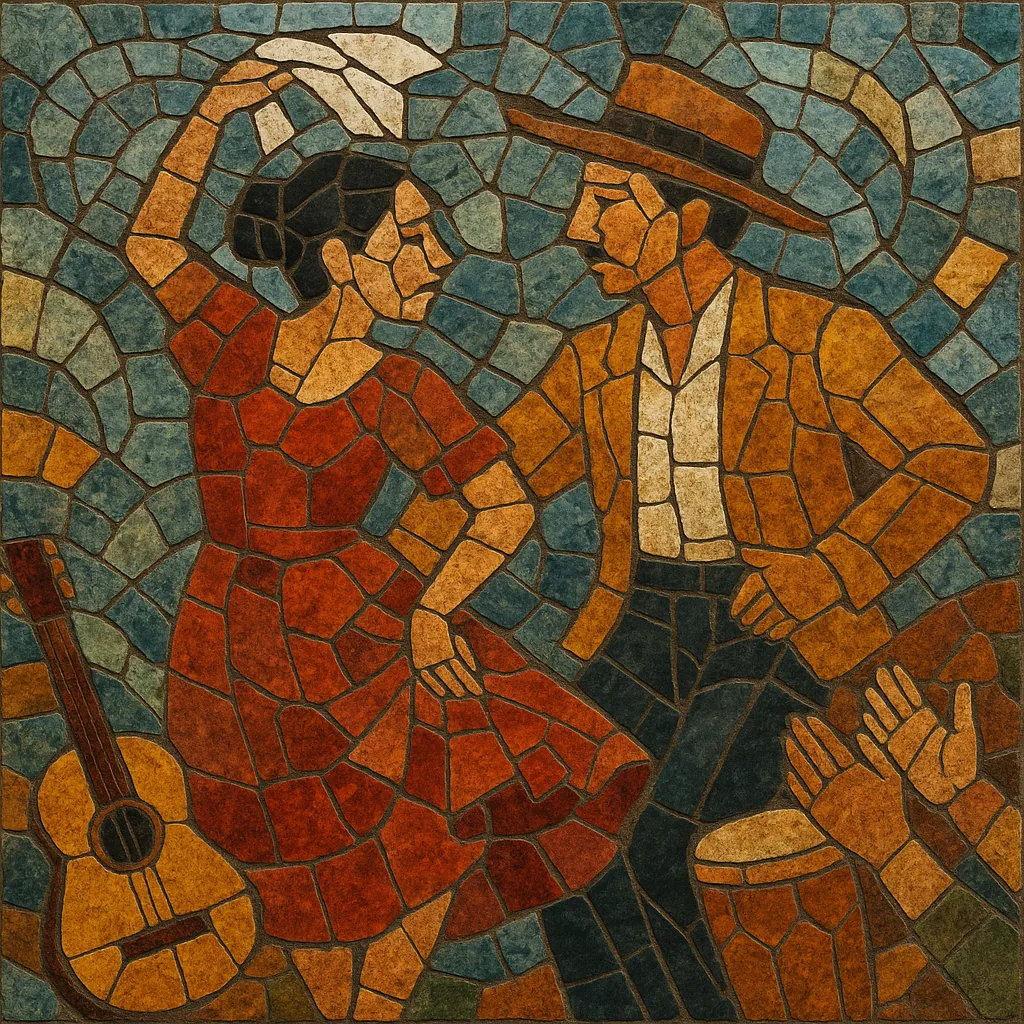
It is typically sung in the minor mode, with a lively sesquialtera feel (hemiola between 6/8 and 3/4), and is accompanied by plucked strings—guitar, vihuela or harp—interlocking with cajón patterns (often joined by hand percussion like palmas or quijada). Dancers perform with handkerchiefs in a flirtatious, courtship-like choreography that mirrors the playful lyrical exchanges.
As a foundational criollo form of the 19th century, zamacueca provided the matrix from which regional descendants such as the Peruvian marinera and the Chilean and Bolivian cueca later developed.
History
Zamacueca emerged in late colonial Peru as an urban, salon-to-street dance that fused Spanish sung-dance prototypes (fandango, seguidilla and the broader contradanza family) with Andean rhythmic feeling and Afro-Peruvian percussive practice. The sesquialtera swing (6/8 against 3/4), minor-mode melodies, and strophic coplas reflect its Iberian roots, while the cajón and call-and-response vocal style speak to Afro-Peruvian performance aesthetics.
By the early–mid 1800s, zamacueca had become a hallmark of Limeño criollo culture, performed in salons, patios and popular festivities with guitar or harp accompaniment and cajón. The dance’s handkerchief play, playful pursuit, and zapateo accents were already characteristic. Written accounts from the period describe its minor-mode melancholy tempered by a buoyant, teasing quality.
The genre radiated widely across the Southern Cone. In Chile and Bolivia, local variants crystallized as cueca; in Argentina, related currents interacted with indigenous and gaucho traditions and later overlapped with the zamba. In Peru, after the War of the Pacific (late 19th century), the Limeño zamacueca was rebranded as “marinera” (a term popularized by Abelardo Gamarra) to emphasize a Peruvian national identity distinct from Chilean cueca, even though the musical-dance kernel remained continuous.
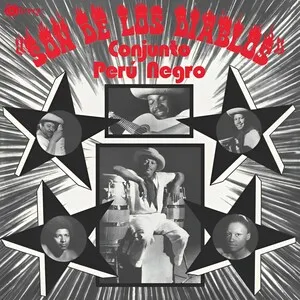
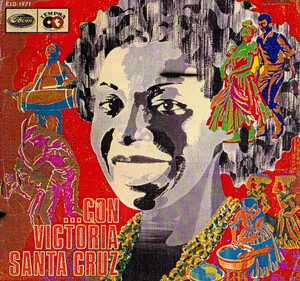
While tastes shifted (vals criollo, polca, and other coastal forms rising), zamacueca’s core survived in marinera and in staged folklore. Afro-Peruvian revitalization movements in the mid‑20th century (e.g., the work of Nicomedes and Victoria Santa Cruz and the ensemble Perú Negro) re-centered the cajón and brought renewed attention to older coastal repertories that included zamacueca numbers. Today it appears in folklore festivals, peñas criollas, and academic programs, and is widely recognized as a progenitor of marinera and cueca.