Your digging level
Description
Cueca is a family of folk songs and partner dances from the Southern Cone, most strongly associated with Chile (where it is the official national dance) and with important regional variants in Bolivia and Argentina.
Musically it features the characteristic 6/8–3/4 hemiola feel, often heard as a buoyant ternary groove that can shift perceived accents between 6/8 and 3/4. Traditional cuecas are sung in strophic form with refrains, and Chilean cueca texts are commonly organized into 14 lines (a composite stanza, typically parsed 4+7+3) that support the dance’s three-part cycle.
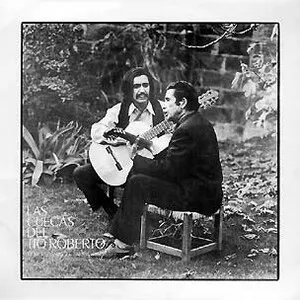
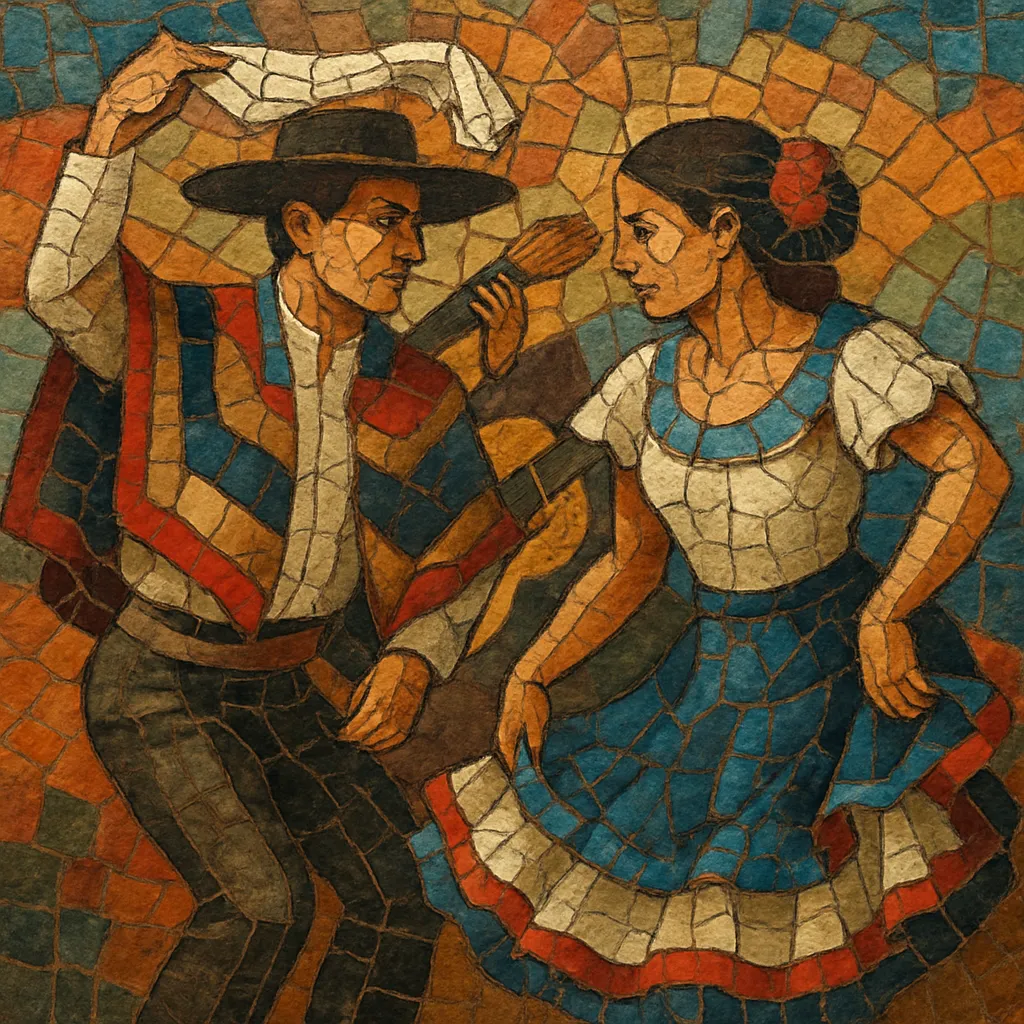
Performances usually involve voice(s), guitar(s), accordion, handclaps (palmas), and light percussion such as bombo and the pandero cuequero, with couples circling and playfully courting one another with handkerchiefs.
History
Scholars generally trace cueca to the 19th century, when port and inland musical cultures in the Southern Cone fused Hispanic song-dance types with Afro‑Latin rhythms. A crucial ancestor is the zamacueca (Peru/Chile), which already displayed the 6/8–3/4 hemiola and flirtatious couple-dance format. Through coastal exchange and overland migration, related forms spread and localized, producing cognate dances such as the Peruvian marinera and, further south and east, Argentine and Bolivian cuecas.
By the late 1800s and early 1900s, cueca had become emblematic of Chile’s central valley, thriving in rural fiestas, city salons, and fondas. Distinct regional styles crystallized—cueca central (Valle Central), cueca nortina (influenced by Andean brass bands), and cueca chilota (Chiloé). In Bolivia, local “cueca cochabambina” and other variants coalesced; in Argentina, the Cuyo region adopted cueca alongside zamba and chacarera.
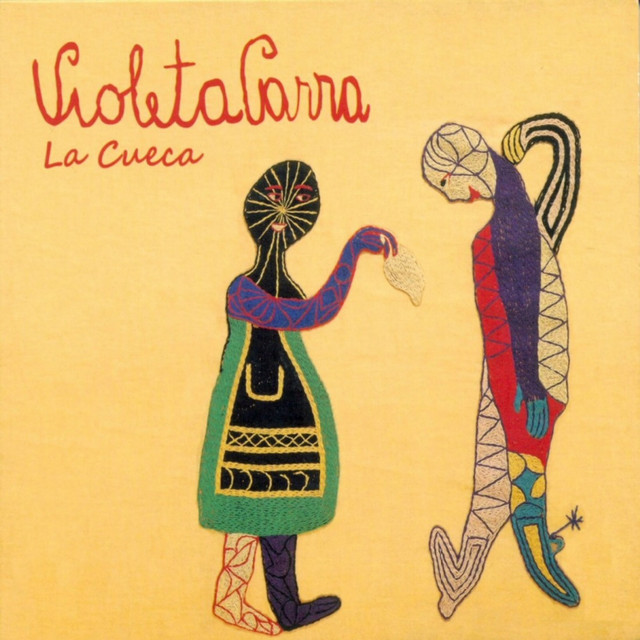
Radio, records, and urban nightlife invigorated new practices. In Santiago, the gritty, witty cueca brava flourished in neighborhood bars and social clubs, carried by groups like Los Chileneros. Folklorists and artists—including Margot Loyola and Violeta Parra—documented, taught, and reimagined cuecas, bringing them to national and international stages.
Under the Pinochet regime, cueca was declared Chile’s national dance on 18 September 1979, cementing its official status even as many artists used folk forms for cultural critique and memory. Nueva Canción figures incorporated cueca rhythms and imagery into concert repertoires, while community traditions persisted in peñas and neighborhood festivities.
Cueca remains a living practice across Chile, Bolivia, and Argentina—performed in schools, competitions, peñas, and modern stages. Revivals have emphasized historical instruments (e.g., guitarrón chileno), while contemporary groups hybridize cueca with rock and urban styles (e.g., cueca rock), ensuring its continued dynamism.