Your digging level
Description
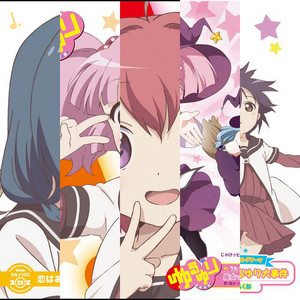
Yuri is a thematic music tag tied to Japan’s girls’ love (GL) culture, centering on songs used in, inspired by, or marketed to anime, manga, and visual novels that portray romantic or emotional relationships between women.
Musically, most “yuri” songs are not a separate sonic idiom but draw on mainstream anisong palettes: glossy J‑pop and pop‑rock, seiyuu (voice‑actor) idol pop, gentle acoustic ballads, and occasional electronic or orchestral cues. What distinguishes the tag is the lyrical and narrative framing—songs that accompany yuri anime openings/endings, character songs sung by female casts, or fan‑driven doujin works that articulate sapphic intimacy, longing, and solidarity.
As a result, “yuri” functions like a content‑focus label within anime music rather than a tight set of production rules: bright, hook‑oriented pop for school‑life comedies; emotive ballads for introspective dramas; and atmospheric pieces for avant‑garde GL shows.
History
Yuri storytelling emerges in shōjo manga in the 1970s and grows through the 1990s as a literary and visual culture. Music tied to these works was primarily incidental—theme songs or image albums aligned with broader J‑pop and anime score trends rather than a distinct musical style.
The 2000s see a visible wave of GL anime and OVAs (e.g., Maria‑sama ga Miteru, Kannazuki no Miko, Strawberry Panic). Their openings/endings and character songs—delivered by seiyuu units and anisong specialists—provide a recognizable musical backbone for the yuri tag: ornate, sometimes gothic‑tinged pop (ALI PROJECT), high‑energy techno‑pop (KOTOKO), and heartfelt ballads. Online forums and fansubs help consolidate “yuri” as a playlistable, searchable music category.
With the mainstreaming of legal streaming and social platforms, new GL titles (e.g., Bloom Into You, Yurikuma Arashi, Citrus) bring fresh waves of OP/EDs. Seiyuu duets and small idol units become central to the sound identity: bright choruses, close female harmonies, and lyrics foregrounding tenderness, self‑discovery, and quiet resolve. Doujin circles and Vocaloid/UTAU producers also contribute fan‑works coded as yuri through cover art, metadata, and narrative framing.
The tag remains audience‑driven: curators aggregate yuri‑coded anisongs, character songs, and doujin pop across platforms. Musically it continues to mirror contemporary anisong—EDM‑polished J‑pop, pop‑rock bands, lush ballads—while the thematic lens (women‑loving‑women narratives) gives the category its cultural coherence.