Your digging level
Description
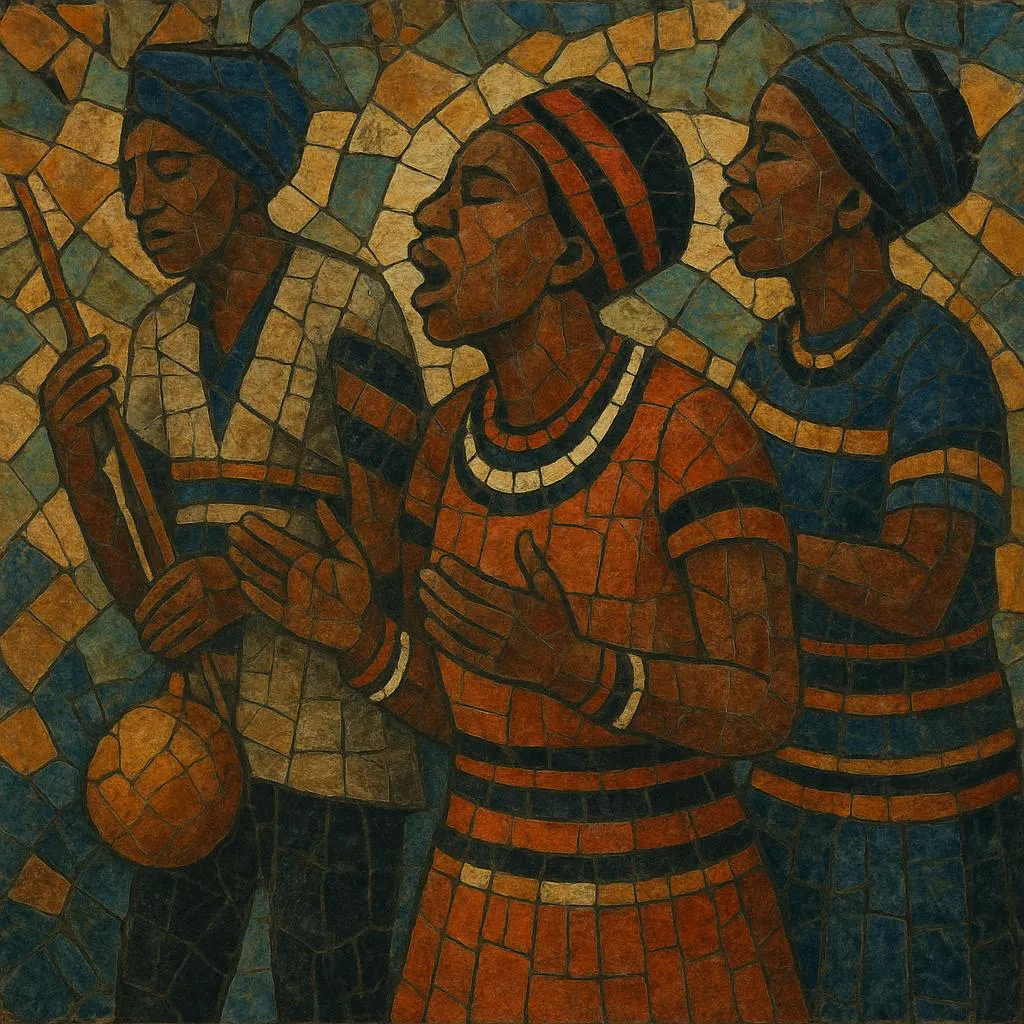
Xhosa music refers to the traditional and contemporary musical practices of the Xhosa people of South Africa. It centers on rich vocal traditions—particularly call-and-response singing, dense choral textures, and ululation—supported by handclaps, foot-stamping, and cyclical polyrhythms.
Signature timbres come from the uhadi gourd-resonated musical bow and the umrhubhe mouth bow, which use the player’s mouth as a resonator to filter harmonics and produce overtone-rich melodies. Melodic organization often draws on pentatonic or hexatonic pitch collections and sustained drones, while harmonies frequently move in parallel intervals and open fourths/fifths.
The language itself (isiXhosa), with its distinctive click consonants, shapes phrasing and rhythm in songs for rites of passage, initiation, praise, weddings, and communal dances. Over time, mission-era hymnody and urban styles interacted with these indigenous practices, yielding choral idioms and modern fusions with jazz and popular music.
History
Xhosa musical practices long predate written accounts, rooted in communal ceremony, storytelling, dance, and praise poetry. Core features—call-and-response singing, antiphonal choirs, body percussion, and the use of musical bows (uhadi and umrhubhe)—were already firmly established. In the 19th century, missionaries documented Xhosa song traditions and introduced hymn singing, which coexisted with and gradually blended into indigenous choral practices.
As Xhosa communities moved to urban centers, large vocal ensembles and male choral groups flourished in work compounds and townships. Mission hymnody, tonic-solfa teaching, and indigenous part-singing enabled robust choral cultures. These currents intersected with emergent South African popular idioms—marabi, pennywhistle-led street music, and later jazz—producing a porous musical ecosystem in which Xhosa choral language, harmonic choices, and vocal textures informed modern styles.
Xhosa artists brought overtone-inflected bow music and isiXhosa repertoire to global audiences. International success by singers who featured Xhosa-language songs and traditional motifs sparked renewed interest in indigenous techniques. Simultaneously, community choirs and cultural ensembles sustained ceremonial and educational roles at home.
Today, Xhosa music spans ceremonial settings, conservatory stages, and mainstream charts. Artists fuse bow textures and Xhosa prosody with jazz harmony, folk-pop songwriting, gospel-influenced choirs, and modern production. Cultural custodians safeguard instrument-making, tunings, and repertories, while younger musicians adapt rhythmic cycles and call-and-response patterns to R&B, soul, and singer-songwriter formats.