Your digging level

For this genre
0/8
🏆
Sign in, then listen to this genre to level up

Description

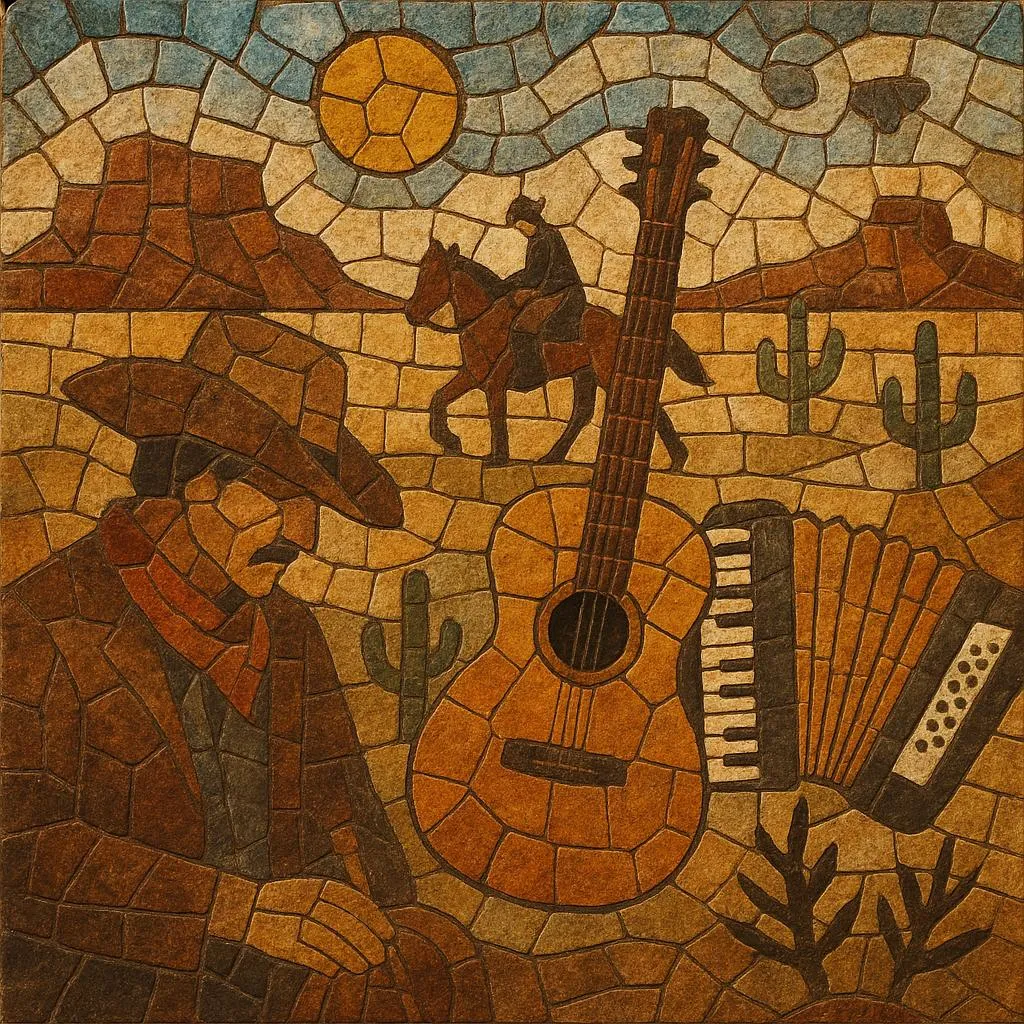
Western Americana is a modern roots style that blends the storytelling and acoustic textures of Americana with the iconography, twang and frontier sensibility of classic Western music. It evokes wide‑open spaces, desert highways, cattle trails and border towns, often pairing plaintive vocals with tremolo‑soaked electric or baritone guitar, pedal steel, and spare percussion.

Sonically, it draws on country and folk songcraft, Western swing’s lilt, Southwestern border instrumentation (e.g., trumpet, accordion), and the cinematic cues of spaghetti‑Western scores (reverb, whistling, wordless choruses). The result lives between campfire intimacy and widescreen vistas—melancholic yet hopeful, rugged yet graceful.


Sources: Spotify, Wikipedia, Discogs, RYM, MB, user feedback and other online sources

History

Precedents (1930s–1970s)

Western Americana’s roots stretch back to cowboy ballads and Western swing in the 1930s–40s (Sons of the Pioneers, Gene Autry, Bob Wills), and to the panoramic, reverb‑laden soundtracks of mid‑century Western cinema. In the late 1960s–70s, country rock and borderland scenes (from Texas to Arizona) seeded a taste for rugged storytelling and open‑skied arrangements.

Alternative Country and the Desert (1990s)

The 1990s alt‑country/Americana wave reframed traditional idioms for contemporary listeners. In the American Southwest—especially Tucson—bands like Giant Sand and (soon after) Calexico fused folk/country with mariachi hues, Morricone‑esque textures and desert ambience. That Southwestern coloration became a key template for what would later be called Western Americana.

Consolidation as a Style (2000s)

By the 2000s, the term Western Americana circulated among writers, promoters and streaming curators to describe Americana steeped in frontier imagery and Western sonics—twangy lead guitars, pedal steel, shuffle/two‑step grooves, and border‑brass accents—without slipping into retro pastiche. Singer‑songwriters foregrounded cinematic storytelling about ranch hands, oil fields, rail towns and border crossings.

Revival and Broader Reach (2010s–present)

A renewed interest in cowboy aesthetics (film/TV synch, festival billings, boutique labels) helped push the sound forward. Artists such as Ryan Bingham, Colter Wall, Tom Russell, Marty Stuart, and Orville Peck anchored a spectrum from spare trail songs to lush, noir‑Western croons. The genre now comfortably overlaps with roots rock, neo‑honky‑tonk and contemporary singer‑songwriter forms while keeping the Western landscape—both literal and imagined—at its core.

How to make a track in this genre

Core Instrumentation
•   Acoustic guitar for song foundation; electric or baritone guitar with spring reverb/tremolo for the “wide‑open” lead tone. •   Pedal steel or lap steel to supply mournful glides and harmonic pads. •   Bass (upright or electric) and light drums/brushes; add hand percussion for trail‑song intimacy. •   Optional Southwestern colors: trumpet/flugelhorn (mariachi voicings), accordion, nylon‑string guitar; occasional fiddle/mandolin.
Harmony, Melody and Rhythm
•   Favor diatonic progressions (I–IV–V; I–vi–IV–V), Mixolydian flavors (b7 over the I chord) and minor‑key ballads (i–VII–VI) for duskier moods. •   Melodic hooks often sit in the middle register, with call‑and‑response between voice and steel/trumpet. •   Rhythms: train‑beat two‑step (boom‑chick), gentle shuffle, 12/8 ballad, or half‑time “slow lope.” Keep drum parts economical to let space and reverb do the cinematic work.
Arrangement & Texture
•   Use space strategically: sparse verses, blossoming choruses with steel swells and harmony vocals. •   Paint with ambience—spring reverb, plate or chamber on vocals and guitar; a touch of tape saturation for dust and patina. •   For spaghetti‑Western cues: whistled motifs, wordless “ahh” choirs, tremolo guitar ostinatos, and timpani‑like floor‑tom rolls.
Lyrics & Themes
•   Story songs rooted in the American West: ranching, rodeo, migrant roads, ghost towns, oilfields, desert weather, borderlands. •   Balance grit and poetry; specific place names and trade details lend authenticity. Use imagery of light, wind, dust and horizon lines.
Writing Tips
•   Start with a campfire‑ready progression and lyric vignette; orchestrate outward with steel/trumpet counter‑lines. •   Keep tempos moderate (≈ 68–108 BPM) to preserve the loping gait; faster pieces can adopt a two‑step swing. •   Aim for contrasts: intimate verse narratives against widescreen, reverberant refrains.

Top tracks

Locked
Share your favorite track to unlock other users’ top tracks

Upcoming concerts

in this genre
Influenced by
Has influenced

Download our mobile app

Get the Melodigging app and start digging for new genres on the go
© 2026 Melodigging
Melodding was created as a tribute to Every Noise at Once, which inspired us to help curious minds keep digging into music's ever-evolving genres.
Buy me a coffee for Melodigging