Your digging level
Description
Waiata are traditional Māori songs from Aotearoa (New Zealand), encompassing a wide family of sung forms such as waiata aroha (songs of love), waiata tangi (laments), oriori (lullabies), waiata poi (songs performed with poi), and waiata-ā-ringa (action songs). The term “waiata” broadly denotes sung poetry—carriers of memory, genealogy (whakapapa), proverbial wisdom (whakatauākī), and community identity.
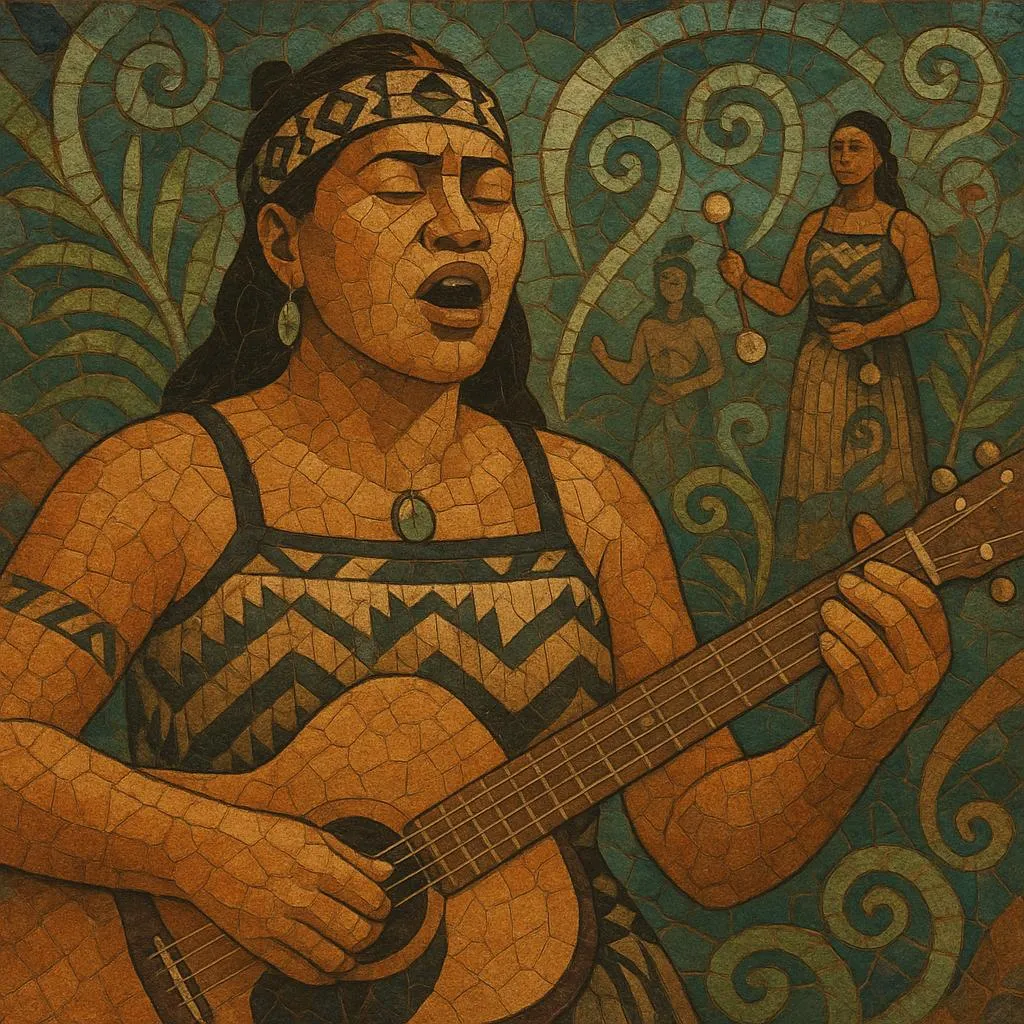
Musically, older waiata are often chant-like, with free rhythm and narrow-range melodies led by group unison, heterophony, and vocables; they may feature subtle microtonal slides and speech-song inflections. In performance, they can be supported by movement (poi, hand actions) and taonga pūoro (traditional instruments such as kōauau flutes, pūtōrino, pūtātara, and hue). Since the 19th–20th centuries, many waiata have also been harmonised and accompanied by guitar and ukulele, blending Māori melodic contours with Western triadic harmony.
Today, waiata live in both customary and contemporary contexts—from marae ceremonies and kapa haka (performing arts) to studio recordings in te reo Māori—remaining a vital expression of language, history, and collective voice.
History
Waiata pre-date European contact and sit at the heart of Māori oral culture. They preserved whakapapa (genealogy), historical events, tribal relationships, and spiritual ideas, while marking key life and community moments—births, farewells, tangihanga (funerals), welcomes, and commemorations.
Earlier waiata were predominantly monophonic or heterophonic, with chant-like delivery, flexible rhythm (following text), and group unison. Actions (such as poi) coordinated community participation and embodied meaning, while taonga pūoro added timbral colour and ceremonial power.
Following colonisation, guitar/ukulele accompaniments and Western harmonic practices entered Māori performance. At the same time, leaders and scholars (notably Sir Āpirana Ngata) documented and revitalised waiata, fostering their transmission. The growth of kapa haka and community gatherings strengthened inter-iwi presentation of waiata, and recording/ broadcasting extended their reach.
From the Māori cultural renaissance onward, waiata expanded into contemporary genres while centring te reo Māori. Landmark popular waiata (e.g., “Poi E”) brought Māori composition to mainstream audiences. In the 21st century, dedicated initiatives (festivals, competitions, “Waiata Anthems” projects) have supported new compositions, blending traditional text forms with modern production. Today, waiata flourish across ceremonial settings, schools, and commercial music—sustaining language and identity.