Your digging level
Description
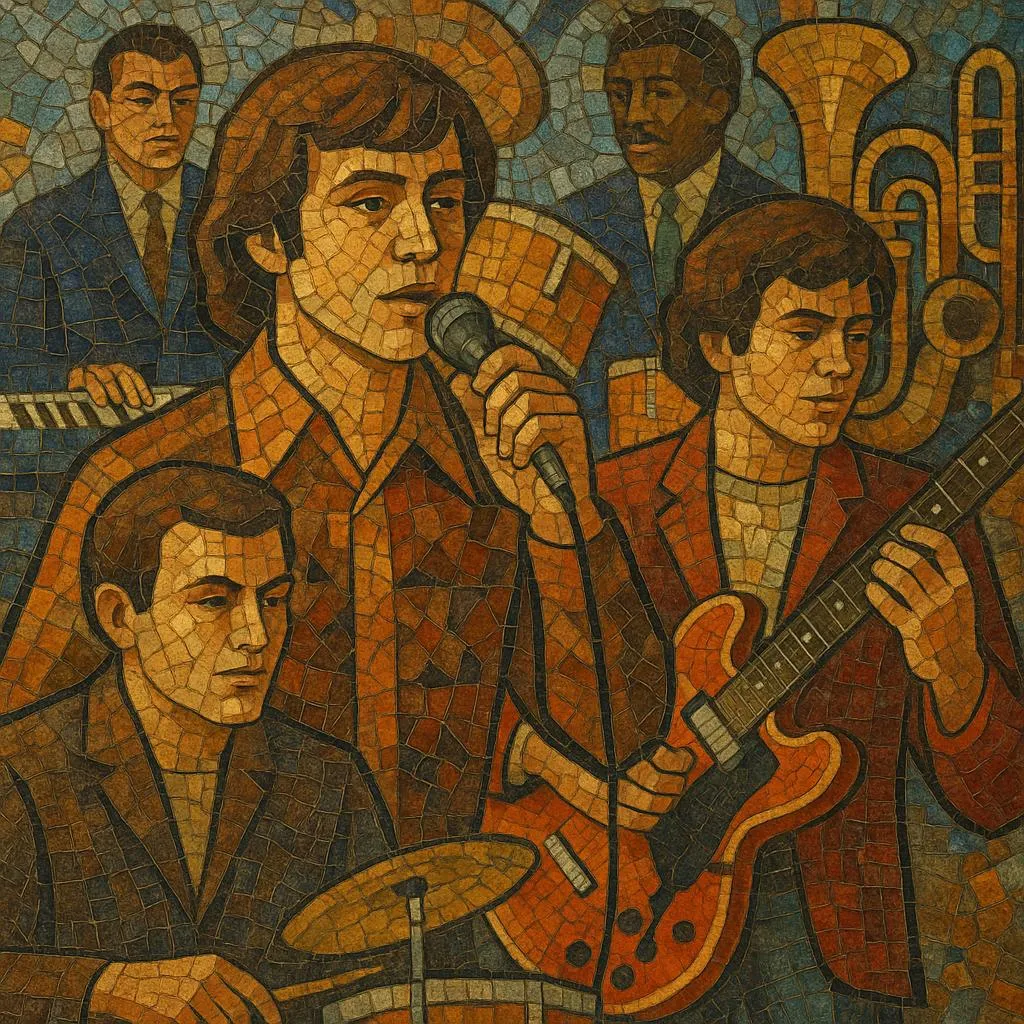
VIA (an acronym in Russian for “Vocal‑Instrumental Ensemble”) refers to the state‑sanctioned pop/rock vocal groups that dominated mainstream Soviet popular music from the late 1960s through the early 1980s.
Musically, VIA bands blended beat‑group pop and light rock with “estrada” (stage/pop) arranging, close choral harmonies, and elements of local folk melody. Typical ensembles combined electric rhythm sections (guitars, bass, drums) with keyboards and often brass or strings, delivering polished, danceable songs with optimistic or romantic lyrics. The sound is tuneful and clean, with clear diction, strong group vocals, and arrangements designed for large concert halls and television.
Culturally, VIA was both a musical style and an institutional format: groups worked under regional philharmonics, toured widely across the USSR, and presented Western‑influenced pop within officially approved aesthetics.
History
The VIA model emerged as Soviet cultural institutions sought a domesticated alternative to Western beat groups. Drawing on estrada’s stage professionalism and on the popularity of British‑invasion pop, early ensembles adopted guitars and drums but framed them with trained vocalists, choirs, and orchestrated arrangements. This allowed Western sonorities to enter mass culture in an officially curated, ideologically safe form.
By the 1970s, VIA groups were the face of mainstream Soviet pop. They developed a signature blend: catchy melodies, bright major‑key harmonies, choral refrains, and danceable but moderate grooves. Many ensembles incorporated regional folk elements—modal inflections, traditional rhythms, and native instruments—creating distinctive national flavors within the overall VIA sound. Television, radio, and state concert circuits amplified their reach.
As disco, funk, and early synthesizers entered the palette, arrangements grew glossier: electric pianos, string machines, and brass sections sat alongside guitar bands. VIA lyrics remained optimistic, romantic, and socially acceptable, while production borrowed global pop techniques (key changes, layered backing vocals). In parallel, more independent rock scenes developed outside official structures, but VIA remained the mainstream benchmark.
After the USSR’s collapse, VIA’s polish and vocal‑ensemble aesthetics fed directly into post‑Soviet pop and television variety shows. Its repertoire has become a nostalgic touchstone, sampled and re‑imagined in genres from synth‑pop to “sovietwave.” The VIA template—tight choral writing, tuneful hooks, and stage‑ready arrangements—continues to inform Russian and broader post‑Soviet popular music.