Your digging level
Description
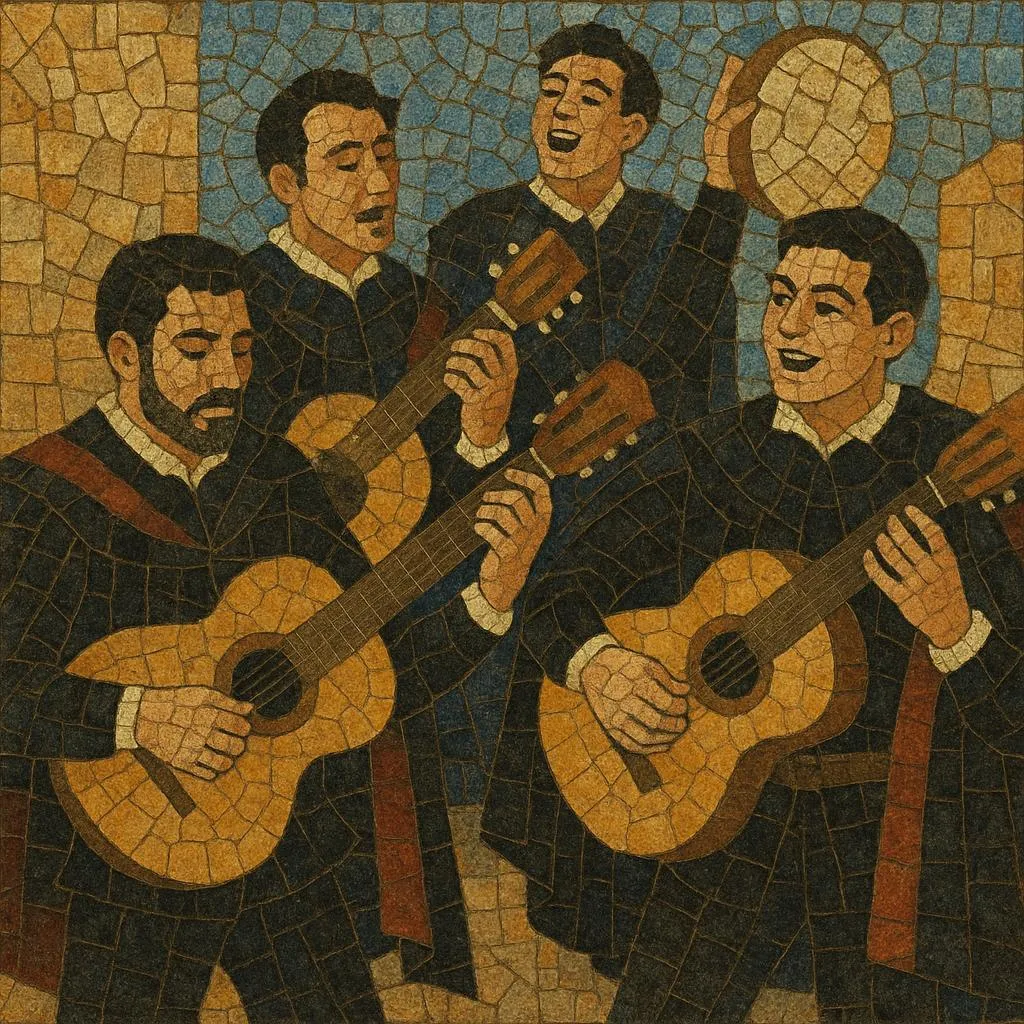
Tuna is a centuries‑old Iberian student music tradition in which university ensembles, dressed in historic academic attire, perform serenades and lively street pieces with plucked strings and light percussion.
Typical instrumentation centers on guitars, bandurrias and laúdes (Spanish lutes), with additional voices, hand percussion (pandereta/tambourine), and occasional regional stringed variants (e.g., Portuguese violas). Performances blend romantic serenades with upbeat waltzes, pasodobles, rumbas and regional folk songs, often delivered with theatrical charm, humor and close harmony.
The ensemble is as much a social and ceremonial institution as it is a musical one: members (tunos/tunantes) preserve campus customs, travel to festivals and friendly competitions, and serenade communities, keeping a living link to medieval student life in Spain and Portugal that later spread across Latin America.
History
Tuna emerges in university towns of medieval Spain and Portugal in the 13th century. Students used music—particularly nocturnal serenades—to earn food or money and to celebrate academic and local festivities. The practice drew on medieval song traditions (cantigas, romances) and the social ritual of the serenade.
As universities matured, so did campus music circles. Plucked‑string textures (guitars, bandurrias, laúdes) and multi‑part vocal writing became hallmarks. By the 19th century, related estudiantina ensembles toured internationally and popularized Iberian student music aesthetics. Tuna repertoire incorporated waltzes, pasodobles, and regional folk forms while retaining the core serenading identity.
Iberian cultural exchange helped transplant tuna practices to Latin America, where university tunas adopted local songs and rhythms, enriching the tradition while preserving attire, ceremony, and serenade customs.
Today tuna is primarily a heritage and community art rather than economic busking. University tunas compete and collaborate in certámenes and festivals across the Iberian world. The style intersects with campus traditions (e.g., Portuguese Coimbra song culture), while maintaining signature elements: academic capes adorned with ribbons, playful banter, street performance, and romantic/night‑time serenades.