Your digging level

For this genre
0/8
🏆
Sign in, then listen to this genre to level up

Description

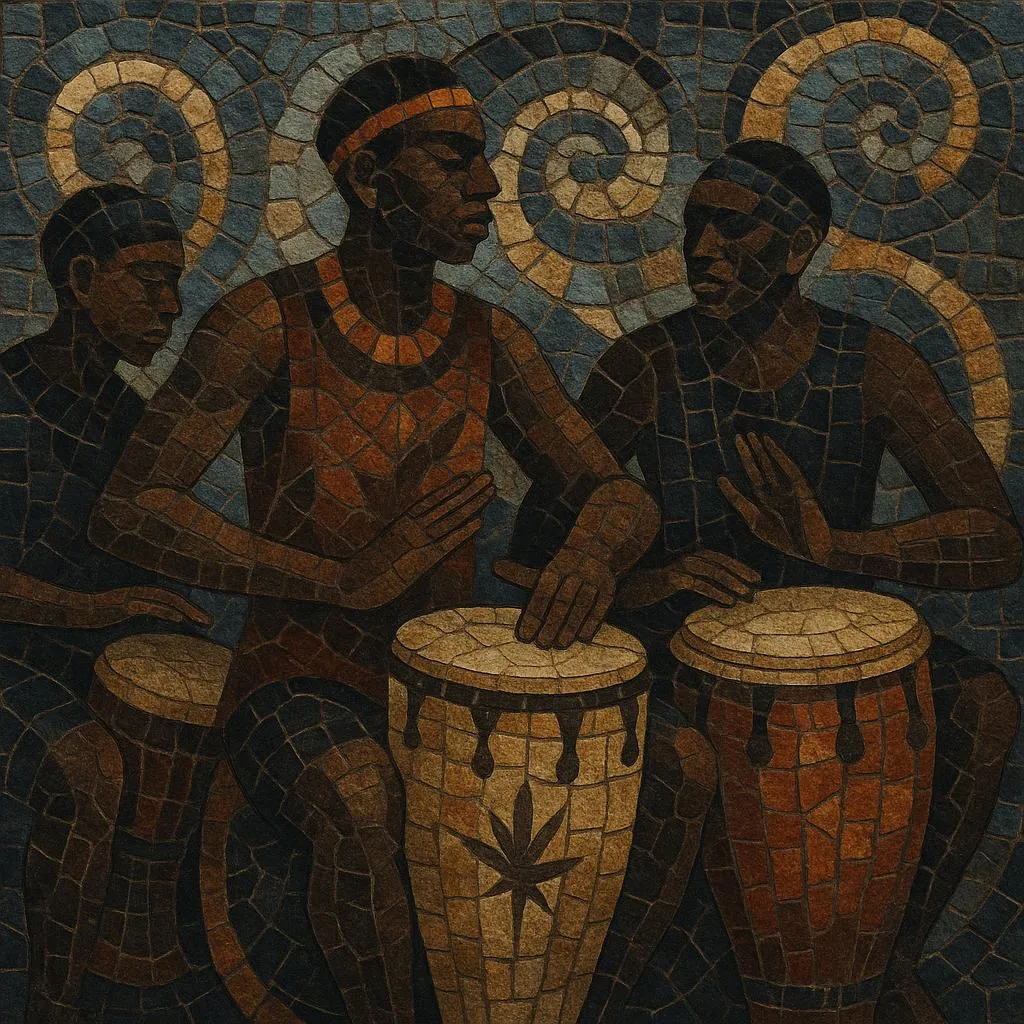
Tribal music (in the electronic dance music sense) is a family of club genres defined by stripped‑back, percussive grooves built around toms, congas, bongos, shakers, and hand‑drum hits.

Rather than using big builds, cymbal swells, or snare rolls, it emphasizes a steady, hypnotic 4/4 pulse with cycling percussion patterns. Hi‑hats and claps are often sparse or absent, keeping the focus on the earthy, mid‑range rhythm. Melodic content is minimal—short stabs, drones, or vocal fragments serve as textural accents while the drum groove carries the track.

DJs and producers favor long, DJ‑friendly arrangements, extended intros/outros, and gradual, tactile changes in density and timbre. The aesthetic ranges from dark and subterranean to warm and ceremonial, but the defining trait is the relentless, trance‑inducing drum work.


Sources: Spotify, Wikipedia, Discogs, RYM, MB, user feedback and other online sources

History

Origins (early–mid 1990s)

Tribal music within club culture coalesced in the early 1990s as house and techno producers pushed drum‑centric arrangements to the fore. New York’s and Miami’s house scenes, along with European techno hubs, favored long, tom‑heavy grooves that borrowed the timbral palette of Afro‑Latin percussion while retaining the machine‑tight pulse of drum machines.

Consolidation (late 1990s–early 2000s)

By the late 1990s, the sound had clear signatures in both house and techno sets: heavy toms/congas, shaker layers, minimal chord stabs, and sparse breakdowns. Labels and club residencies popularized a darker, warehouse‑ready thrust on one side and a warmer, "Iberican" flavor on the other. The shared thread was the stripped, monotonic beat architecture—few fills, few cymbals, and long sections designed for mixing.

Global diffusion and cross‑pollination (2000s–2010s)

As global dance music widened, tribal frameworks informed progressive house grooves and later intersected with Afro‑diasporic club forms. Its drum‑first pragmatics—looped hand‑drum patterns, skeletal arrangements, and hypnotic repetition—also resonated with emerging scenes seeking raw, body‑led rhythms.

Legacy

Today, the tribal approach is a lasting template for DJs and producers who want momentum without melodic clutter: a percussive engine that can swing dark and subterranean or sun‑baked and ceremonial, all while keeping the focus squarely on the drum conversation.

How to make a track in this genre

Core rhythm and tempo
•   Tempo: 122–128 BPM in 4/4. •   Kick: Solid, centered four‑on‑the‑floor with minimal variation. •   Percussion: Layer toms, congas, bongos, and shakers as the main actors. Prioritize mid‑range hand‑drum timbres over bright cymbals. Keep hi‑hats/claps sparse or omit entirely.
Groove design
•   Build interlocking parts: one or two conga/tom ostinatos, a shaker driving 16ths or 8ths, and a secondary percussion voice for off‑beat syncopation. •   Use call‑and‑response between low toms and higher congas. Program subtle ghost notes to add human flow. •   Avoid big fills; use micro‑edits (muting one layer for a bar, velocity nudges, transient shaping) for movement without breaking hypnosis.
Harmony, texture, and sound design
•   Keep harmony minimal: a single drone, a two‑note chord stab, or a filtered pad. Let percussion carry the arrangement. •   Employ earthy processing (tape saturation, gentle overdrive) on drums. Use short room/plate reverbs for tactile space; avoid splashy highs. •   Add textural accents—chant fragments, breathy one‑shots, or found shakers—sparingly and rhythmically.
Arrangement and mix
•   Structure for DJs: 16–32 bar intro/outro with mostly drums; evolve elements in long phrases (e.g., add or remove one percussion layer every 16 bars). •   Keep the low end clean: kick and the lowest tom share space; high‑pass other percussion as needed. •   Focus on punchy mids (150–800 Hz) where hand‑drums live; tame harsh highs to preserve the warm, club‑forward feel.

Top tracks

Locked
Share your favorite track to unlock other users’ top tracks

Upcoming concerts

in this genre
Influenced by
Has influenced

Download our mobile app

Get the Melodigging app and start digging for new genres on the go
© 2026 Melodigging
Melodding was created as a tribute to Every Noise at Once, which inspired us to help curious minds keep digging into music's ever-evolving genres.
Buy me a coffee for Melodigging