Your digging level
Description
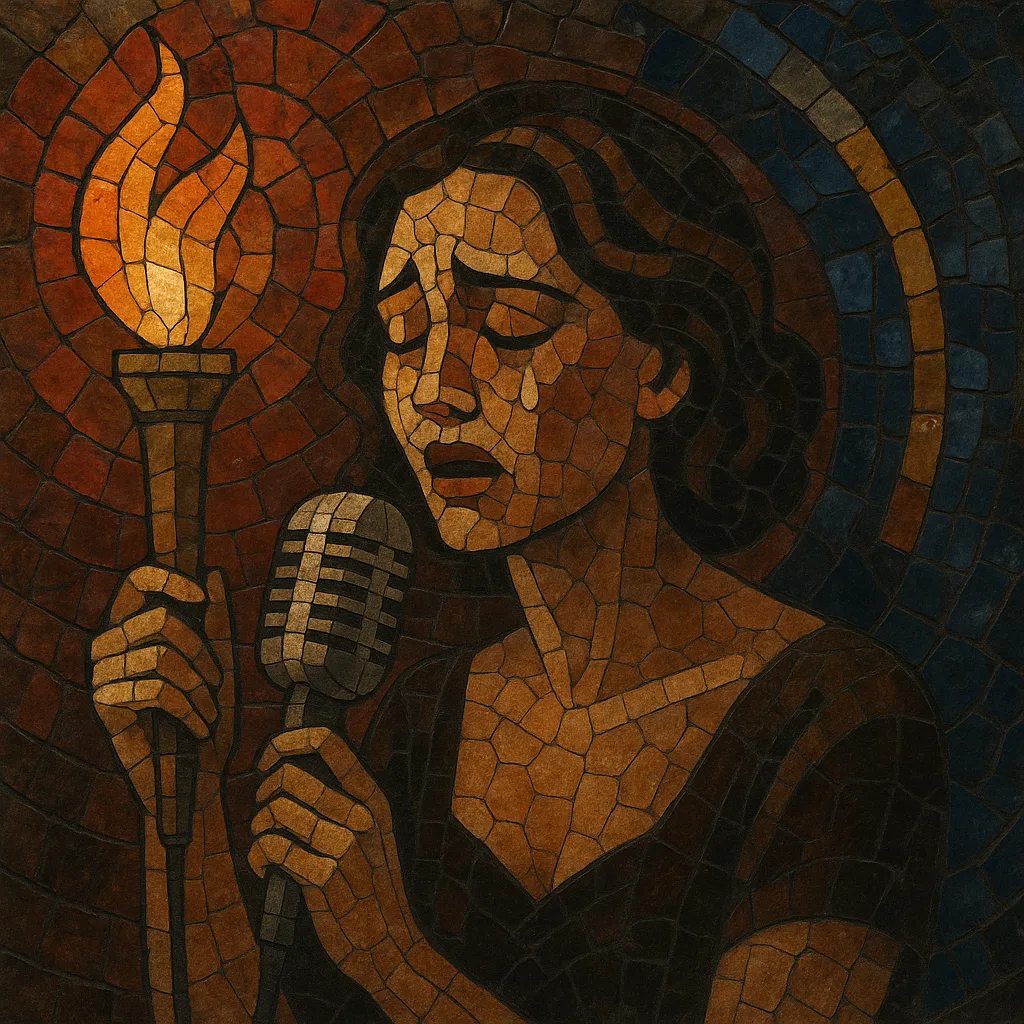
A torch song is a sentimental, often slow ballad that expresses the pain of unrequited love, longing, heartbreak, or romantic resignation. The term comes from the idiom “to carry a torch,” meaning to continue loving someone after the relationship has ended.
Rooted in the Great American Songbook and popularized by nightclub and film performances, torch songs emphasize intimate, expressive vocals and finely shaded phrasing over virtuosic display. Harmonically, they typically employ the sophisticated jazz- and Tin Pan Alley–influenced palette of the classic 32‑bar AABA standard, with rich extensions, secondary dominants, and occasional modulations.
Although historically associated with smoky clubs and crooners, the torch approach has continued through modern pop and R&B ballads, where the focus remains on story, vulnerability, and vocal nuance.
History
The torch song coalesced in the early jazz and Tin Pan Alley era, when composers and lyricists crafted intimate ballads for theaters, revues, and nightclubs. Early exemplars like “My Melancholy Baby,” “The Man I Love,” and “Body and Soul” set the template: a yearning narrative voice, supple melody, and harmonies that invited expressive vocal rubato. The idiom gained momentum alongside vaudeville and cabaret, and by the 1930s it was a staple of the Great American Songbook.
During the swing and post‑war years, torch songs flourished in jazz clubs, radio, films, and Broadway. Singers such as Billie Holiday, Frank Sinatra, and Ella Fitzgerald developed an intimate, conversational phrasing that made the songs feel confessional. Orchestral and big‑band arrangements softened to spotlight the voice—strings, brushed drums, and muted horns became signatures of the mood.
As pop, soul, and R&B rose, the torch sensibility moved into new settings: lush soul ballads, easy‑listening pop, and adult‑oriented radio formats. While the jazz standard repertoire remained central, artists in soul and pop adopted the same lyrical tropes of longing with slower tempos and sophisticated chord changes, keeping the torch lineage alive outside traditional jazz venues.
The aesthetic continues in contemporary vocal jazz, adult contemporary, quiet storm, and pop/R&B balladry. Modern singers draw on the hallmarks—emotional directness, intimate mic technique, and narrative focus—while updating production (subtle electronics, close‑miked vocals, atmospheric reverb). The torch song remains a living performance style rather than a fixed historical artifact.