Your digging level

For this genre
0/8
🏆
Sign in, then listen to this genre to level up

Description

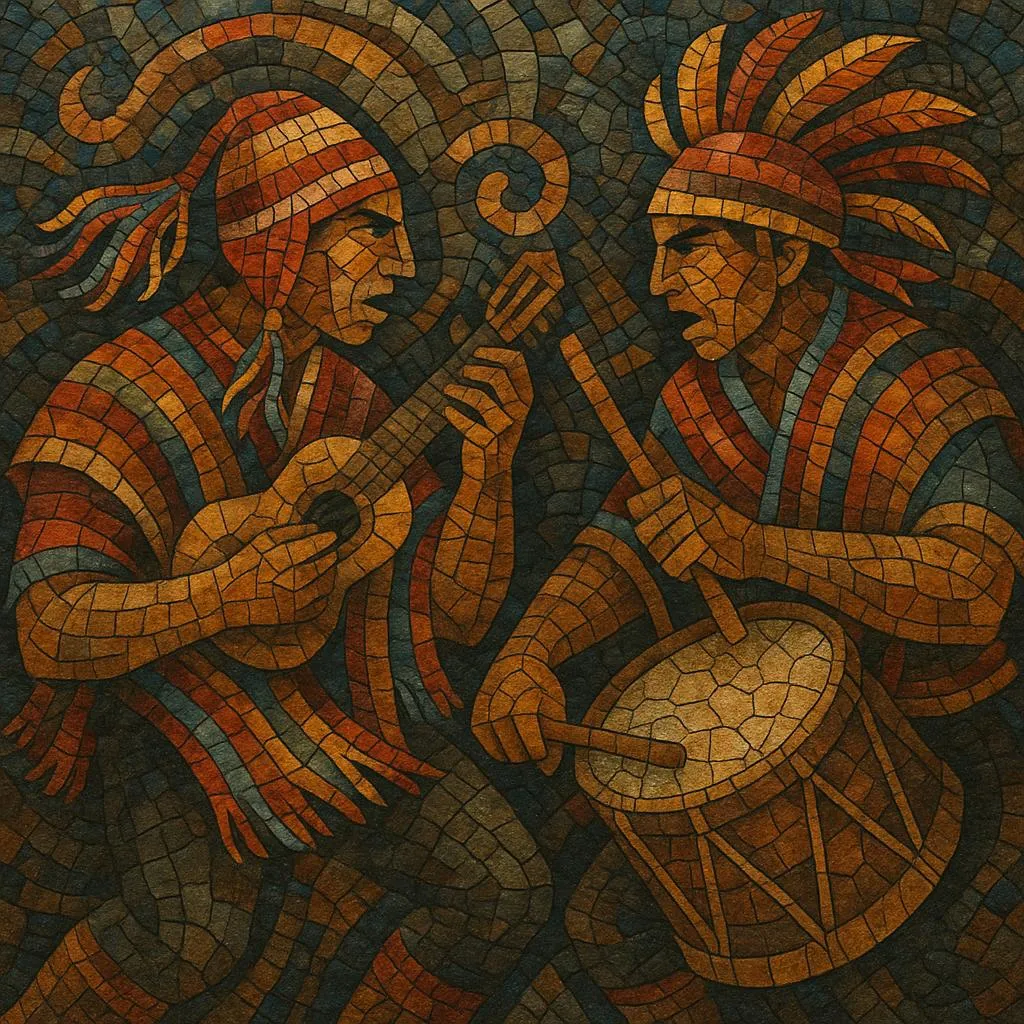
Tinku is a Quechua-origin ritual dance-and-music style from the Norte Potosí region of Bolivia. The word tinku means “meeting/encounter,” and the tradition centers on festive gatherings where rival communities dance, chant, and engage in ritualized combat meant to renew social bonds and agricultural fertility.

As a musical style adapted for the stage, tinku is fast, driving, and percussive, with stomping dance steps that double as rhythmic accompaniment. Melodies tend to be short, insistent, and often pentatonic, performed on Andean instruments such as charango, quena, and panpipes (sikus), anchored by communal singing and forceful drum patterns (bombo, caja). The overall sound is celebratory but intense, mirroring the dance’s roots in competitive encounters.


Sources: Spotify, Wikipedia, Discogs, Rate Your Music, MusicBrainz, and other online sources

History

Indigenous roots and ritual context

Tinku emerged among Quechua communities of Norte Potosí (Bolivia) as a ritual “encounter” tied to the agricultural calendar and local patron-saint festivities. The most emblematic celebration takes place in and around Potosí during the first weeks of May (Cruz de Mayo). Participants gather, form circles, chant, and dance; men (and eventually women) engage in ritualized fighting while musicians and singers sustain a continuous, propulsive groove. The practice blends deep pre-Columbian concepts of reciprocity and vitality with Catholic festival frames.

From community ritual to staged folklore

In the 20th century, Bolivia’s growing urban folklore movement began presenting regional dances on stage, and tinku was codified as a distinct choreographic and musical form. Ensembles arranged the community chant-and-drum foundations for charango, quena, zampoñas/sikus, guitars, and large Andean drums, emphasizing the pounding duple meter and group vocals that convey the music’s high-energy, confrontational spirit.

Contemporary practice and diffusion

Today, tinku thrives both in its ritual setting in Norte Potosí and as a popular stage genre performed by folkloric fraternities at major festivals (e.g., Oruro) and by touring Bolivian ensembles. Modern adaptations may incorporate fuller harmonies, bass, drum kit, and amplified winds, but they retain the signature drive, unison shouts, and stomping steps. The style has influenced Andean fusion and rock projects, helping carry the encounter ethos and Andean sonority into contemporary popular music.

How to make a track in this genre

Core rhythm and tempo
•   Use a fast duple meter (typically 2/4 or driving 4/4) at a brisk tempo (roughly 120–160 BPM). •   Emphasize heavy, even downbeats that mirror the dance’s stomping steps. Layer bombo (large Andean drum) and caja/tinya patterns for momentum.
Instrumentation
•   Melody: charango, quena, and sikus (zampoñas). Guitars often double or provide strums; optional bass reinforces the pulse. •   Percussion: bombo legüero/Andean bass drum, caja/tinya, and foot-stomps as percussive elements. •   Vocals: communal, forceful, and often in unison; call-and-response chants work well to simulate the collective encounter.
Melody and harmony
•   Favor short, repetitive melodic cells in a pentatonic or modal Andean contour. •   Keep harmonies simple (open fifths, parallel thirds, or pedal drones). The rhythmic energy and group vocals should lead more than complex chord changes.
Form and texture
•   Build intensity through ostinatos, layered sikus lines, and antiphonal voices (e.g., a leader phrase answered by the ensemble). •   Use breaks for shouted interjections or for highlighting stomping patterns before re-entering the full ensemble groove.
Lyrics and stance
•   Draw on themes of encounter, community pride, harvest/earth, courage, and festive rivalry. Lyrics are often concise and chant-like to fit the relentless rhythm.
Performance feel
•   Prioritize collective energy and forward motion. The sound should feel celebratory yet combative—bright winds and charango on top of a thick, pounding drum-and-stomp foundation.

Top tracks

Locked
Share your favorite track to unlock other users’ top tracks
Influenced by
Has influenced
Challenges
Digger Battle
Let's see who can find the best track in this genre

Download our mobile app

Get the Melodigging app and start digging for new genres on the go
© 2026 Melodigging
Melodding was created as a tribute to Every Noise at Once, which inspired us to help curious minds keep digging into music's ever-evolving genres.
Buy me a coffee for Melodigging