Your digging level
Description
Tajik traditional music encompasses courtly art repertoires, devotional forms, and mountain folk song traditions found across Tajikistan, with strong ties to the broader Persianate and Central Asian musical worlds.
Its best‑known classical stream is the maqom tradition (shared with neighboring regions), in which sung ghazal poetry is set to modal/melodic frameworks (maqom/dastgah) and intricate rhythmic cycles (usul). In the eastern Pamir highlands, falak and maddoh styles embody a more austere, soaring, and devotional sound—often voice‑led, with frame drum, plucked lutes, and fiddle. Across the country, performances favor melismatic, highly ornamented singing; heterophonic textures; and a refined, text‑centered aesthetic that elevates poetry, spirituality, and philosophical themes.
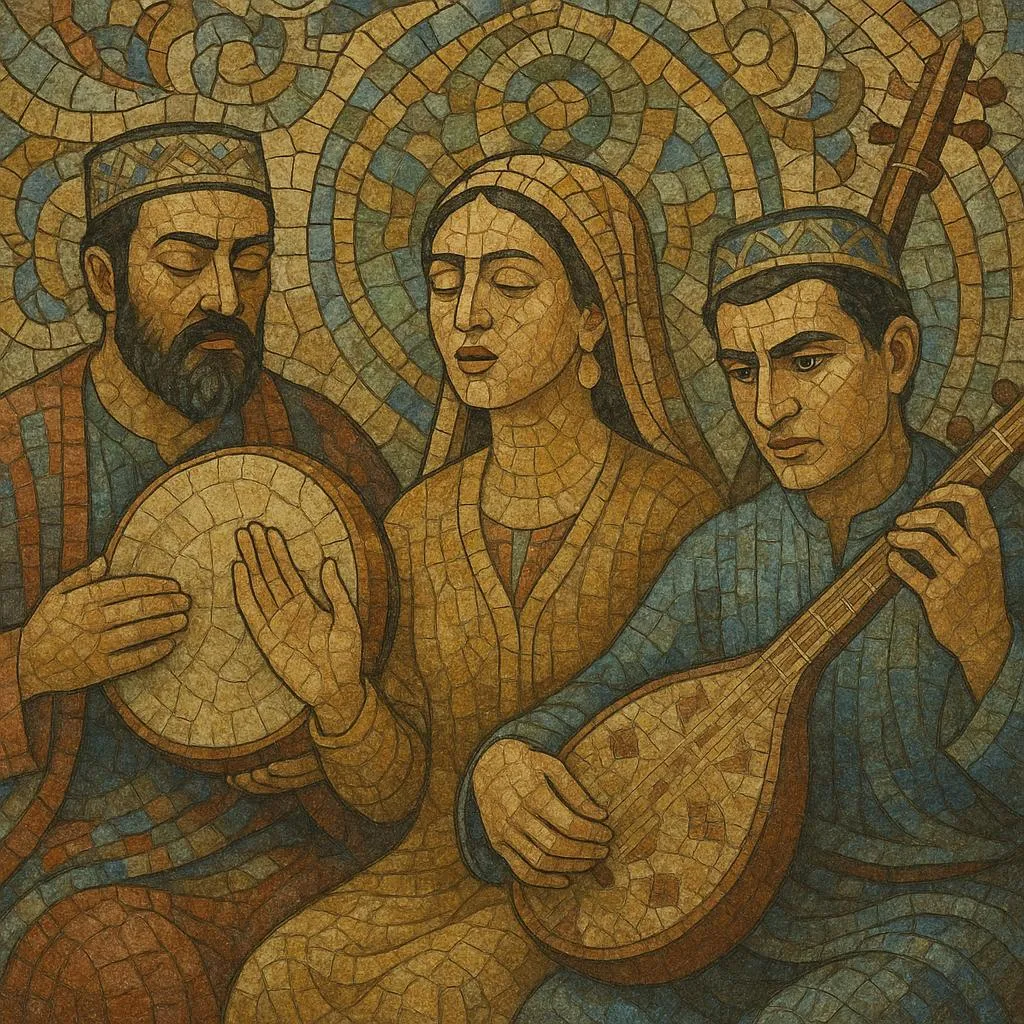
Common instruments include the rubob, dutar, tanbur, ghijak (spike fiddle), nay/karnay (flutes and long trumpets for ceremonial use), and the doira (frame drum). The musical language draws on Persian poetics, Sufi mysticism, and modal practices that predate the modern nation-state, yet it continues to evolve in contemporary ensembles and conservatories.
History
Tajik traditional music crystallized over centuries in Persianate urban centers of Transoxiana (Bukhara, Samarkand, Khujand), where Tajik- and Uzbek-speaking musicians cultivated maqom repertoires in courts and merchant salons. These repertoires codified modal systems, poetic forms (especially the ghazal), and cyclical rhythms (usul). The Tajik strand shares deep kinship with Persian dastgāh practice while retaining local melodic turns, instrumental timbres, and Tajik-Persian diction.
In the eastern Pamirs (Badakhshan), distinct practices such as falak (a plaintive, “fate”-evoking song style) and maddoh (Ismaili devotional chanting) flourished in village and ritual contexts. These styles emphasize unison or heterophonic group singing, responsorial textures, and the centrality of the voice, supported by doira frame drum, rubob/dutar, and ghijak. Their texts range from mystical to moral subjects and reflect the region’s religious pluralism and highland lifeworlds.
During the Soviet period, Tajik classical and folk repertoires were institutionalized through state ensembles, radio orchestras, and conservatories. This brought standardization (fixed suites, staged formats, notated arrangements) alongside new opportunities for professional musicians. Urban maqom and rural falak/maddoh entered concert halls and airwaves, even as local lineages and oral pedagogy persisted.
Since the 1990s, Tajik traditional music has experienced renewed attention: master-apprentice transmission, university programs, and regional ensembles have preserved maqom cycles and Pamiri repertoires. International tours and recordings have introduced Tajik singing, poetry, and instrumental color to world audiences, while contemporary artists draw on these traditions in new, hybrid forms.