Your digging level
Description
Szanty is the Polish maritime folk song scene centered on sea shanties—traditional sailors’ work songs—reinterpreted and newly composed in Polish.
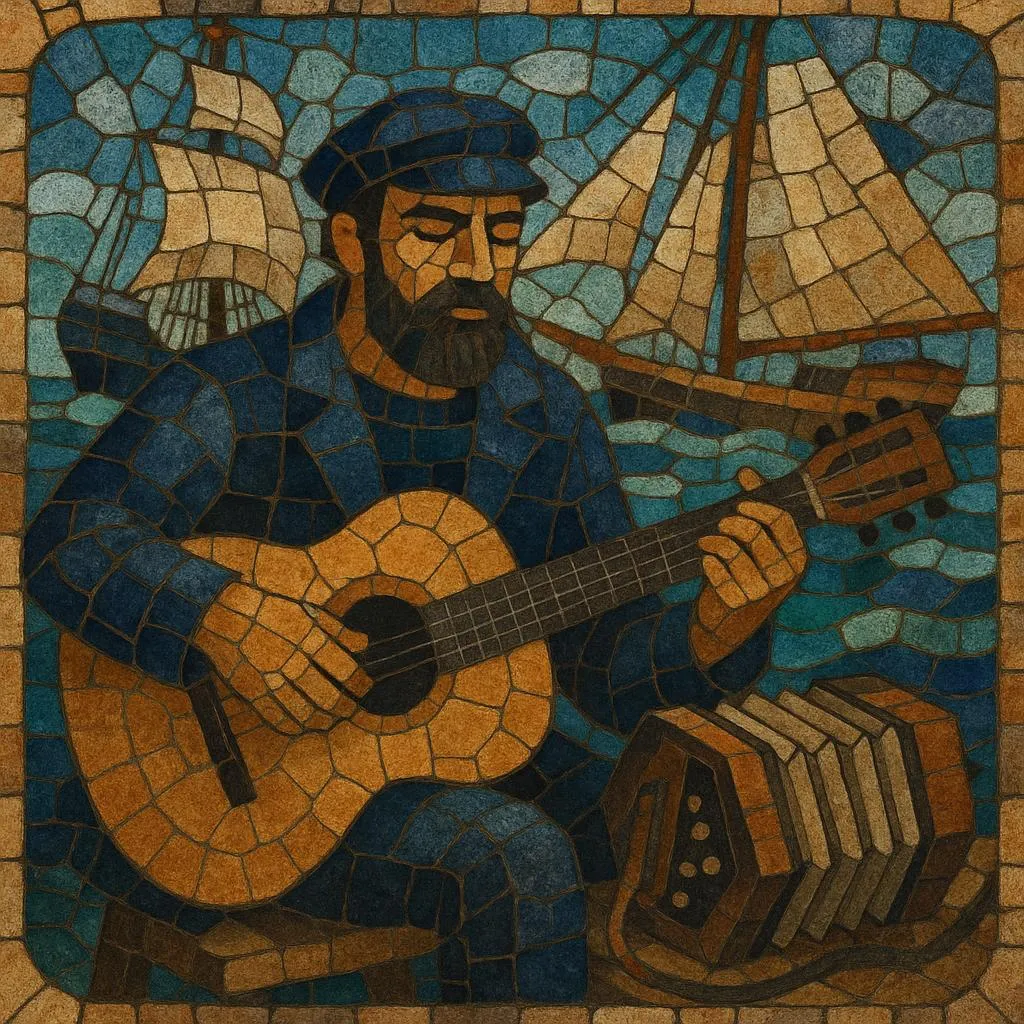
While rooted in Anglo‑American and Celtic shanty repertoire, the Polish movement developed a distinct festival and club culture: multi‑part vocal arrangements, sing‑along choruses, and acoustic instrumentation (guitars, concertina/accordion, fiddle, whistles, bodhrán) designed for pubs, student sailing clubs, and concert stages.
Repertoires mix faithful translations of historical work songs (halyard, capstan, and forebitter types) with original Polish ballads about life at sea, camaraderie, storms, ports, and ships. The style values call‑and‑response, strong pulse for group singing, and storytelling lyrics, often blending elements of Polish sung‑poetry and broader European folk aesthetics.


History
Sea shanties originated as sailors’ coordinated work songs aboard square‑rigged ships in the 19th century. Their functional rhythms (for hauling, heaving, and marching) and call‑and‑response structure spread across Atlantic maritime cultures.
Post‑war Polish sailing clubs and student song movements began to translate and adapt shanties, singing them socially on land. The dedicated Polish scene—szanty—crystallized around festivals and sailing communities, culminating in the launch of major festivals (notably the Shanties Festival in Kraków, founded in 1981). Bands professionalized arrangements, added Polish lyrics, and brought maritime repertoire to concert stages.
With the growth of national festivals, radio support, and a touring circuit, szanty diversified. Ensembles introduced richer vocal harmonies, instrumental color (concertina, fiddle, whistles), and mixed programs of translated classics and Polish originals that drew on balladry and sung‑poetry. Recordings, songbooks, and choral arrangements helped standardize a canon and a participatory pub‑singing ethos.
Szanty remains a vibrant Polish niche with strong festival culture, choral collaborations, and youth ensembles. While historically informed performance is respected, many acts favor concert‑ready harmonies and narrative ballads. The global sea‑shanty revival on social media broadened curiosity, but in Poland the scene already had deep roots, community infrastructure, and a repertoire that continues to grow.
Think sing‑along. Write with a strong, steady pulse and memorable choruses that invite group voices.
•Use classic shanty functions as archetypes:
•Halyard shanties: 4/4, clear call‑and‑response for short coordinated pulls.
•Capstan/windlass: 6/8 or flowing 4/4, continuous motion for heaving.
•Forebitters (off‑duty ballads): narrative strophic songs with longer verses.