Your digging level for this genre

0/8
🏆
Sign in, then listen to this genre to level up

Description

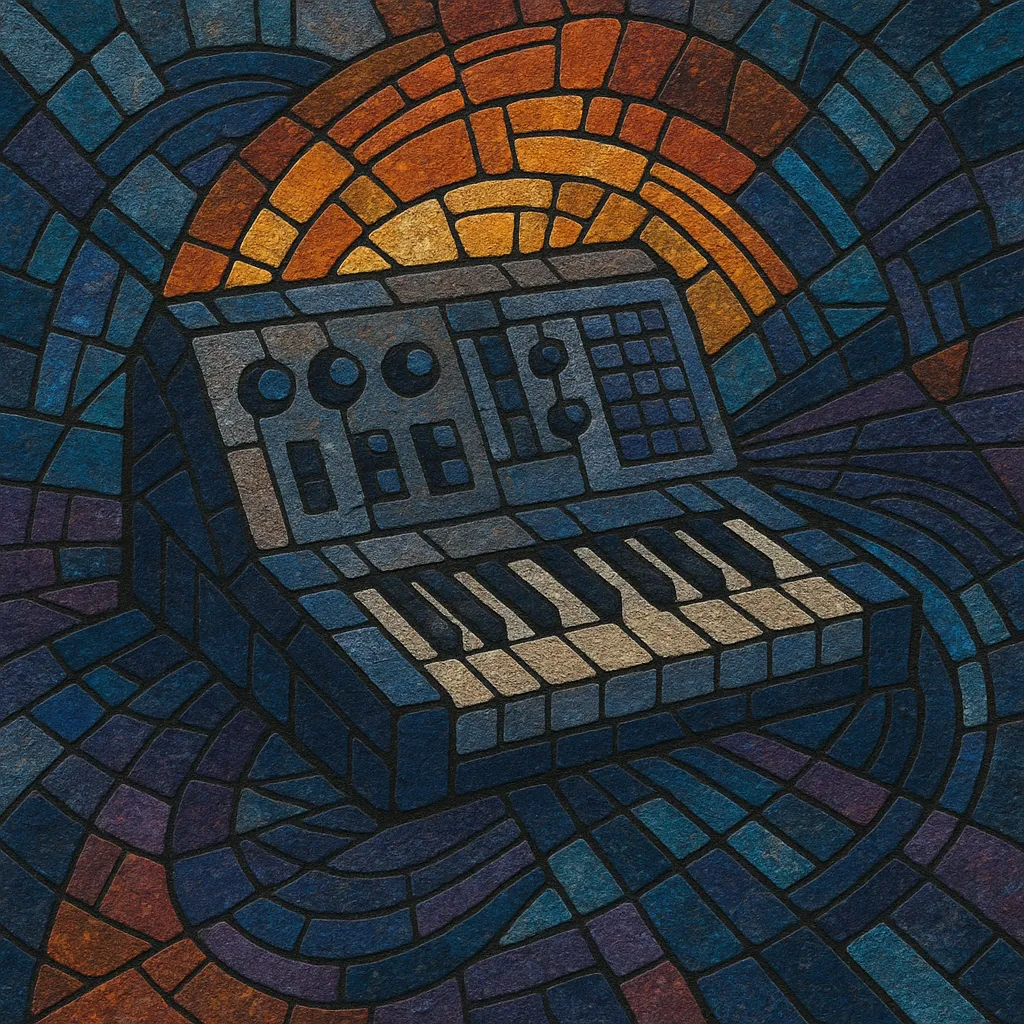
Synthesizer (as a genre tag) refers to music that foregrounds the electronic synthesizer as the primary sound source, celebrating timbre design, sequenced patterns, and the tactile possibilities of analog and digital electronics.

It spans from early modular explorations and Moog/Buchla demonstrations to Berlin School sequences, space-age textures, and virtuosic keyboard reinterpretations of classical and popular repertoire. Emphasis is placed on sound design (oscillators, filters, envelopes, modulation), repeating motifs, and textural development, often with minimal lyrics or none at all.

While the instrument is used across countless styles, the "synthesizer" category highlights works where the identity, techniques, and sonorities of the synth itself are the core aesthetic focus.

History

Early Electronic Roots (1940s–1960s)

Tape music and musique concrète laid the groundwork for studio-based sound construction, while early electronic studios (e.g., the RCA Mark II) explored tone generation and sequencing. The late 1950s and early 1960s saw the arrival of voltage-controlled modular systems (Moog, Buchla), which transformed electronic music from laboratory practice to performable instrument. Morton Subotnick’s "Silver Apples of the Moon" (1967) and Wendy Carlos’s "Switched-On Bach" (1968) demonstrated that synthesizers could be both experimental and popular.

Expansion and Popular Imagination (1970s)

Affordable monosynths and step-sequencers catalyzed a wave of synth-centered music. The Berlin School (Tangerine Dream, Klaus Schulze) emphasized long-form sequenced ostinati and evolving textures. Jean-Michel Jarre and Vangelis brought cinematic grandeur to mass audiences, while krautrock’s motorik pulse and Giorgio Moroder’s crystalline arpeggios integrated synthesizers into disco and pop.

Standardization and Mainstreaming (1980s)

Polyphonic synths and the introduction of MIDI (1983) normalized synth workflows. Though synth-pop dominated charts, a parallel current continued to spotlight the instrument itself—demonstration albums, new-age/space synth recordings, and virtuosic keyboard projects that foregrounded timbre sculpting, sequencing, and expressive control.

Digital, Software, and Revival (1990s–Present)

Virtual-analog hardware, soft-synths, and DAWs democratized access to synthesis. A modular renaissance (Eurorack) re-centered tactile patching, while synth-focused niches flourished alongside broader electronic scenes. Archival reissues and contemporary artists sustained interest in pure synthesizer aesthetics across ambient, experimental, and performance contexts.

How to make a track in this genre

Core Instruments and Setup
•   Use a synthesizer as the primary sound source: modular (Eurorack), analog subtractive, FM, wavetable, or capable soft-synths. Complement with a step-sequencer, arpeggiator, and a drum machine (or simple pulse/click) for timing. •   Prioritize tactile control (knob-per-function if possible), enabling real-time timbral performance (filter sweeps, envelope tweaks, modulation depth rides).
Sound Design and Timbre
•   Start with basic waveforms (saw, square, sine, triangle); shape with a resonant low-pass filter and ADSR envelopes for amplitude and filter. •   Add motion using LFOs (vibrato, tremolo, filter wobble), subtle oscillator detune for width, and sync/ring modulation or FM for harmonic richness. •   Create core patches: solid bass (low-pass, fast attack, short decay), soaring lead (slight portamento, filter envelope), evolving pad (slow attack, multiple oscillators), and sequenced plucks (short decay, tight filter envelope).
Rhythm, Harmony, and Form
•   Build repeating step-sequences (8–16 steps) and evolve them via transposition, modulation, and filter automation. Motorik 4/4 or simple ostinati work well; ambient approaches can use sparse pulses or drones. •   Favor modal or minimalist harmony: pedal tones, slow-moving root changes, and additive layering of countermelodies. •   Structure pieces through timbral development—introduce new modulation routings, open/close filters, vary envelope times, and automate effects to delineate sections.
Effects and Mixing
•   Use delay (tempo-synced and dotted), plate/hall reverb for space, and gentle chorus/ensemble for width. Employ saturation or tape emulation to tame transients and add color. •   Sidechain (or manual ducking) can create breathing room between kick and sustained synths. Keep low end focused (high-pass pads, mono bass).
Performance Tips
•   Record long passes of knob movements and parameter automation to capture performance feel. •   If performing live, map performance controls (cutoff, resonance, decay, modulation depth, FX send) to accessible hardware for expressive, synth-forward shows.

Top tracks

Locked
Share your favorite track to unlock other users’ top tracks
Influenced by
Has influenced
Challenges
Digger Battle
Let's see who can find the best track in this genre
© 2025 Melodigging
Melodding was created as a tribute to Every Noise at Once, which inspired us to help curious minds keep digging into music's ever-evolving genres.
Buy me a coffee for Melodigging