Your digging level
Description
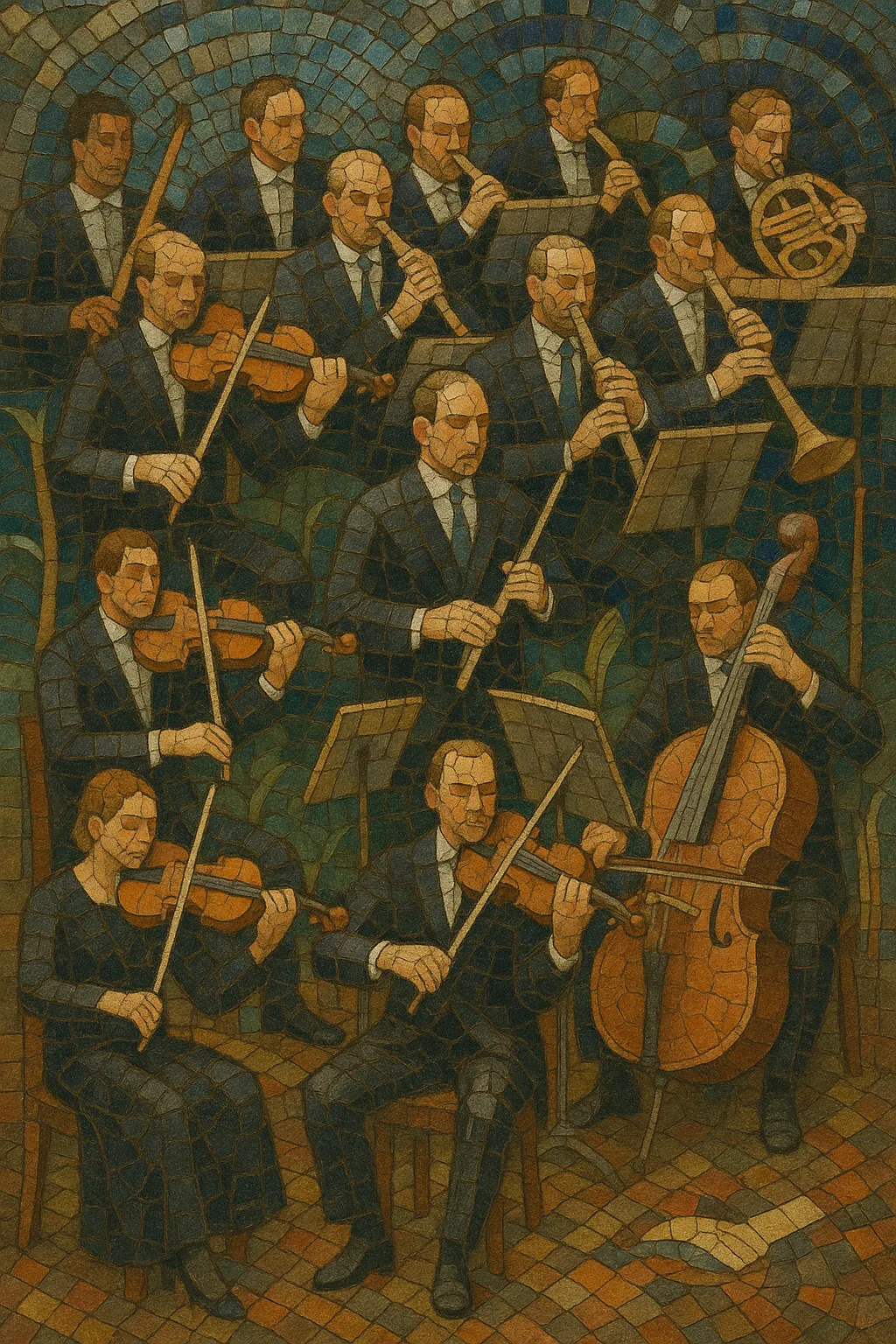
Symfonický orchestr (symphony orchestra) refers to the large, standardized classical ensemble designed for the performance of symphonies, overtures, tone poems, concertos, and other large-scale works. It typically includes strings, woodwinds, brass, percussion, and often harp, keyboards, or auxiliary instruments.
As the repertory expanded from the Classical into the Romantic era, the ensemble grew in size and color to realize wider dynamic range, more complex textures, and dramatic narratives. Today, the symphony orchestra is both a musical institution and a performance tradition, encompassing concert presentations, opera pits, film sessions, and contemporary commissions.
History
The orchestral idea took shape in the Baroque era with court ensembles and opera orchestras, but the standardized symphony orchestra coalesced in the late 18th and early 19th centuries. Classical-period composers and conductors in Vienna and surrounding centers refined balanced string sections with pairs of woodwinds, horns, and trumpets, laying the groundwork for the modern ensemble.
During the 1800s, the ensemble grew dramatically. Composers expanded brass and percussion, introduced harp and auxiliary winds, and explored extreme dynamics and timbral contrasts. This era solidified the symphony orchestra as a vehicle for narrative tone poems, monumental symphonies, and concertos, matched by professionalization of orchestras and the rise of the public concert hall.
In the 20th century, orchestras adapted to new harmonic languages (impressionism, neoclassicism, modernism) and new media (radio, recordings, cinema). They became cultural institutions with resident halls and seasons, embraced international touring, and commissioned contemporary works. Today, symphony orchestras perform core repertory, film scores, cross-genre collaborations, and premieres, serving as both historical stewards and living laboratories for orchestral sound.
Start with the standard sections: strings (first/second violins, violas, cellos, double basses), woodwinds (typically 2–3 each of flutes/piccolo, oboes/English horn, clarinets/bass clarinet, bassoons/contrabassoon), brass (4 horns, 2–3 trumpets, 3 trombones, tuba), and percussion (timpani plus color percussion). Add harp, piano, celesta, or auxiliary winds as the score demands.
Use strings for core sonority and continuity, winds for color and counter-melody, and brass for climaxes and harmonic pillars. Balance choirs carefully: ensure inner voices (viola/clarinet/horn) are audible, and orchestrate dynamics so melodies project without over-scoring accompaniment.
Common approaches include tonal or modal harmony with extended chromatic color; plan clear formal arcs (sonata, ternary, variations, rondo) or through-composed narratives (tone poem). Pace harmonic rhythm to support phrasing, reserving dense chromaticism and brass for structural highlights.
Articulation variety (legato, marcato, staccato) provides clarity and propulsion. Use percussion for punctuation rather than constant doubling. Cross-rhythms between strings and winds add motion; give rests and registral space to maintain transparency.
Write idiomatically for each instrument’s range and technique; avoid constant tutti writing to preserve impact. Provide clear cues, sensible divisi, and rehearsal letters. Consider bowings, breath marks, and page turns; leave room for conductor tempo shaping and orchestral rubato.