Your digging level

For this genre
0/8
🏆
Sign in, then listen to this genre to level up

Description

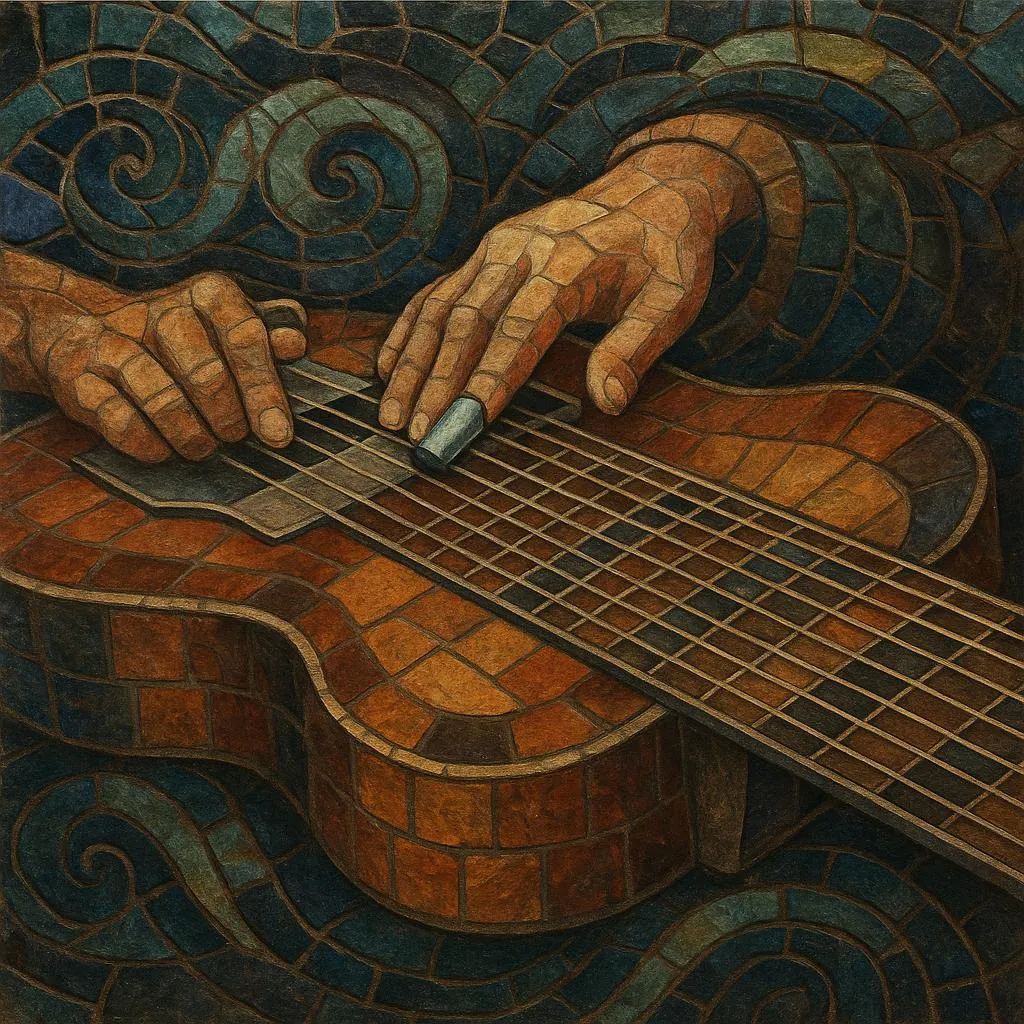
Steel guitar is a style of guitar performance centered on sliding a steel bar over the strings to create smooth, vocal‑like glissandi, shimmering vibrato, and rich chord voicings. It originated in Hawaiʻi in the late 19th century and later branched into lap steel (acoustic and electric) and, by the mid‑20th century, the pedal steel guitar used widely in country music.

The sound is defined by sustained tones, expressive portamento between pitches, and lush extended harmonies (6ths, 9ths, diminished/augmented colors). Common tunings (e.g., C6, A6, E13 for lap steel; E9 and C6 for pedal steel) allow strummable jazz‑ and swing‑flavored chords as well as characteristic two‑note “crying” bends in pedal steel. Today, steel guitar spans Hawaiian, country, western swing, gospel sacred steel, roots/americana, and even ambient/experimental contexts.


Sources: Spotify, Wikipedia, Discogs, RYM, MB, user feedback and other online sources

History

Origins in Hawaiʻi (1890s–1910s)

Scholarly and oral histories credit Hawaiian musician Joseph Kekuku with developing the steel technique around 1889, sliding a metal object across the strings of a Spanish guitar to produce singing glissandi. The approach spread rapidly across Hawaiʻi and became central to Hawaiian popular music. At the 1915 Panama–Pacific International Exposition in San Francisco, Hawaiian ensembles helped ignite a global craze, carrying the steel sound to the mainland U.S. and beyond.

Electrification and Lap Steel (1930s–1940s)

The pursuit of sustain and volume led to electrification. Rickenbacker’s cast‑aluminum “Frying Pan” (patented 1937) became the archetypal electric lap steel. Virtuosos such as Sol Hoʻopiʻi and, later, Jerry Byrd refined swing‑era harmonies (C6/A6/E13 tunings), influencing western swing and mainstream popular music. Steel guitar also crossed into early blues and hillbilly music via slide techniques.

Pedal Steel and the Nashville Sound (1950s–1970s)

Mechanized pitch‑changing via pedals and knee levers transformed the instrument’s language. Bud Isaacs’s landmark recording on Webb Pierce’s “Slowly” (1953) introduced the sound of moving inner voices while a chord sustains—a signature pedal steel effect. Builders like Paul Bigsby and players such as Buddy Emmons, Ralph Mooney, Lloyd Green, Speedy West, and Don Helms pushed the E9 and C6 necks into country, honky‑tonk, and western swing, cementing the pedal steel as a Nashville hallmark.

Diversification: Sacred Steel, Roots, and Ambient (1980s–Present)

A parallel sacred steel tradition grew within the House of God church (pioneered by Willie Eason, later popularized by Robert Randolph), infusing gospel and blues energy. In roots/americana and rock, players like David Lindley and Santo & Johnny broadened the instrument’s reach. Contemporary artists and composers also exploit steel guitar’s infinite sustain and swells for ambient, cinematic, and experimental music, while Hawaiian stylists continue to preserve and evolve classic lap‑steel idioms.

How to make a track in this genre

Setup and Tunings
•   Choose lap steel (non‑fretted, played flat) or pedal steel (E9/C6 double‑neck common). Use fingerpicks (thumb + 2–3 fingers) and a solid steel bar. •   For Hawaiian/jazz voicings, try C6 (C–E–G–A–C–E) or A6; for country pedal steel, standard E9 (with A/B pedals and common knee levers) yields idiomatic bends and I→IV moves.
Harmony and Vocabulary
•   Embrace 6th, 9th, and 13th sonorities (C6/A6/E13 tunings) for lush, swing‑tinged chords. •   On E9 pedal steel, use A+B pedals for the classic “crying” two‑note bends, and leverage knee levers for passing tones, diminished runs, and contrary‑motion inner voices. •   Outline I–vi–ii–V and I–IV–V with sliding approach tones and chromatic encirclement to keep lines vocal and fluid.
Rhythm and Groove
•   For Hawaiian and western swing: medium swing or hula feels; comp with syncopated strums and arpeggios. •   For country ballads and honky‑tonk: shuffles and two‑beats; answer the vocal with short fills, and sustain pads under chorus. •   For gospel/sacred steel: blues‑inflected pentatonics, call‑and‑response riffs, and drive over backbeat claps or church grooves.
Techniques and Expression
•   Core techniques: smooth bar glissando, wide vibrato, palm blocking and pick blocking for articulation, artificial harmonics (chimes), and bar slants (lap steel) for added extensions. •   Use the volume pedal for vocal swells and to smooth pick attack; layer subtle delays and spring/plate reverb for depth.
Form, Arrangement, and Production
•   Arrange as a responsive voice: intro hook, verse fills answering lyrics, a lyrical solo, and sustained pads beneath choruses. •   Double lines an octave apart with harmonics for shimmer; in ambient contexts, loop long chords and volume‑pedal swells. •   Record with clean headroom; mic the amp (open‑back combos, classic Fender‑style) and capture a DI track for safety. EQ to tame piercing upper mids (2–4 kHz) while preserving sparkle (6–8 kHz).

Top tracks

Locked
Share your favorite track to unlock other users’ top tracks

Upcoming concerts

in this genre
Influenced by
Has influenced

Download our mobile app

Get the Melodigging app and start digging for new genres on the go
© 2026 Melodigging
Melodding was created as a tribute to Every Noise at Once, which inspired us to help curious minds keep digging into music's ever-evolving genres.
Buy me a coffee for Melodigging