Your digging level
Description
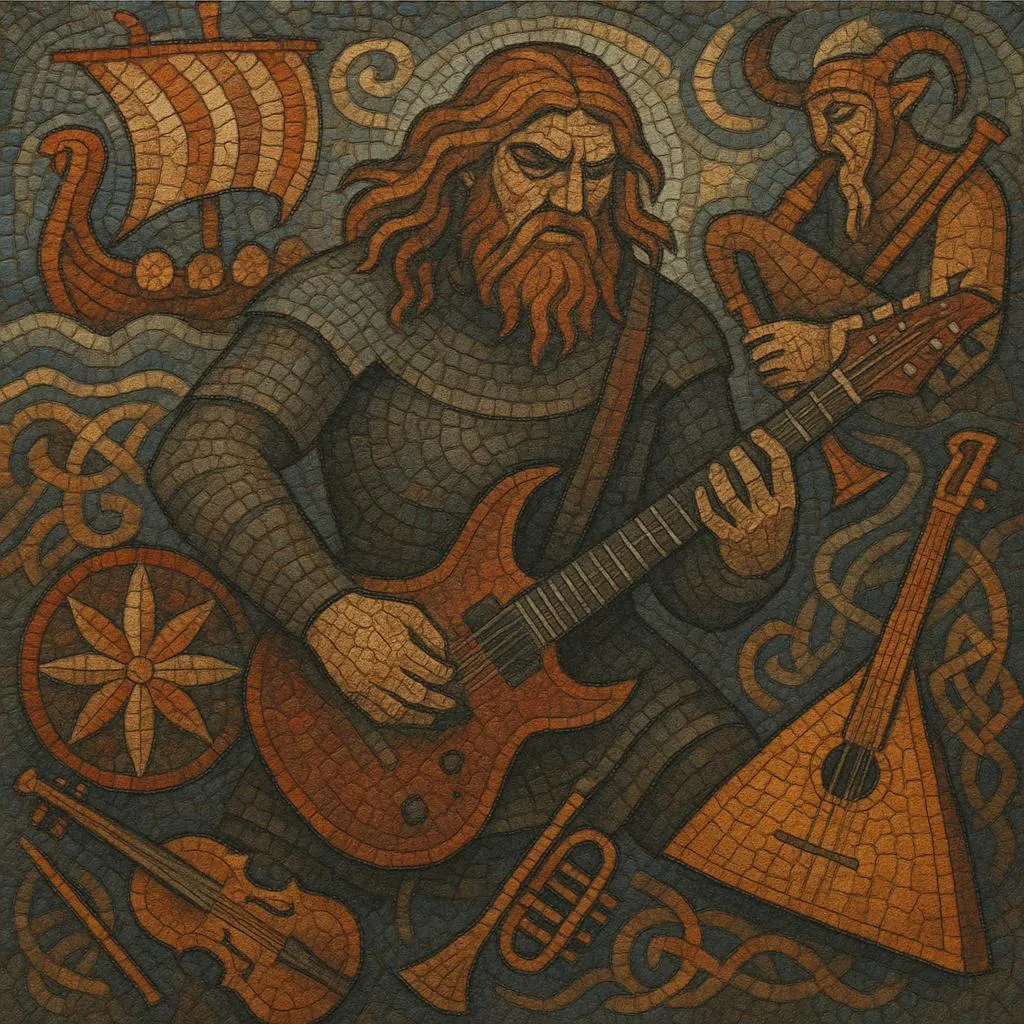
Slavic metal is a regional stream of folk- and extreme-metal that integrates melodies, instruments, meters, and languages from Slavic folk traditions into modern metal frameworks. It typically blends heavy guitar riffing, double‑kick or blast‑beat drumming, and harsh or clean vocals with acoustic timbres such as gusli, sopilka/tilinka flutes, bagpipes (dudy/gaida), fiddle, accordion, balalaika, or domra.
Stylistically, Slavic metal spans blackened pagan metal and doom/folk fusions to power‑ or symphonic‑leaning variants. Hallmarks include modal folk melodies (often Aeolian/Dorian/Phrygian color), drone or bourdon textures, call‑and‑response choruses, and the use of odd/asymmetric dance meters (e.g., 5/8, 7/8, 9/8) that are common in South and East Slavic folk dances. Lyrical themes typically invoke pre‑Christian mythologies, nature, regional history, warrior epics, and seasonal rites, and are frequently delivered in Slavic languages (Russian, Ukrainian, Polish, Belarusian, Czech, Croatian, etc.).

History
The roots of Slavic metal lie in the early 1990s, when European folk metal was first codified and black metal scenes expanded across Eastern Europe. Bands in Russia, Ukraine, Poland, the Czech Republic, and the Balkans began to graft local folk melodies, language, and myth onto black, doom, and heavy metal templates. Early East‑Slavic and Central European groups set the precedent by combining tremolo‑picked riffs with traditional instruments and pagan themes.
In the 2000s, the sound matured and diversified. Folk‑doom and symphonic strains emerged alongside blackened pagan approaches. Groups increasingly incorporated authentic instrumentation (bagpipes, gusli, sopilka, violin) and field‑recorded folk choruses, and wrote lyrics in native languages to foreground regional identity. Touring and festival circuits in Europe brought wider attention, while domestic scenes professionalized production standards.
Through the 2010s, Slavic metal became a recognizable transnational “accent” within folk/exreme metal. Some bands emphasized ritual/ethnographic aesthetics; others fused power‑metal grandeur or symphonic layers with folk rhythm and chant. The use of asymmetric meters and drone folk textures remained a signature. Parallel to growth came scrutiny of politically charged imagery in parts of the scene; many artists explicitly distance themselves from extremist ideologies while maintaining interest in pre‑Christian culture and oral traditions.
Common markers today include modal folk leads doubling distorted riffs, gang/choral refrains that echo village song practice, prominent percussion ostinati, and arrangements that stage a dialogue between amplified rhythm section and acoustic folk instruments.