Your digging level
Description
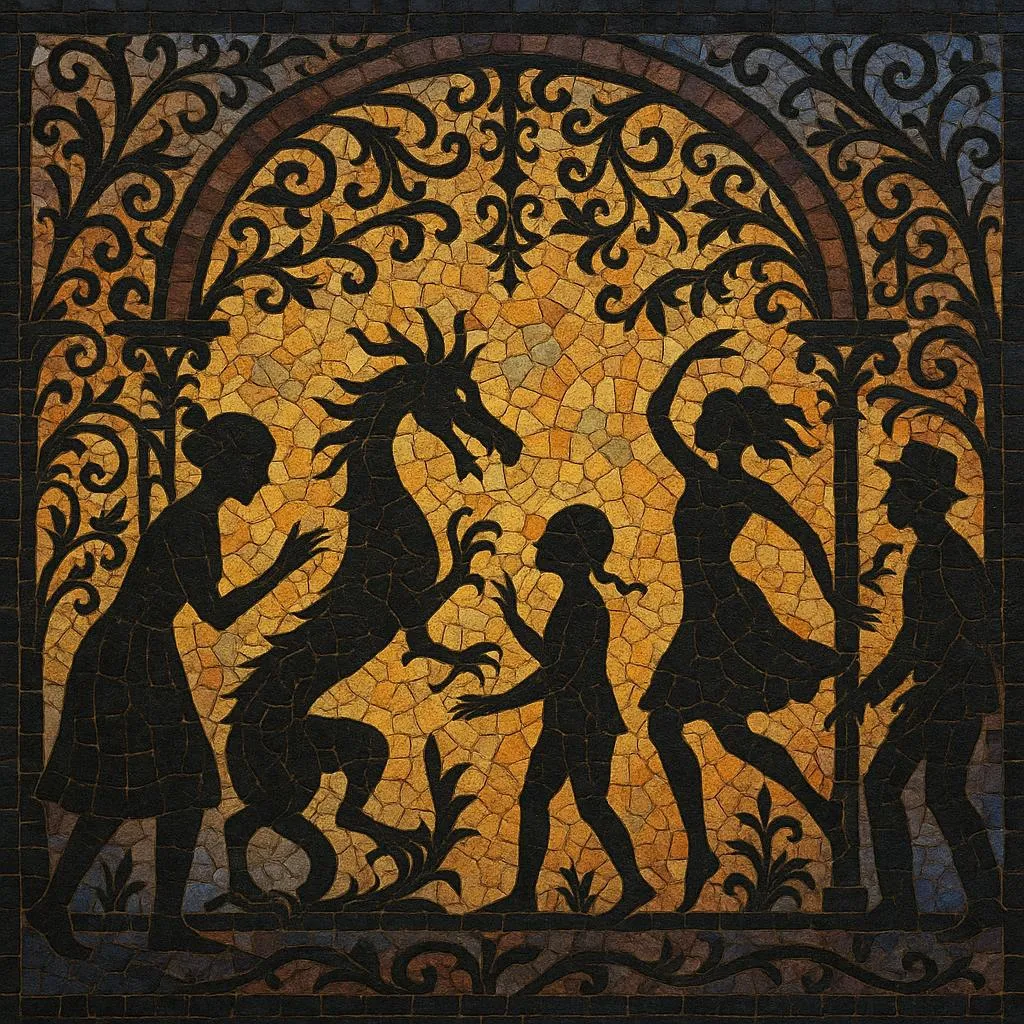
Silhouette animation is a frame‑by‑frame animation technique in which characters and objects appear as flat, black paper cutouts (or their digital equivalents) seen in profile against illuminated backgrounds. Technique inspired by European shadow play and silhouette cutting.
Pioneered most famously by German animator Lotte Reiniger, the style uses jointed puppets cut from black card, hinged with wire or rivets, and animated on a backlit glass table or multiplane rig. Its stark contrast, flowing cut‑paper articulation, and ornate backdrops lend themselves to fairy‑tale, mythic, and dreamlike narratives.
Modern variants can be fully digital, but the core aesthetics—crisp contours, expressive profiles, filigreed scenery, and light‑through‑shadow staging—remain central.
History
Silhouette animation emerged in Germany in the early 1920s, drawing directly from the centuries‑old European traditions of shadow play and the German art of paper silhouette cutting (Scherenschnitt). Lotte Reiniger, often cited as the form’s great pioneer, developed a sophisticated method of articulating cut‑paper puppets under a backlit camera stand. Her feature The Adventures of Prince Achmed (1926) is the oldest surviving animated feature film and established the style’s grammar—lyrical movement, ornate sets, and fairy‑tale storytelling. Collaborators such as Berthold Bartosch and Walter Ruttmann contributed effects and backgrounds, helping to refine the craft.
After Achmed, Reiniger produced numerous short fairy‑tale films in Germany and, later, in the UK after emigrating in the 1930s. In parallel, Japanese animator Noburō Ōfuji explored cut‑paper silhouette work, often using patterned chiyogami paper, proving the approach could carry distinct regional aesthetics. The technique became a recognizable subset of cutout/stop‑motion animation used in educational films, commercials, and shorts.
Interest persisted through European studio work and festival circuits. In France, Michel Ocelot revived and reimagined the silhouette mode with television series and features such as Princes et Princesses (1999), blending traditional profiles with contemporary storytelling cadence and color‑tinted backdrops.
Digital compositing tools spurred a resurgence. Anthony Lucas’s The Mysterious Geographic Explorations of Jasper Morello (2005) and Ben Hibon’s silhouette sequence “The Tale of the Three Brothers” in Harry Potter and the Deathly Hallows – Part 1 (2010) brought the look to global mainstream audiences. Today, silhouette animation appears across festival shorts, features, title sequences, and music videos, retaining its shadow‑play lineage while adopting multiplane parallax, particle effects, and orchestral or chamber scoring inspired by silent‑era practice.