Your digging level
Description
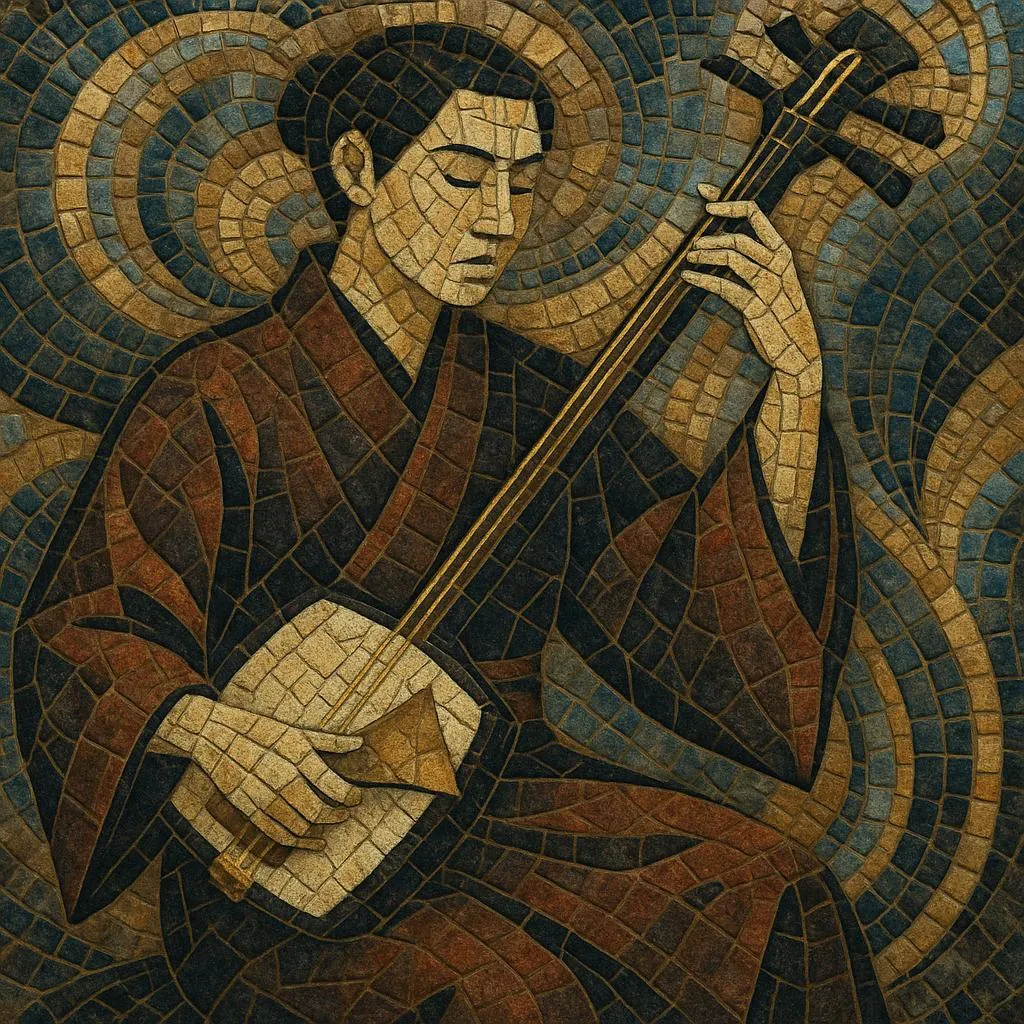
Shamisen is a Japanese musical genre centered on the three‑string, long‑necked lute called the shamisen, plucked with a large plectrum (bachi). The instrument’s characteristic sawari (intentional string buzz) and percussive right‑hand articulation give the music a bright, cutting timbre capable of both delicate lyricism and driving rhythmic power.
The genre encompasses multiple traditions and repertoires: art‑music styles such as nagauta (linked to Kabuki theatre), jiuta and kouta (chamber and salon repertories), narrative jōruri accompaniment, and regional folk song (min’yō). A virtuosic modern stream, Tsugaru‑jamisen, features rapid tremolo, dramatic dynamic contrasts, and improvisatory development. Typical tunings (hon‑chōshi, ni‑agari, san‑sagari), use of Japanese pentatonic pitch collections (In and Yo scales), and an aesthetic of ma (expressive space) shape its melodic and formal language.
History
The shamisen entered Japan in the mid‑1500s via the Ryūkyū Islands (its ancestor is the Okinawan sanshin, itself related to the Chinese sanxian). By the early Edo period (1600s) the instrument was widely adopted in urban centers. It quickly became integral to popular entertainments and narrative recitation, transforming existing vocal traditions such as jōruri and fueling the rise of Kabuki’s musical infrastructure.
During the 17th–18th centuries, distinct schools and repertoires crystallized. Nagauta flourished as the long‑song framework for Kabuki, jiuta evolved as refined chamber music in Kamigata (Kyoto–Osaka), and kouta emerged in salon and geisha contexts. Technique and pedagogy formalized, repertory expanded, and ensemble practices (with voice, drums, and flute) standardized. The shamisen’s sound became a sonic emblem of Edo urban culture.
Across Japan, shamisen accompanied min’yō (folk song). In northern Aomori, Tsugaru‑jamisen took shape in the 19th–early 20th centuries from itinerant musicians who developed a virtuosic, rhythmically propulsive solo idiom featuring rapid bachi strokes, tremolo, and improvisatory variation.
In the 20th century, studio recording and broadcasting disseminated shamisen styles nationally. Post‑war popular genres (ryūkōka and later enka) retained timbral and melodic traces of shamisen practice, even when performed with modern orchestration. Since the 1990s, international touring artists and crossover projects have fused shamisen with jazz, rock, EDM, and film/game scoring, while conservatories and traditional iemoto (hereditary schools) continue to sustain classical lineages.