Your digging level
Description
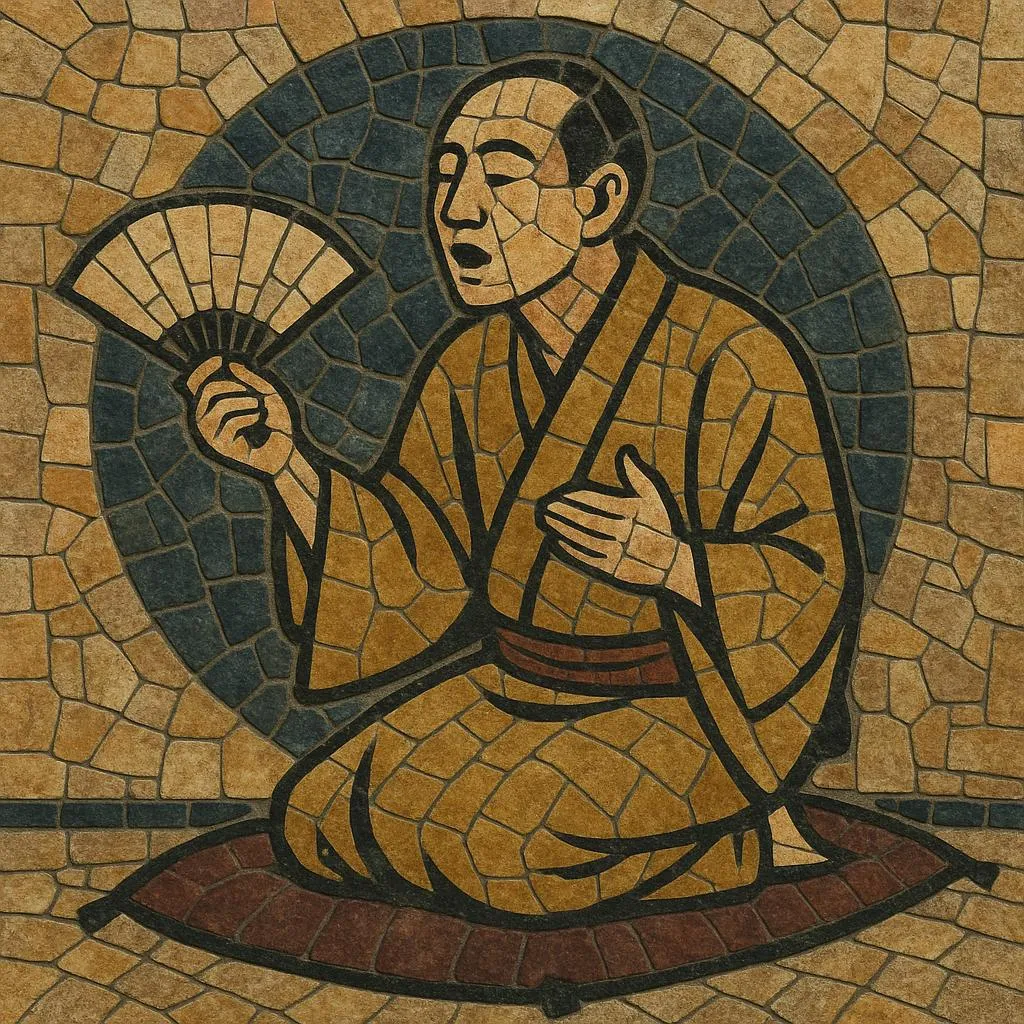
Rakugo is a traditional Japanese art of comic (and sometimes sentimental or ghostly) storytelling performed by a single seated narrator. The performer (rakugoka) delivers all dialogue and narration while kneeling on a cushion (zabuton), portraying multiple characters by shifting head angle, gaze, vocal color, and register.
With only a folding fan (sensu) and hand towel (tenugui) as props, rakugo relies on voice, timing, and imagination rather than stage sets. Stories are typically structured as a short preface (makura), a main narrative, and a concluding punchline (ochi). While primarily spoken, it often interleaves brief sung or chanted passages and may be framed by traditional theater music (debayashi) in yose (variety) theaters.
Two regional styles—Edo (Tokyo) and Kamigata (Osaka/Kyoto)—developed distinct pacing, dialects, and comic flavors. The repertory spans witty vignettes, human-interest dramas (ninjōbanashi), and ghost tales (kaidan), making rakugo a versatile narrative music-theater form recorded widely in the modern era.
History
Rakugo emerged in the 17th century within Edo-period urban entertainment, developing from sermon-like comic storytelling and short topical jokes (kobanashi) at yose venues. Early raconteurs systematized techniques for voicing multiple characters and codified the ochi (punchline) to anchor each tale.
By the 18th–19th centuries, two centers crystallized: Edo (Tokyo) favored crisp timing and Edo dialect wit, while Kamigata (Osaka/Kyoto) leaned into musical interludes, lively cadence, and Kansai humor. Yose theaters incorporated debayashi (house ensemble) and hayashi (drums/flute) to open/close sets, while rakugoka refined set forms such as makura → main story → ochi, and specialized subgenres including sentimental ninjōbanashi and eerie kaidan.
In the Meiji era, masters consolidated repertory and authored new classics reflecting changing urban life. Print culture and early recordings helped standardize famous texts and performer lineages (iemoto-style stage names), while the yose circuit expanded rakugo’s reach.
After WWII, radio and television popularized rakugo nationwide. A postwar boom produced iconic storytellers who balanced tradition with modern sensibility, restored long-form narratives, and toured beyond yose. In recent decades, new generations have revived classic pieces, introduced contemporary topics, and released extensive live and studio albums, keeping the form active in theaters, broadcast, and digital platforms.