Your digging level
Description
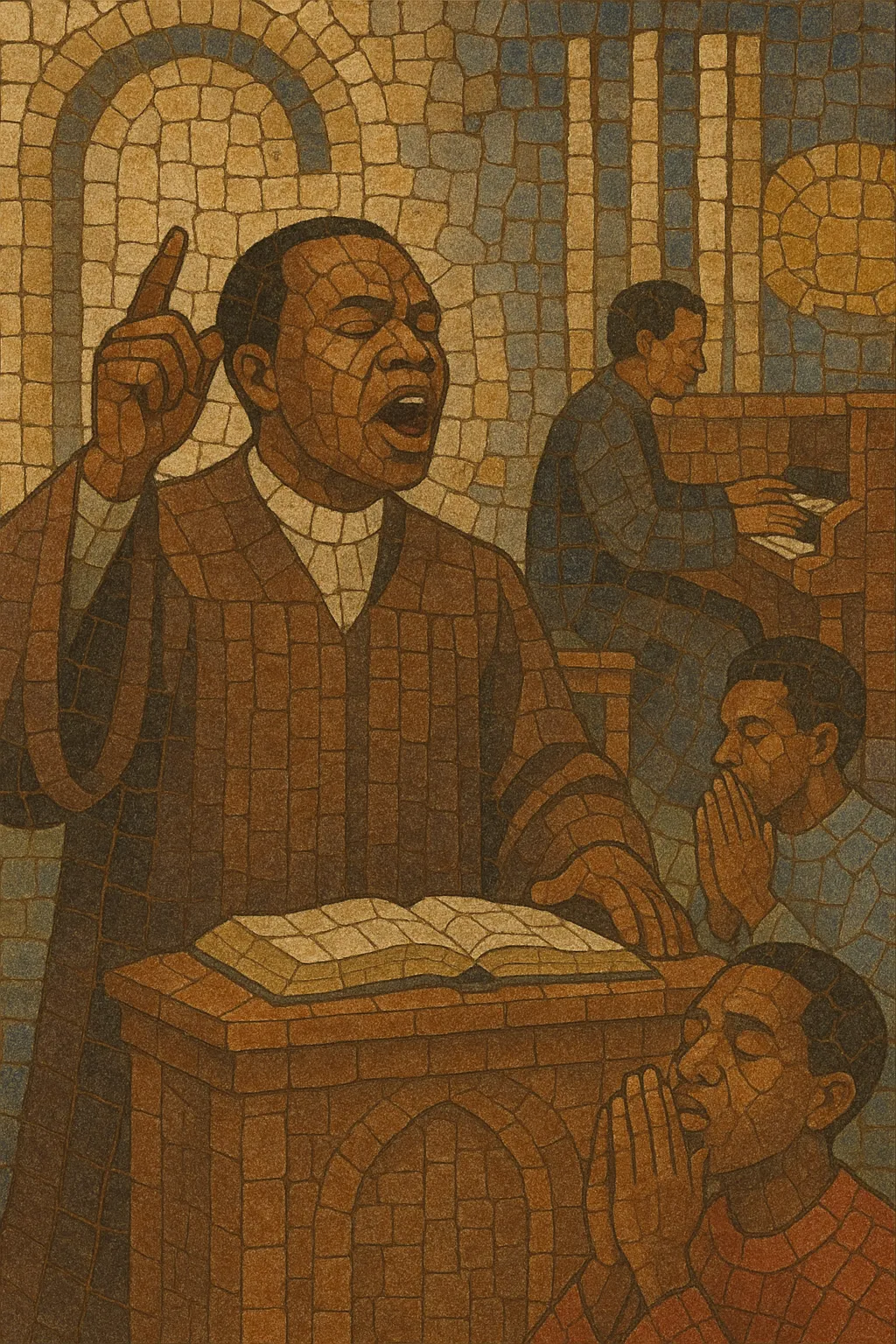
Sermon is a spoken, often improvised, religious oratory recorded as audio, frequently captured live in church services. It centers on scripture exposition, moral exhortation, and personal testimony, delivered with rhetorical devices such as call-and-response, repetition, and dynamic vocal "whooping" that escalates toward a climactic close.
While sermons can be purely unaccompanied speech, many historic recordings include musical underscoring—Hammond organ pads, piano punctuations, tambourine, and congregational or choir interjections—to mirror and intensify the preacher’s cadence. The genre’s most documented sound world comes from African American church traditions, where preaching overlaps with gospel aesthetics and communal participation.
History
Sermonic oratory is centuries old within Christian worship, but as an audio genre it coalesced in the early 20th century United States. The sound and cadence were shaped by African American church traditions—ring shout, spirituals, lined-out hymns, and testimonial speech—where call-and-response, melisma, and rhythmic emphasis were already part of communal worship.
With the advent of commercial recording and radio, preachers began issuing discs marketed to religious and secular audiences alike. Figures such as Rev. J. M. Gates and Rev. A. W. Nix created best-selling “sermon records” that captured fiery rhetoric, moral narratives, and vivid allegory, sometimes framed with organ chords and congregational responses. Radio further popularized the form, carrying live or studio sermons beyond church walls.
During the golden age of gospel and the Civil Rights era, sermons gained broader cultural visibility. Rev. C. L. Franklin’s recorded homilies showcased a musical, improvisatory preaching style, while Martin Luther King Jr.’s sermons blended prophetic theology with social justice oratory. Record labels and church imprints documented services where spoken exhortation flowed into gospel song and back again.
Televangelism, cassette ministries, CDs, and streaming extended the genre’s reach. Iconic evangelists and pastors (e.g., Billy Graham, Aimee Semple McPherson, T. D. Jakes) issued widely distributed sermon recordings. Sermon samples became common in soul, gospel, and hip hop, while contemporary megachurch services continue the tradition with professional sound reinforcement, musical underscoring, and global broadcast.