

Your digging level
For this genre
0/8
🏆
Sign in, then listen to this genre to level up
Description
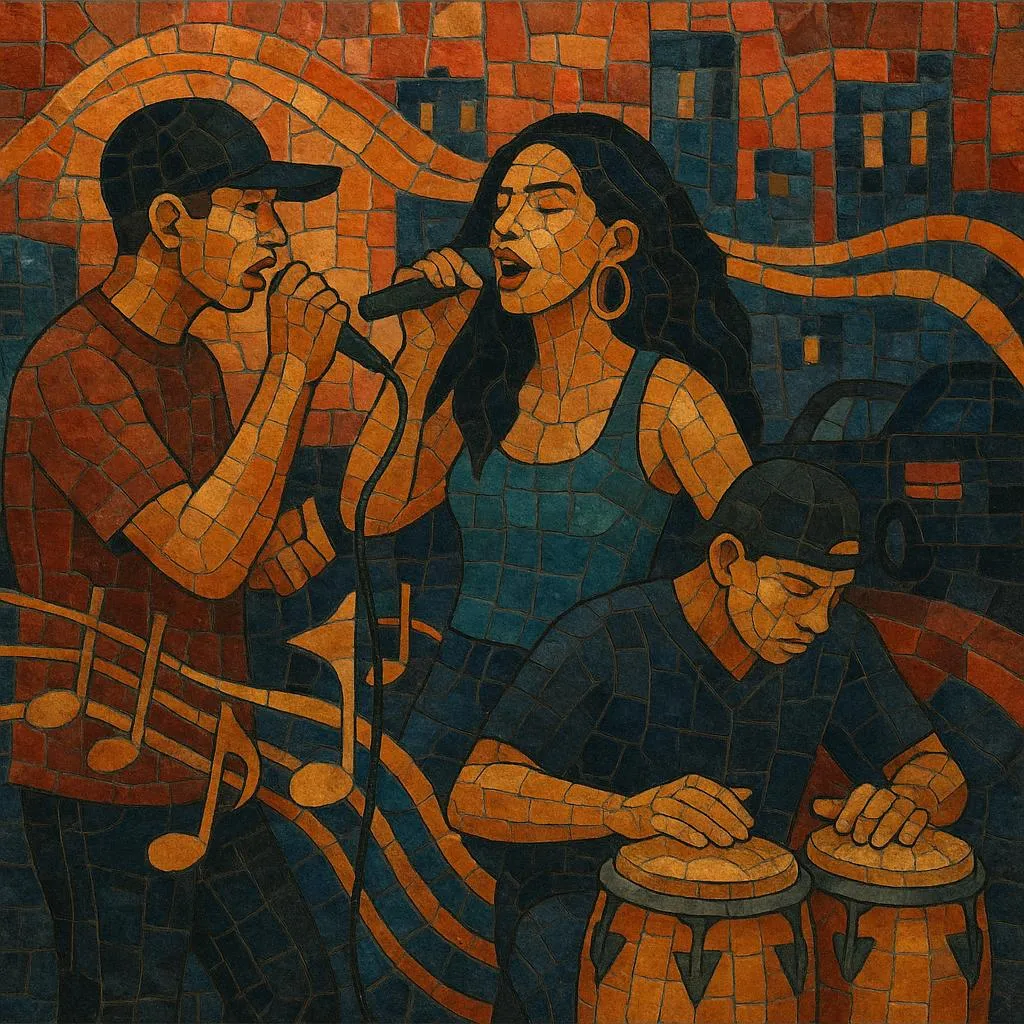
Salsa urbana ("urban salsa") is a contemporary salsa style that blends classic Puerto Rican and Nuyorican salsa arranging with elements from reggaeton, hip‑hop, and modern R&B/pop production.
It keeps the traditional salsa engine (clave, tumbao bass, montuno piano, congas/timbales/bongó and punchy horn riffs) but layers dembow‑style drum programming, 808s, rap/sung features, and sleek radio‑ready hooks. Lyrics often mix streetwise slang and contemporary romance narratives, and collaborations with urban artists are common.
The result is a club‑centered, hook‑driven salsa that feels as comfortable on tropical playlists as it does alongside urbano latino, while remaining danceable for salsa floors.
History
Roots (1990s foundations)
• The groundwork was laid by post–salsa romántica acts and Nuyorican producers who began flirting with hip‑hop aesthetics and pop hooks. Groups like DLG (Dark Latin Groove) showed that rap interludes and contemporary R&B sensibilities could live inside salsa arrangements.
Emergence (2000s)
• In Puerto Rico and New York, a younger wave of salseros absorbed the meteoric rise of reggaeton and urbano latino. Producers and bandleaders kept the 3‑2/2‑3 clave, brass riffs, and montuno vamps, but introduced dembow grooves, programmed kicks/claps, and featured MCs/singers from the urban scene.
• The term “salsa urbana” gained currency to distinguish this more hybrid, radio‑friendly approach from salsa dura or classic romántica, emphasizing club appeal and cross‑format collaborations.
Consolidation and regional waves (2010s)
• Puerto Rican acts (e.g., N’Klabe, NG2, Michael Stuart, Víctor Manuelle in his collaborative era) normalized urbano crossovers, while the Dominican Republic saw a powerful modern salsa revival that often carried an “urbana” edge (e.g., Chiquito Team Band, Alex Matos, Yiyo Sarante, David Kada), tightening links with merengue urbano and reggaeton circles.
• High‑profile collabs between salseros and reggaeton/trap stars, plus streamlined pop songwriting, pushed the style onto mainstream tropical and Latin charts.
Present day
• Salsa urbana is a regular presence on tropical radio, streaming playlists, and club sets. It coexists with salsa dura revivals and classic romántica, and it has helped seed related hybrids (e.g., salsatón and Colombian salsa choke), keeping salsa relevant to new generations of urbano listeners and dancers.
Core rhythm and groove
• Keep the salsa clave (3‑2 or 2‑3) as the backbone. Build traditional percussion (congas, bongó, timbales, güiro, cowbell) around it.
• Layer a dembow‑style drum program: tight kick on 1 and the off‑beats, snare/clap on the backbeats with reggaeton swing, and tasteful 808 subs under the acoustic bass.
• Typical tempos sit around 92–105 BPM so it feels both club‑friendly and danceable for salseros.
Harmony and melody
• Use salsa staples: montuno piano vamps, brass call‑and‑response, and common ii–V–I turns.
• Mix in modern pop/R&B loops (e.g., four‑chord minor progressions) and ear‑catching toplines with stacked pop backing vocals.
• Write strong, repeatable coros; leave space for soneos (ad‑libs) and, optionally, an 8–16‑bar rap verse.
Instrumentation and sound design
• Rhythm section: congas + timbales + bongó, baby‑bass or electric bass laying a tumbao; piano montuno (or synth keys) driving the vamp.
• Horns: 2–4 piece (trumpets/trombones or add sax) with concise riffs; layer occasional synth leads or pads for modern sheen.
• Programming: tasteful dembow drums, 808s, risers, impacts; sidechain or duck subtly so acoustic percussion breathes.
Song form and lyrics
• Verses in urban colloquial Spanish, contemporary romance, nightlife, and swagger themes; hooky, sing‑along choruses.
• Structure: Intro → Verse → Pre‑Chorus → Chorus → Rap/Bridge → Montuno/Coros → Final Chorus/Outro.
Production tips
• Quantize programmed drums to a gentle swing so they lock with live percussion and clave.
• Use modern pop vocal processing (tight doubles, harmonies, light autotune if desired) without masking the soneo energy.
• Keep horns punchy and dry enough to cut through club systems; automate breaks and drops to spotlight coros and rap features.

Produciendo Salsa Urbana! Beat de salsa urbana.
Alex Rivas Lessons

HACIENDO UNA BASE PARA SALSA EN FL STUDIO 🍑
Fundshauser

PARTE 1 de Cómo crear una salsa en menos de 2 minutos
Eddy Jara

#alexrivas #salsa #piano #salsaurbana #latinmusic #productormusical #producer #logicprox #tips
Alex Rivas Lessons

Best playlists


Top tracks
Locked
Share your favorite track to unlock other users’ top tracks
Upcoming concerts
in this genre
