Your digging level

For this genre
0/8
🏆
Sign in, then listen to this genre to level up

Description

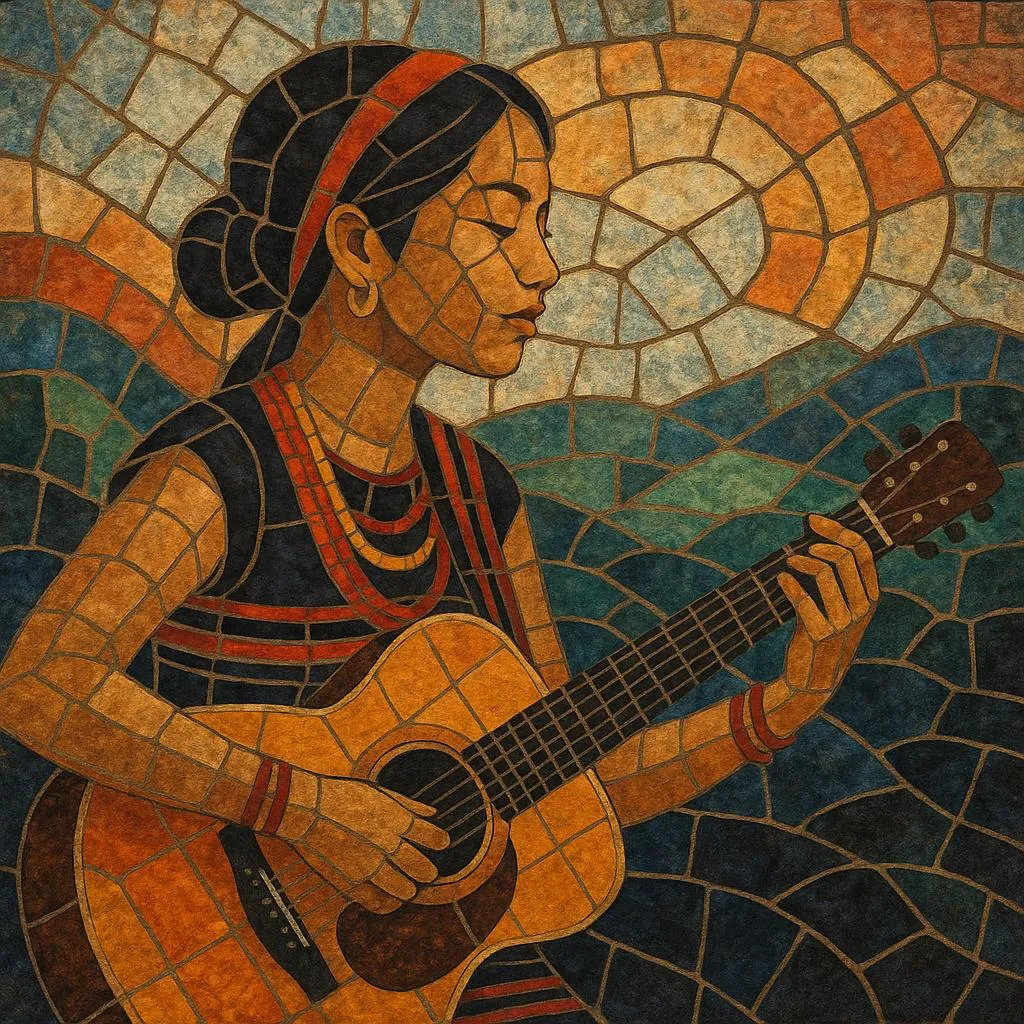
Rongmei pop is a contemporary popular-music micro-scene sung primarily in the Rongmei language of the Rongmei (Kabui) Naga community from India’s Northeast (notably Manipur, Nagaland, and parts of Assam). It blends mainstream Indian and global pop idioms—catchy hooks, verse–chorus forms, polished vocals—with local melodic sensibilities and lyrics that reflect everyday life, love, landscape, and faith.

Sonically, Rongmei pop ranges from acoustic ballads with light rock accompaniment to beat-driven tracks that draw on EDM/R&B production. Because Christianity is central to many Naga communities, church-harmony aesthetics and gospel-influenced vocal arranging often surface alongside Western guitar-pop and K‑pop–inspired polish. Distribution is grassroots, relying on YouTube, Facebook, local studios, and community events rather than large national labels.


Sources: Spotify, Wikipedia, Discogs, RYM, MB, user feedback and other online sources

History

Roots (pre-2010s)

Rongmei community singing traditions—ranging from folk repertoires to church and youth-choir music—laid the foundation for a shared vocal aesthetic emphasizing close harmonies and emotive delivery. Western popular music reached Northeast India through radio, cassettes, and later CDs, seeding rock and pop bands across Naga communities.

Digital Takeoff (2010s)

Affordable home recording tools, small-town studios, and social platforms (notably YouTube and Facebook) enabled a surge of vernacular-language pop. Young Rongmei artists began composing in their mother tongue, setting contemporary pop/EDM grooves beneath melodies shaped by local speech and song contours. Visuals—fashion, choreography, and K‑pop–style presentation—further professionalized the look and feel.

Consolidation and Community (late 2010s–2020s)

Rongmei pop stabilized around a grassroots, independent model: singles and videos released online; performances at church programs, community festivals, and campus events; and collaborations with neighboring Naga and Northeast-Indian scenes. While remaining locally focused, the music expanded stylistically—from acoustic romantic songs to dance-forward tracks—while preserving Rongmei linguistic identity.

How to make a track in this genre

Songwriting and Lyrics
•   Write in Rongmei (with occasional code-switching to English or Hindi if natural), centering themes of love, friendship, faith, community, and place. •   Favor concise verse–pre-chorus–chorus forms; craft a memorable, singable hook that highlights the language’s natural rhythm and vowel colors.
Harmony and Melody
•   Use diatonic pop harmony (I–V–vi–IV and related cycles) for accessibility; sprinkle in IVmaj7, ii, or borrowed chords for color. •   Melodies often sit in a comfortable mid-range and spotlight sustained tones for expressive phrasing; consider call-and-response lines for group vocals.
Rhythm and Groove
•   For ballads: 70–95 BPM with light backbeats or acoustic strums. •   For dance tracks: 105–125 BPM, four-on-the-floor or Afro/EDM‑tinged patterns; add handclaps and syncopated percussion for lift.
Instrumentation and Production
•   Core palette: lead vocal, acoustic/electric guitars, bass, pop/EDM drum programming, and pads/synths. •   Layer two to four backing-vocal parts (church-choir influence) in choruses; use gentle doubles and harmonies to thicken hooks. •   Keep mixes bright and vocal-forward; sidechain pads/keys to the kick in dance cuts; use tasteful reverb/delay for spaciousness.
Cultural Touches
•   Weave in subtle folk signifiers (pentatonic turns, local rhythmic accents) without overwhelming the pop framework. •   Visuals matter: performance videos, choreography, and community settings strengthen audience connection.
Workflow Tips
•   Write with the singer in mind—Rongmei prosody should guide melodic stress. •   Produce a bilingual lyric video to broaden reach while centering Rongmei identity. •   Test arrangements live in church/community events to refine hooks and tempos before final release.

Main artists

Top tracks

Locked
Share your favorite track to unlock other users’ top tracks

Upcoming concerts

in this genre
Influenced by
Has influenced
No genres found

Download our mobile app

Get the Melodigging app and start digging for new genres on the go
© 2026 Melodigging
Melodding was created as a tribute to Every Noise at Once, which inspired us to help curious minds keep digging into music's ever-evolving genres.
Buy me a coffee for Melodigging