Your digging level
Description
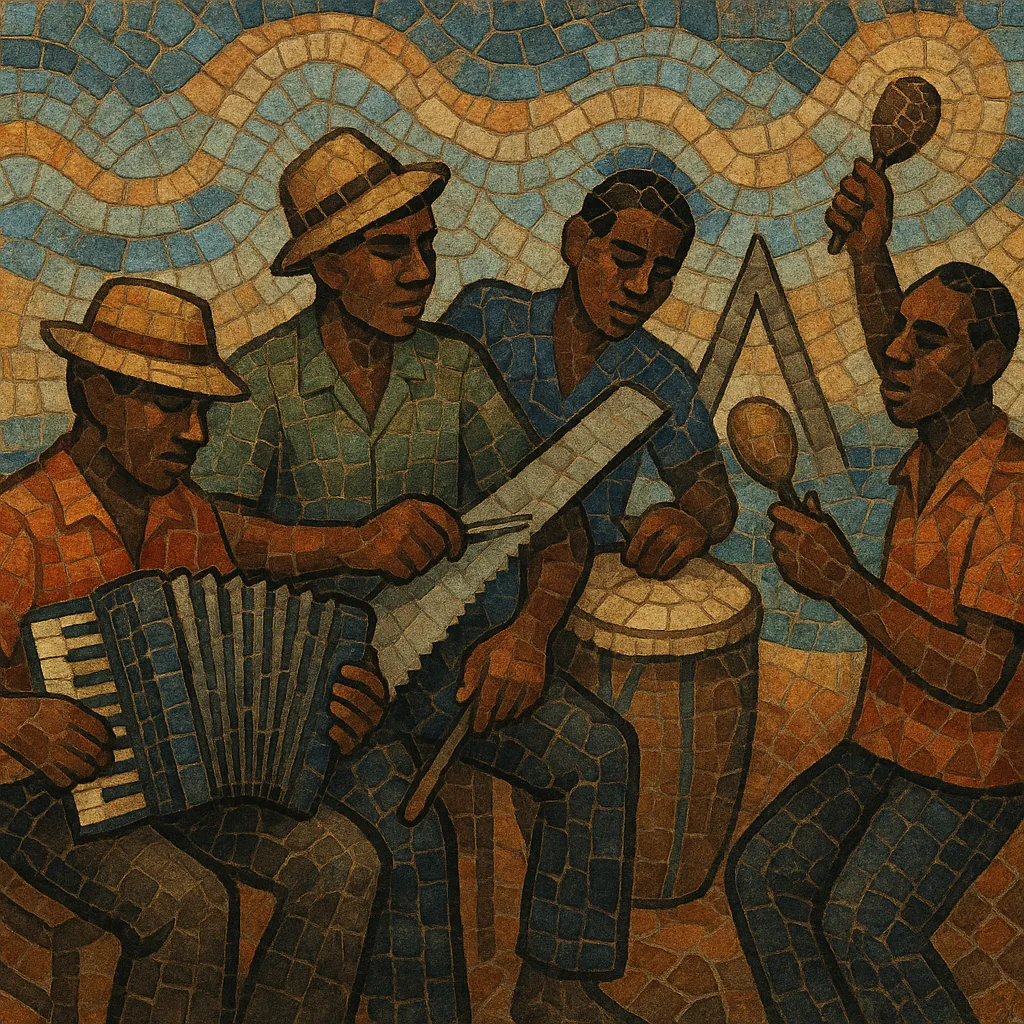
Ripsaw is a traditional dance-music style from the Turks and Caicos Islands whose hallmark is the musical use of a common handsaw. The player flexes the saw to change its pitch and timbre while scraping it with a metal rod, knife, or file to create a bright, buzzing lead voice.
Bands typically combine the handsaw with goatskin frame drums, box (home‑made) guitar, concertina or accordion, triangle, and sometimes maracas or scrub board. The repertoire accompanies community dances and celebrations and sits in the wider Afro‑Caribbean family alongside Jamaican mento and Bahamian rake‑and‑scrape, with steady, lilting two‑step and quadrille-derived grooves.
The music is buoyant and social—built around call-and-response singing, simple diatonic harmonies, and catchy syncopated patterns that keep dancers moving for hours.
History
Ripsaw coalesced in the Turks and Caicos Islands in the early 1900s, drawing on African rhythmic traditions carried by Afro‑Caribbean communities and on European social-dance music (especially quadrille). As seafaring and inter-island travel brought accordions/concertinas and metal tools into everyday life, locals began flexing and scraping the household handsaw to make a distinctive singing lead voice—an ingenious adaptation that gave the style its name.
The classic ensemble centers on the handsaw, supported by goatskin drum(s), box guitar, triangle, and often accordion or concertina. Strong backbeat patterns and two-step or quadrille pulses made ripsaw ideal for weddings, holidays, and village dances. Call‑and‑response refrains, humorous or topical lyrics, and community participation are core to its performance practice.
Ripsaw is closely related to Bahamian rake‑and‑scrape, which shares the flexed‑saw lead, goatskin drum, and accordion. The two styles circulated across the northern Caribbean through inter-island migration and boat trade, evolving slightly different repertoires and dance emphases while remaining recognizably part of the same tradition. Ripsaw also sits near Jamaican mento and broader calypso songcraft in its harmonic simplicity and song topics.
In the late 20th and early 21st centuries, cultural institutions and community bands in the Turks and Caicos helped preserve ripsaw through festivals, school programs, and national celebrations. Contemporary performers may fold in elements of calypso, reggae, or popular song, but the handsaw’s shimmering lead and social dance function remain the genre’s living heart.