Your digging level

For this genre
0/8
🏆
Sign in, then listen to this genre to level up

Description

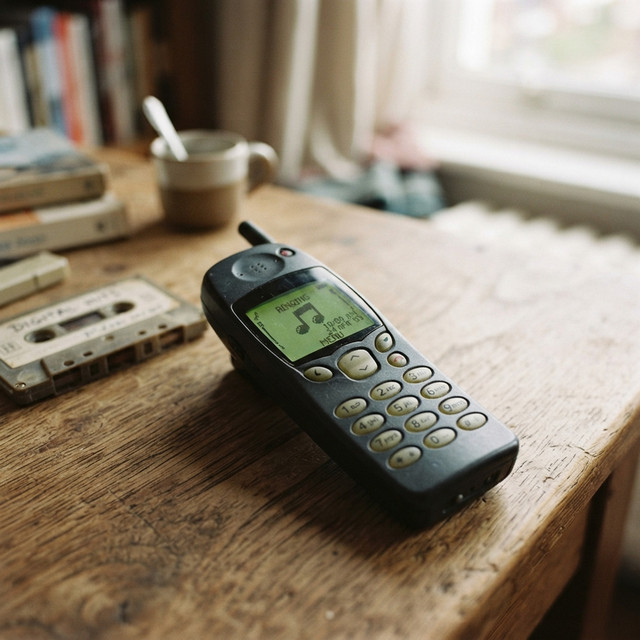
Ringtone is a functional micro‑form of music created for mobile phones, typically 3–30 seconds long and designed to cut through ambient noise, loop seamlessly, and be immediately recognizable.

It grew from early monophonic beeps and simple melodies (often encoded as RTTTL or MIDI) to polyphonic and then full‑audio “truetone/real tone” clips (MP3/AAC). Stylistically, ringtone catalogs span miniatures of pop, dance, hip hop, classical themes, TV cues, sound effects, and novelty hooks, but they share production traits: very clear, treble‑forward mixes, strong attack/transient design, simple motives, and minimal intros.

While ringtones began as a utility, the boom of downloadable tones in the 2000s created a distinct commercial niche and aesthetic—one that later fed into internet genres that embrace consumer‑tech sonics and short‑form earworms.


Sources: Spotify, Wikipedia, Discogs, RYM, MB, user feedback and other online sources

History

Origins (late 1990s)
•   The modern ringtone ecosystem emerged alongside the first mobile internet and downloadable content services in Japan, with carriers enabling paid tone downloads. •   Early consumer phones supported monophonic melodies (entered by users or delivered over-the-air), soon followed by polyphonic MIDI playback. Finland’s Nokia handsets and Japan’s i‑mode era popularized the idea that the phone’s ring could be personalized.
The 2000s boom: polyphonic to truetone
•   Around 2001–2003, phones widely supported polyphonic MIDI, spawning vast catalogs of chart‑song imitations and original alert tones. Specialized aggregators and carrier portals sold weekly charts of ringtones. •   Mid‑2000s handsets began playing compressed audio (MP3/AAC). So‑called truetones/real tones let users set recognizable song excerpts or bespoke audio miniatures. Global ringtone revenues peaked in the mid‑ to late‑2000s at several billions USD annually, with some regions even running ringtone sales charts.
Smartphones and the long tail (2010s–present)
•   As smartphones opened file systems and app stores, users sourced ringtones via apps, UGC hubs, and direct transfers instead of carrier portals. The commercial peak declined, but the ringtone aesthetic persisted as a recognizable micro‑format. •   Streaming platforms later categorized “ringtone” as a functional genre, hosting large libraries of short custom alerts (alarms, notifications, text tones) across styles—classical miniatures, EDM stabs, hip‑hop beats, chiptune bleeps, and TV/game‑inspired cues.
Cultural and aesthetic legacy
•   The ringtone era normalized ultra‑short, hook‑first music objects and a bright, compressed phone‑speaker sound. Critics even dubbed certain minimalist mid‑2000s pop‑rap as “ringtone rap,” pointing to simple, catchy motifs tailored for mobile listening. •   Internet‑born microgenres that celebrate consumer tech and sonic nostalgia (e.g., vapor‑adjacent scenes) often reference ringtone timbres, notification sounds, and lo‑fi mobile audio as part of their palette.

How to make a track in this genre

1) Define the use case and length
•   Aim for 3–15 seconds for calls/alerts (alarms can be 10–30 seconds). Make it loopable (clean bar boundaries, no long tails), and hook‑forward—start with the main motif immediately.
2) Melody and harmony
•   Write a simple, singable motif (5–8 notes) within ~1 octave. Use pentatonic or natural minor/major for immediate familiarity. Keep harmony sparse: a tonic–dominant pedal, a two‑chord vamp (I–V, i–VII, i–VI), or single‑chord ostinato is enough.
3) Rhythm and tempo
•   Choose clear, medium‑to‑bright tempi (95–130 BPM for pop/hip‑hop; 120–128 for dance/techno; 80–95 for notifications). Use tight, repetitive grooves with strong transients on beats 1 and 3 (or 1 and 2 if halftime) so the tone cuts through.
4) Sound design and instrumentation
•   Prioritize bright, focused timbres that survive tiny phone speakers: plucks, bells, clavs, saw/square leads, FM bells, short mallets, brassy stabs, chirpy chiptune waveforms. Layer one mid‑focused instrument (1–3 kHz) with a percussive transient (click/clap) for definition. •   Avoid sub‑bass and boomy kicks; high‑pass most elements at 120–180 Hz. If you want bass presence, use a mid‑bass (150–300 Hz) or distorted/saturated bass to project on small speakers.
5) Mixing and loudness
•   Mix mono or narrow stereo; many phones sum to mono. Use gentle bus compression/limiting to keep the tone loud without pumping; target a compact crest factor and bright EQ tilt (+1–3 dB around 2–5 kHz, tame harshness at 6–8 kHz). •   Edit tails so the loop point is click‑free (zero‑crossing, short fades). Leave 0.2–0.5 s of silence at the end if the OS adds gaps.
6) Formats and delivery
•   Export 44.1 kHz/16‑bit WAV for master, then convert to platform formats (M4R for iOS, MP3/OGG/WAV for Android). Keep file names descriptive (e.g., "Alert_Bell_Bright_120bpm_Cmaj.m4r").
7) Variations and context
•   Provide multiple variants: call tone (longer, fuller), text/notification (ultra‑short 0.5–2 s), alarm (softer intro + crescendo). Consider themed sets (classical miniatures, EDM stabs, lo‑fi chiptune, cinematic hits).
8) Legal
•   Use original melodies or public‑domain material. Don’t sample or quote copyrighted hooks unless you have clearance; even ultra‑short clips can be protected.

Top tracks

Locked
Share your favorite track to unlock other users’ top tracks

Related labels

Upcoming concerts

in this genre
Influenced by
Has influenced

Download our mobile app

Get the Melodigging app and start digging for new genres on the go
© 2026 Melodigging
Melodding was created as a tribute to Every Noise at Once, which inspired us to help curious minds keep digging into music's ever-evolving genres.
Buy me a coffee for Melodigging