Your digging level
Description
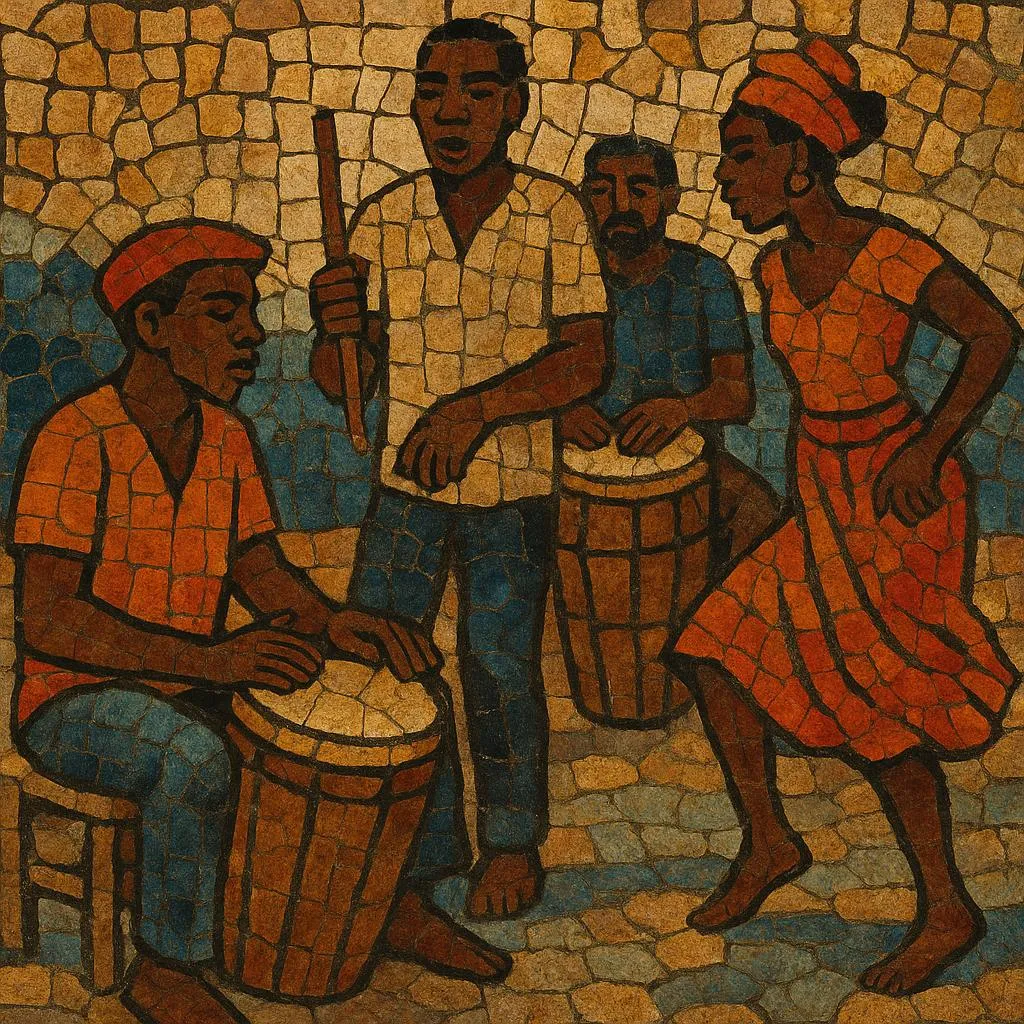
Raspe (often written locally as “raspé/raspè”) is a traditional French‑Antillean dance‑song form tied to rural community gatherings and Creole social life. It belongs to the family of Afro‑Creole musics that developed under and after slavery on the islands, with a strong emphasis on call‑and‑response singing, improvised verses, and percussive accompaniment.
Rhythmically, raspe sits between duple and compound feels, using driving hand‑drum patterns and a constant wooden stick ostinato (ti‑bwa) that “scrapes” or grids the beat. The music accompanies codified dance steps and footwork, and the performance is as much about the communal circle—lead singer, chorus, dancers, drummer, and audience—as it is about any single melody.
While it is a distinct folk form, raspe overlaps historically with neighboring Antillean traditions (bèlè/bélé, biguine/mazouk circles) and provided raw rhythmic vocabulary later heard in carnival processions and, by extension, in popular styles from the French Caribbean.
History
Raspe emerged on the plantations and in the rural communities of the French Antilles during the 19th century. Enslaved and later emancipated Afro‑descendant communities fused West African call‑and‑response and drumming with European social‑dance footprints (waltz, polka, mazurka). This yielded Creole ring‑dance practices in which a lead voice (lavwa) trades verses with a chorus (ranponn), animated by a barrel drum and the ever‑present ti‑bwa stick ostinato.
The name evokes the tactile, percussive “scraping/gridding” of time—both in the stick pattern and in the dancer’s footwork. Raspe performances were integral to veillées (evening gatherings), fêtes, and community celebrations. Topics of the texts range from everyday life and love to humorous topical commentary, delivered in Martinican/Guadeloupean Creole.
With urbanization and professional dance bands, related Creole genres (biguine, mazouk) moved into salons and recording studios. Raspe remained closer to village squares and cultural associations, but its percussive cells and chorus response informed carnival street forms and the kinetic “vidé” processions.
From the late 20th century onward, roots‑culture movements and folk troupes helped document and teach raspe’s songs, drum patterns, and dance codes. Workshops and community groups across Martinique and Guadeloupe have since kept the form alive, presenting it on stage while preserving its participatory spirit.