Your digging level
Description
Rapai dabõih (often spelled rapa’i daboh/daboih) is a traditional Acehnese drum-and-chant genre from northern Sumatra, Indonesia, closely tied to Sufi devotional practice and the ritual spectacle of daboh (a local form of debus/invulnerability acts).
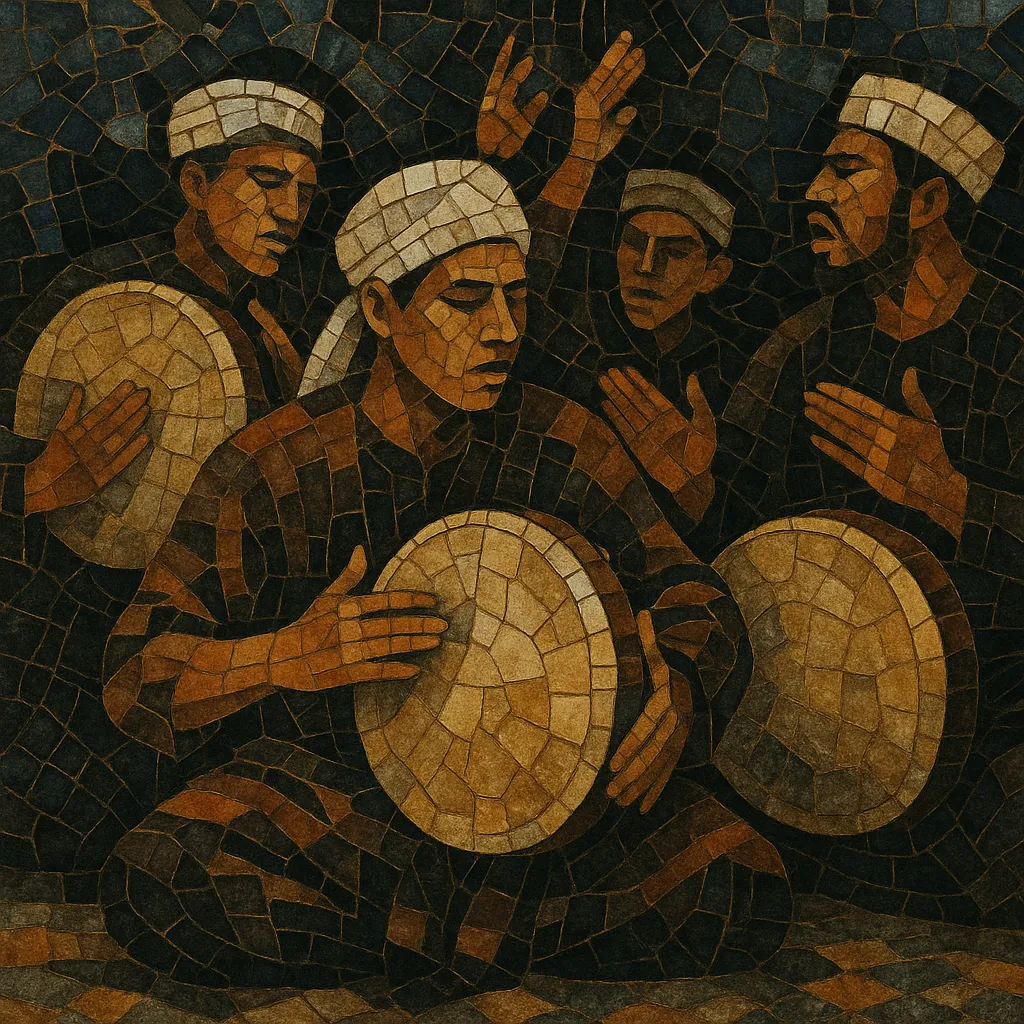
An ensemble of male performers plays interlocking patterns on frame drums called rapa’i, supports chanted poetry and zikir (remembrance of God) in Acehnese and Arabic, and accompanies stylized martial movements and trance-inflected feats. Performances typically build from slow, processional invocations and salawat to high-energy sections marked by tight unison breaks, call-and-response, and rapid accelerandi.
The music is communal, percussive, and theatrical: rows of drummers produce dense, polyrhythmic textures while the chorus declaims religious texts and historical hikayat. Traditionally staged for religious festivals and community rites, rapai dabõih today is also presented as a staged heritage art that emphasizes its musical and choreographic precision.
History
Rapai dabõih emerged in Aceh during the Islamic florescence of the Aceh Sultanate (16th–17th centuries), when Sufi brotherhoods and Hadrami traders introduced frame-drum devotional arts to the region. The genre’s name reflects two elements: rapa’i, a large frame drum emblematic of Acehnese Islamic music, and dabõih/debus, a ritual display associated with the Rifa’i Sufi order that dramatizes piety and perceived invulnerability. Early practice combined zikir, salawat, and hikayat with tightly coordinated drumming to support trance and communal devotion.
Across the 18th–19th centuries, village troupes in Pidie, Aceh Besar, and neighboring districts codified distinctive repertoires, drum sizes, and sticking patterns. Rapai dabõih circulated at maulid (Prophet’s birthday) festivities, communal celebrations, and local rites, reinforcing Islamic identity and local cohesion. Ensembles refined call-and-response textures, dramatic breaks, and accelerations that framed the daboh segments.
In the colonial and early postcolonial eras, authorities periodically restricted the more extreme self-mortification displays. As a result, performance gradually shifted toward staged demonstrations that highlighted musicality and choreography while reducing risk. Parallel Acehnese frame-drum genres (such as rapai geleng) were professionalized for cultural showcases, but rapai dabõih maintained its devotional grounding and percussive heft.
In the late 20th and 21st centuries, rapai dabõih has been revitalized through cultural festivals, university troupes, and regional competitions. Many groups now interpret the daboh component symbolically or with controlled stagecraft, foregrounding the intricate ensemble drumming, religious poetry, and precise formation work. Archival efforts, community workshops, and tourism have helped secure its place as a living heritage of Aceh.