Your digging level

For this genre
0/8
🏆
Sign in, then listen to this genre to level up

Description

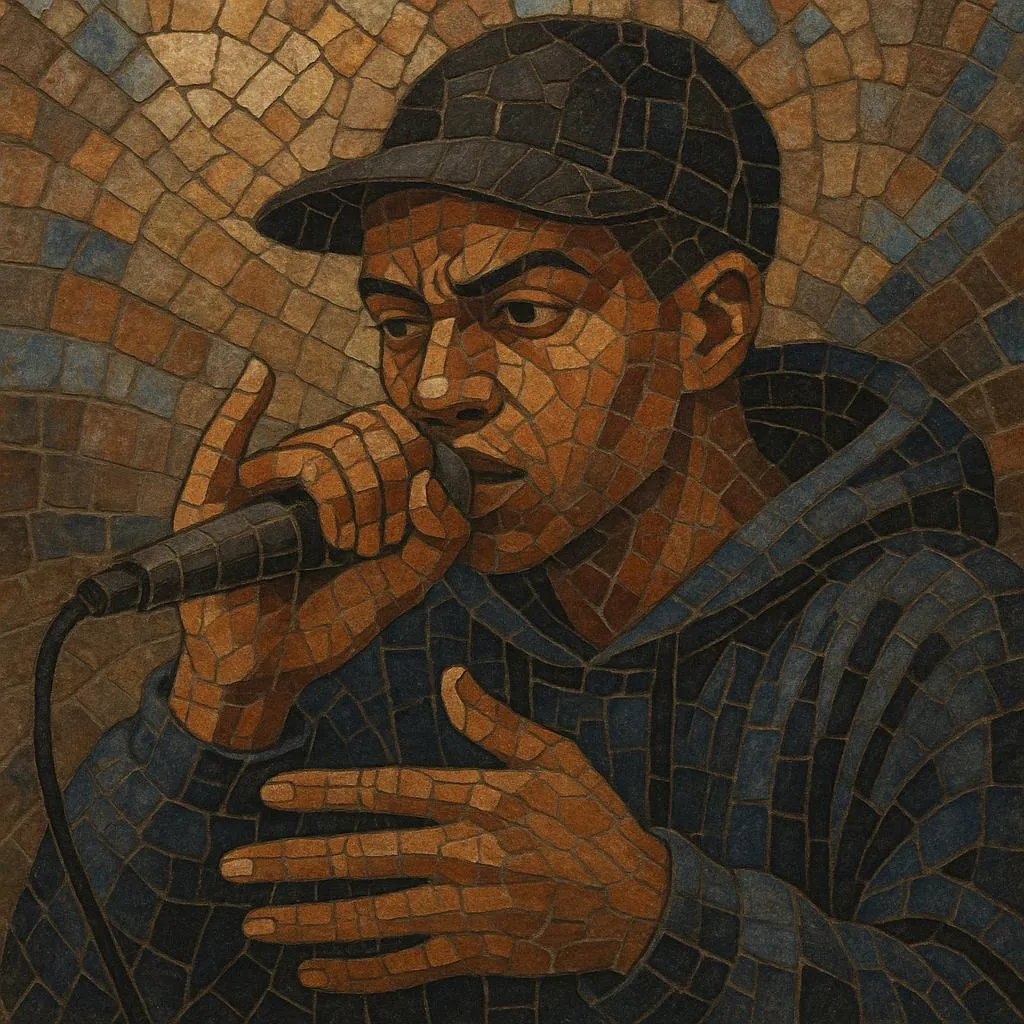
Rap conscient (French for “conscious rap”) is a socially and politically aware branch of francophone hip hop.

It centers on message-driven lyricism: denunciation of racism and inequality, critique of consumerism and state violence, reflections on identity, immigration, and life in working-class neighborhoods.

Musically, it often favors clear vocals and intelligible mixes, with boom-bap or soulful backdrops that support the text rather than overpower it.

Compared to party rap or purely technical “ego rap,” rap conscient prioritizes substance, storytelling, and moral or civic engagement.


Sources: Spotify, Wikipedia, Discogs, Rate Your Music, MusicBrainz, and other online sources

History

Origins (1990s)

Rap conscient emerges within the broader rise of French rap in the 1990s, influenced by U.S. conscious hip hop and by local realities in France and other francophone areas.

Consolidation (late 1990s–2000s)

The style becomes a recognizable current inside rap francais, with artists emphasizing sharp writing, social commentary, and community representation.

Diversification (2010s–present)

While trap and pop-rap dominate mainstream formats, rap conscient persists and evolves: some artists keep classic boom-bap aesthetics, others adopt modern production while maintaining politically engaged themes.

Role today

Rap conscient remains an important “counterbalance” voice within francophone rap, shaping public debate and offering narrative depth about social issues and lived experience.

How to make a track in this genre

1) Production & instrumentation
•   Use drum patterns that keep the vocal front-and-center: classic boom-bap kicks/snares, restrained hi-hats, or a modern but uncluttered trap-influenced groove. •   Choose samples or chord progressions that convey seriousness: minor keys, jazz/soul loops, piano or Rhodes, warm basslines, and subtle strings. •   Mix for intelligibility: compress and EQ the lead vocal so every consonant is clear; keep the beat slightly lower than in club-oriented rap.
2) Rhythm & flow
•   Favor steady, articulate flows with deliberate pacing so the message lands. •   Use rhythmic variation for emphasis: switch between tighter subdivisions in dense argument sections and longer notes in emotional or reflective lines. •   Add purposeful pauses; silence can be as persuasive as bars.
3) Harmony & melodic choices
•   Minor or modal harmony (e.g., i–VI–VII, i–iv–V, or jazzy ii–V colors) supports reflective or critical content. •   Keep melodic hooks simple and memorable; choruses can be sung or half-sung, but should reinforce the thesis of the song.
4) Lyrics & themes (the core)
•   Start with a clear “problem statement” and perspective: first-person testimony, reportage, or direct address. •   Use concrete detail (places, daily routines, specific incidents) to avoid generic slogans. •   Balance critique with nuance: acknowledge contradictions, personal responsibility, and complexity. •   Employ rhetorical tools: anaphora (repeated openings), internal rhyme, multisyllabic rhyme, and punchlines that serve the argument rather than ego.
5) Structure & performance
•   Common structure: Intro (context) → Verse 1 (diagnosis) → Hook (thesis) → Verse 2 (evidence/story) → Bridge (reflection) → Final hook/outro (call to action or open question). •   Deliver with conviction and controlled emotion; the tone is often serious, urgent, and grounded rather than purely celebratory. •   Consider spoken-word or documentary-style skits only if they add clarity and do not dilute momentum.

Main artists

Related labels

Top tracks

Locked
Share your favorite track to unlock other users’ top tracks
Influenced by
Has influenced
No genres found
Challenges
Digger Battle
Let's see who can find the best track in this genre
© 2026 Melodigging
Melodding was created as a tribute to Every Noise at Once, which inspired us to help curious minds keep digging into music's ever-evolving genres.
Buy me a coffee for Melodigging