Your digging level
Description
Quechua music refers to the traditional and contemporary musical practices of the Quechua‑speaking peoples of the central Andes (primarily Peru, Bolivia, and Ecuador, with extensions into northern Chile, Argentina, and southern Colombia).
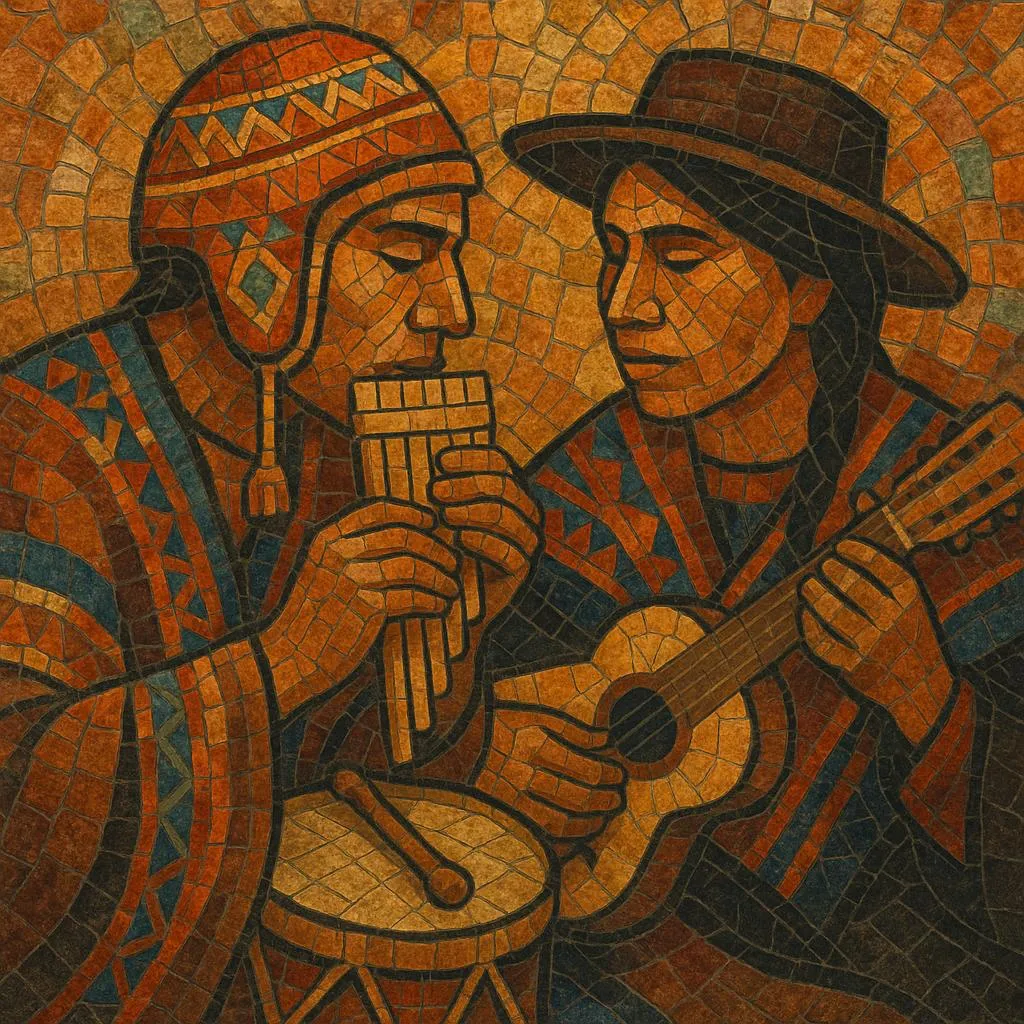
Its sound world is defined by a deep Indigenous Andean core—panpipe ensembles (siku/antara), end‑blown flutes (quena, pinkillu), duct flutes (kena-kena), small drums (tinya), large double‑headed bass drums (bombo/wankara), and communal singing—later enriched by instruments that arrived in the colonial era such as the charango (a small lute), guitar, harp, and violin. Vocal textures often favor heterophony, call‑and‑response, and collective timbre rather than solo virtuosity, and many ensembles use interlocking (hocket) parts (e.g., ira/arka panpipe rows) to create a single composite melody.
Melodically, Quechua repertories gravitate toward anhemitonic/hemitonic pentatonic and diatonic scales; harmonically, parallel fourths/fifths, drones, and open sonorities remain characteristic, while mestizo repertoires may employ triadic harmony. Rhythmically, sesquialtera (3:2 hemiola) and compound/duple alternations are common, supporting dance genres linked to agricultural calendars, pilgrimages, and carnival cycles. Lyrically (in Quechua and often Spanish), themes range from love, landscape, and communal life to ritual devotion and contemporary identity.
History
The musical foundations of Quechua communities long predate the Inca Empire, but they coalesced and spread widely during the Inca period (c. 13th–16th centuries). Courtly and communal repertories used flutes, panpipes, shell trumpets, rattles, and drums in agricultural rites, state ceremonies, and festivals. Collective singing and interlocking aerophone parts formed distinctive textures tied to place, season, and kin-group.
Spanish colonization introduced European instruments (charango-like lutes, harp, guitar, violin) and Christian ritual frameworks. Quechua musical life absorbed these elements while preserving Indigenous aesthetics: processional music for Catholic feasts intertwined with local calendrical rites; new song types (e.g., yaraví as a poetic lament) and dance‑songs (e.g., huayno/wayno) emerged as mestizo forms with Quechua poetics, Andean rhythms, and hybrid instrumentations.
Urban migration and nationalist cultural projects in Peru, Bolivia, and Ecuador put Andean/Quechua repertories on radios, stages, and records. Pan‑Andean ensembles popularized siku and quena textures; charango virtuosi and harpists reached national prominence. Folkloric ballet troupes, school ensembles, and state festivals codified regional styles (sikuris, k’antu, huaynos, harawis) for modern audiences while communities maintained local ritual musics.
From nueva canción to world‑music circuits, Quechua elements shaped pan‑Andean and global imaginaries. In the 2000s–2020s, artists brought Quechua language into pop, rock, and hip‑hop; community ensembles revitalized traditional cycles; and digital media amplified rural and diasporic voices. Contemporary scenes balance continuity (ritual ensembles tied to place) with innovation (Quechua trap/rock/folk crossovers), foregrounding language revitalization and Indigenous identity.