Your digging level
Description
Powerviolence is an ultrafast, confrontational offshoot of hardcore punk that emphasizes whiplash dynamics between blastbeat-speed eruptions and lurching, sludgy slowdowns. Its songs are typically very short—often under a minute—and rely on raw, abrasive guitar and bass tones, barked or screamed vocals, and sudden stop/start structures.
Rooted more in punk than in metal, powerviolence differs from grindcore through its stripped-down riffing, anti-virtuosic ethos, and frequent use of hardcore and d-beat rhythms alongside shocking tempo drops into sludge-influenced breakdowns. Lyrics tend to be anti-authoritarian, socially critical, or nihilistic, and the style is strongly tied to DIY culture, lo-fi aesthetics, and an intentionally uncompromising sound.


History
Powerviolence emerged in the late 1980s in the United States, particularly in Southern California and the Bay Area. Early catalysts included Infest, No Comment, and Neanderthal, who pushed hardcore punk’s speed and brevity to extremes while inserting jarring slowdowns. The term "powerviolence" is widely associated with Eric Wood (Man Is the Bastard), whose projects helped define the genre’s harsh minimalism, noise abrasion, and uncompromising DIY stance.
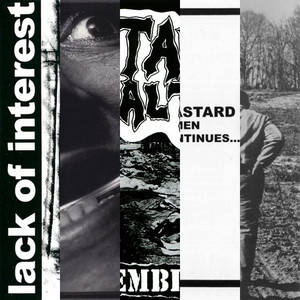
The 1990s saw the style coalesce around bands such as Crossed Out, Man Is the Bastard, Spazz, Capitalist Casualties, Despise You, Lack of Interest, and Dropdead. Labels and hubs like Slap A Ham Records (and its Fiesta Grande events at 924 Gilman), 625 Thrashcore, Deep Six Records, and a network of zines and tape traders amplified the sound. Hallmarks—blink-fast blastbeats, violent stop/start edits, sudden sludge tempos, and very short tracks—became codified across 7-inches, splits, and compilation series (e.g., Slap A Ham’s Bllleeeeaaauuurrrrgghhh! comps).
A 2000s and 2010s resurgence brought new waves of bands—Iron Lung, Hatred Surge, Mind Eraser, Weekend Nachos, The Endless Blockade, Sea of Shit—and cross-pollination with grindcore, sludge, and noise scenes. International scenes in Japan, Europe, and Latin America continued to cultivate the style, while contemporary labels (e.g., To Live A Lie, Painkiller, Deep Six) and digital platforms helped globalize its reach. Powerviolence remains a fiercely DIY, anti-commercial form that privileges immediacy, extremity, and political or personal urgency.
Use a classic hardcore setup: guitar, bass, drums, and shouted/screamed vocals. Favor simple, high-impact rigs—overdriven or fuzzed guitar and bass with aggressive mids, minimal effects, and a raw, live-room sound. Production should be dry and immediate rather than polished.
Alternate between hyperfast passages (blastbeats, skank beats, and d-beat at extreme tempos) and sudden, crushing slowdowns influenced by sludge. Aim for violent stop/start edits and metric whiplash. Keep songs short—10 to 60 seconds is common—often chaining several micro-ideas into one track.
Write with direct, percussive power-chord riffs, chromatic movement, and dissonant intervals (tritones, minor seconds). Avoid technical showmanship; the energy and contrast matter more than complexity. Use abrupt key centers or riff changes to heighten shock value.
Deliver vocals as sharp, shouted bursts—call-and-response or gang shouts work well. Lyrics tend toward anti-authoritarian critiques, social and scene politics, or bleak personal themes. Keep lines concise to match the song length and pacing.
Avoid traditional verse–chorus forms. Instead, sequence blasts, turnarounds, and breakdowns in rapid succession. Utilize hard mutes, dead stops, and sudden tempo drops for impact. Many bands track live to capture cohesion and volatility.
Play with maximal intensity and minimal downtime; sets are often short. Embrace a DIY ethic—zines, tapes, small venues, and community-driven releases—and resist overproduction. The attitude should feel immediate, confrontational, and unfiltered.