

Your digging level
Description
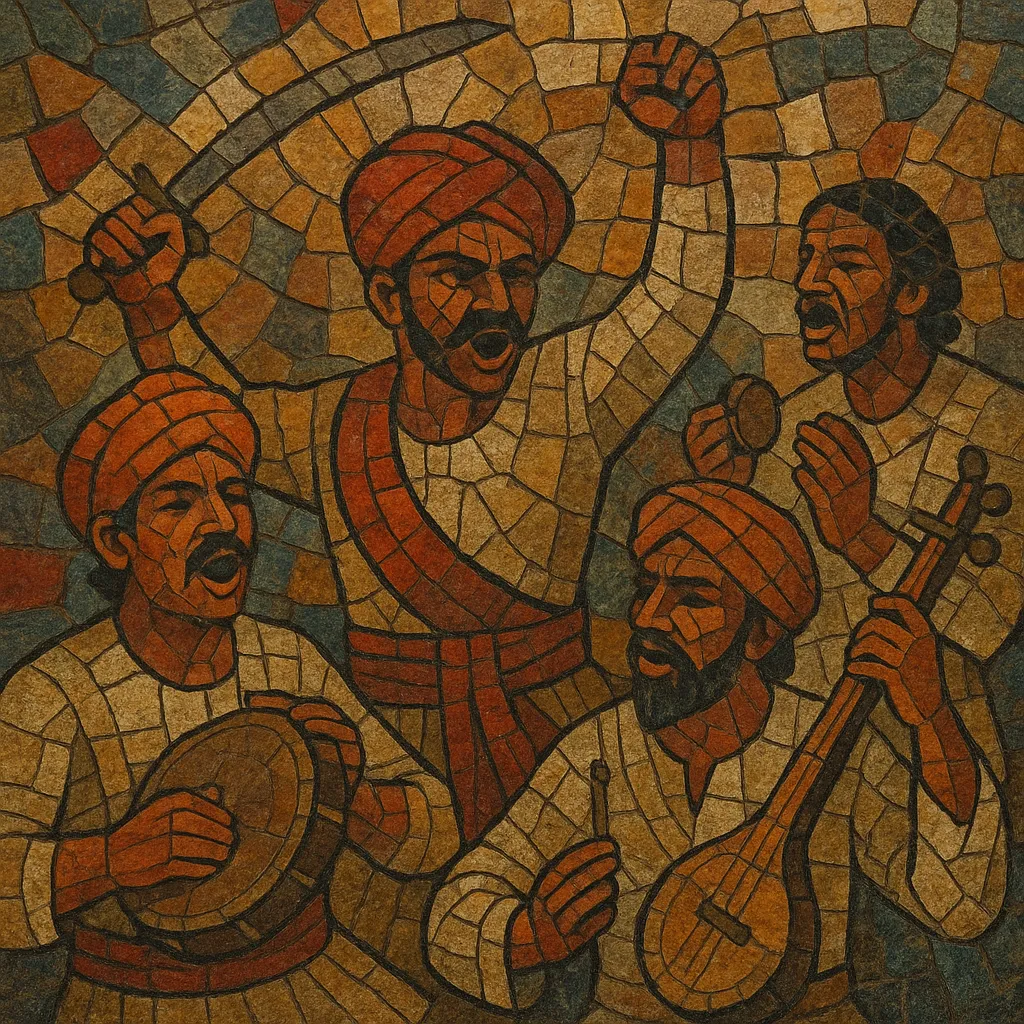
Powada is a traditional Marathi heroic ballad genre whose very name derives from the Marathi verb meaning “to glorify.” It emerged as a forceful narrative-verse form in the late 17th century in western India and is performed in a charged, declamatory style by shahirs (balladeers) with chorus and percussion.
Historically, powadas celebrated and memorialized legendary exploits—most famously those of Chhatrapati Shivaji Maharaj, Tanaji Malusare, and other Maratha heroes—while also serving as a vehicle for public commentary. Over time, the form expanded from courtly and martial praise to socially engaged performance, addressing issues such as female foeticide, dowry, caste oppression, and corruption. It remains a living, community-facing genre heard at rallies, festivals, and cultural programs across Maharashtra.
History
Powada crystallized in the late 1600s in Maharashtra, India, during the Maratha ascendance. It drew on older Marathi folk-narrative practices and the subcontinent’s epic and devotional song traditions, then took on a distinctly martial, public-facing role as shahirs composed and performed ballads praising Shivaji Maharaj, Tanaji Malusare, and other figures who resisted Mughal power. Early landmark pieces include powadas on the slaying of Afzal Khan and the capture of Kondhana (Sinhagad), which set the template for a vigorous, rhetorical performance style accompanied by hand percussion.
As royal courts and local patrons changed, powada shifted from palace precincts to bazaar, akhada (gymnasium), and jatra (fair) settings, retaining its heroic core while absorbing elements of popular theatre and kirtan call-and-response. Shahir-poets such as Ram Joshi helped systematize its metres and staging, while itinerant troupes developed the vigorous lead-and-chorus delivery, punctuated by drums (dholki), frame drums (daf/duff), cymbals (taal/manjira), and the monotone drone of instruments like tuntune.
Industrialization, print culture, and mass politics gave powada a new arena. Lokshahirs (people’s bards) like Annabhau Sathe, Amar Sheikh, and their compatriots recast the form as a workers’ and peasants’ chronicle. Powada became a medium for mobilization and education—famously during the Samyukta Maharashtra movement (1950s–60s) for a unilingual Marathi-speaking state—while also castigating social ills such as dowry, female foeticide, and corruption.
Today powada thrives at cultural programs, rallies, and in educational spaces, often interwoven with Lavani/Tamasha and modern folk ensembles. Contemporary shahirs use the genre’s high-energy declamation, mnemonic refrains, and participatory choruses to address Dalit rights, gender justice, agrarian distress, and civic pride—demonstrating powada’s enduring elasticity as both heritage and living protest art.



