Your digging level
Description
Post-disco soul is the sleek, mid-tempo strain of early‑1980s R&B that emerged in the wake of the late‑1970s disco backlash. Contemporary writers even called it “disco without the loud bass‑drum thump,” pointing to arrangements that softened four‑on‑the‑floor while keeping club‑ready grooves and romantic soul vocalism. It favors drum machines, handclap accents, and warm electric piano/polysynth textures over the lavish strings and horns of classic disco.
Rhythmically it leans on a strong backbeat and mid‑tempo bounce (often around 110–116 BPM), with slap or synth bass, glossy chords, and prominent synthesizers—traits shared with and often overlapping the “boogie” subset. Its studio craft was shaped by DJs/producers and 12‑inch mixes coming out of New York and Los Angeles, linking the disco era to modern R&B and the nascent house/garage scenes.

History
After the 1979 disco backlash (often symbolized by Chicago’s Disco Demolition Night), club music didn’t vanish—it regrouped. Writers in the period described a new “post‑disco” soul sound that retained disco’s dancefloor purpose while paring back its orchestration and shifting emphasis away from the pounding kick. The Cadence magazine quip that it was “disco without the loud bass‑drum thump” captures the pivot. New York’s DJ‑driven ecosystem—Paradise Garage and labels like West End/Prelude/Salsoul—incubated the sound via extended 12″ mixes and dub‑style breakdowns.
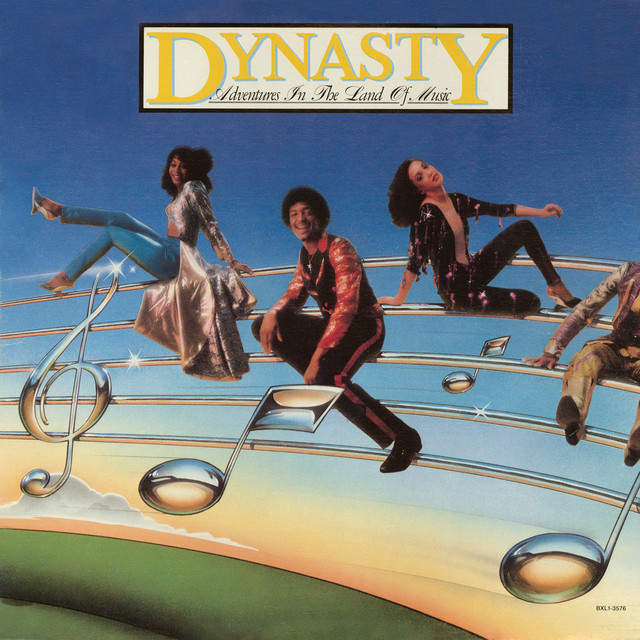
Producers such as Kashif crystallized the style with drum machines, synth bass, and space‑conscious arrangements for singers like Evelyn “Champagne” King (“I’m in Love,” 1981; the 1982 album Get Loose). On the West Coast, Leon Sylvers III’s SOLAR camp (Shalamar, The Whispers, Dynasty) pushed a polished, boogie‑inflected variant; in the Midwest, Jimmy Jam & Terry Lewis honed their template with The S.O.S. Band. These records connected R&B radio, Black club culture, and pop charts without reverting to late‑’70s disco sonics.
Paradise Garage resident Larry Levan helped codify the post‑disco aesthetic—DJ‑friendly intros, dubby breakdowns, and electronic drum programming—bridging disco to early house/garage. West End, a key New York label, championed this approach and later fed the garage/house continuum.
AllMusic frames “post‑disco” as the connective era between disco’s dissolution and house’s emergence: a singles‑driven period where producers and DJs were central. The boogie/post‑disco soul vocabulary—mid‑tempo bounce, handclaps, synth‑bass, plush harmonies—fed directly into dance‑pop, contemporary R&B, freestyle, garage/house, and, later, new jack swing.
Aim for a mid‑tempo bounce—roughly 105–116 BPM—with a pronounced backbeat (snare/clap on 2 and 4) rather than relentless four‑on‑the‑floor. Use programmable drum machines (e.g., LM‑1, TR‑808) for tight kicks, crisp claps, and syncopated hi‑hats; leave space for bass and vocals to “breathe.”
Write in major keys with soulful color tones: maj7, 9ths, and 11ths on electric piano or warm polysynth pads (Prophet‑5/Juno/OB). Favor circular, groove‑friendly progressions (I–IV–V with added color; ii–V‑I turnarounds) and extended vamp sections for DJ‑friendly mixes.
Use either a percussive electric bass (slap/pop lines) or a rounded synth‑bass (Minimoog/OB‑8) locking tightly with the kick. Lines should be melodic but economical, emphasizing the “and” of the beat and occasional octave jumps.
Lead vocals are smooth and emotive; arrange stacked harmonies and call‑and‑response hooks. Lyrical themes center on romance, desire, nightlife, and uplift. Keep phrases concise to ride the groove and leave room for instrumental fills.
Build 12″‑style structures: DJ‑friendly intros, breakdowns, and dub‑tinged bridges; automate mutes/delays on percussion and rhythm guitar “chanks.” Layer handclaps, auxiliary percussion (shaker, cowbell), and tasteful synth lines; avoid over‑orchestration—this style is sleek, not symphonic. New York’s Garage/West End lineage is the model for extended arrangements that translate to the dance floor.